
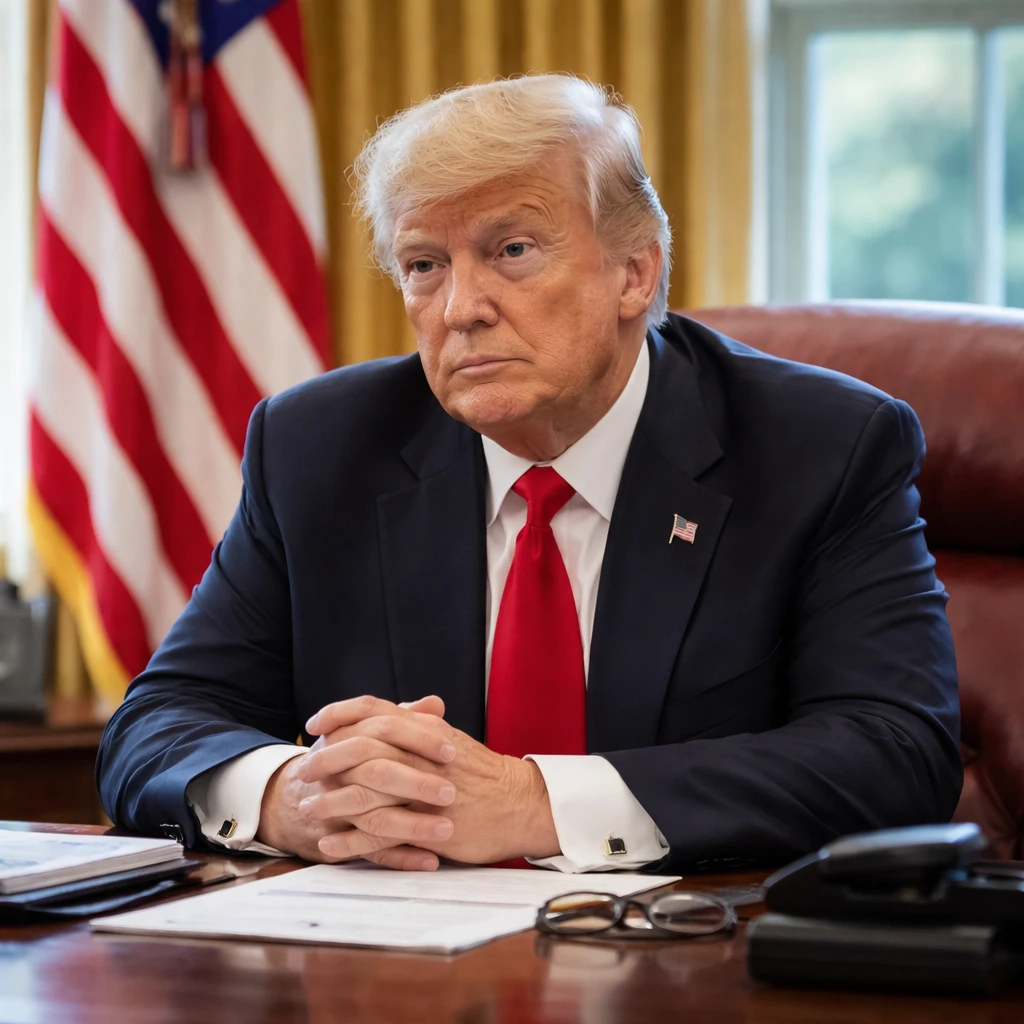
In a comprehensive interview conducted at the White House, President Donald Trump approached the contentious issue of an ICE officer's fatal shooting of a mother in Minnesota with a tone less definitive than prior statements. On January 7, Jonathan Ross, an officer with the U.S. Immigration and Customs Enforcement agency, shot Renee Good, a Minneapolis resident and mother of three. This event occurred shortly after the federal government dispatched more than 2,000 officers to Minnesota to reinforce immigration enforcement efforts.
Video evidence examined by Reuters indicates that officer Ross fired the initial shot as Good's vehicle passed him, discharging a total of three shots. Previously, Trump's social media commentary depicted Good as "a professional agitator" who allegedly "violently, willfully, and viciously" ran over the officer, suggesting the shooting was an act of self-defense. This depiction aligned more closely with comments from Vice President JD Vance.
However, during the Oval Office discussion, Trump chose a more nuanced approach. When questioned on whether he considered the ICE officer's actions justified, Trump avoided simple categorization, stating, "I don’t get into right or wrong. I know that it was a tough situation to be in." He further highlighted a perceived lack of respect directed at law enforcement, specifically ICE officers, and lamented, "It’s so sad to see on both sides." These remarks signify a shift toward conciliation in the administration's narrative surrounding the event.
Regarding potential legal ramifications for Officer Ross, Trump declined to preemptively grant a pardon, expressing a desire to observe the development of any legal proceedings. He remarked, "That was a very unfortunate incident. We’re just going to see what happens." The legal landscape is complex, as federal agents are typically shielded from state prosecution for actions connected to their official duties. Nonetheless, local officials have publicly contested the assertion that the shooting constituted self-defense.
Echoing his previous commitments, Trump reaffirmed his intention to continue deploying ICE agents into metropolitan areas. He defended the strategy as essential for combating criminal activity, despite incidents like the Minneapolis shooting that have heightened tensions between federal enforcement personnel and local communities. Data from ICE indicate that a significant portion of individuals detained during these enforcement surges have no charged crimes or prior convictions, underscoring the contentious nature of the policy.
The administration's efforts and the resulting confrontations impact public perceptions and dynamics within law enforcement, immigrant communities, and broader societal interactions. The ongoing policy implementation carries implications for various sectors, including public safety, legal systems, and urban governance, influencing investor sentiment toward companies and entities connected to government contracts, security services, and community programs.