
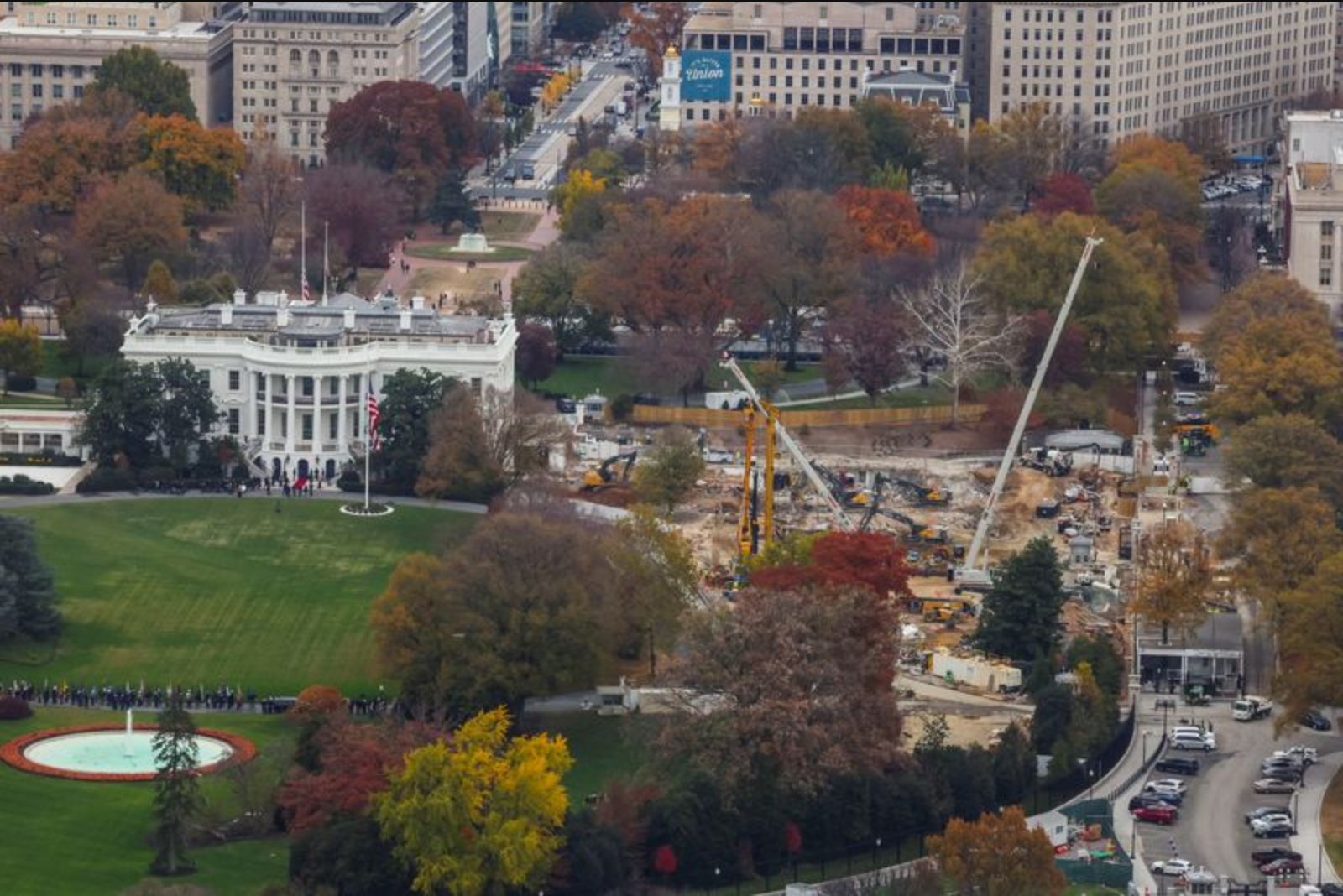
The federal planning body that supervises major Washington, D.C., building projects is set to discuss and vote on President Donald Trump’s contested White House ballroom proposal on Thursday, according to a public meeting agenda. The item, listed as the "East Wing Modernization Project," comes two days after a judge determined work on the site cannot proceed without Congress granting approval.
The project, which the president has described as a privately financed, signature addition to the White House, is budgeted at $400 million and would create a 90,000-square-foot (8,400-square-meter) ballroom. It forms part of a wider effort by the president to alter elements of Washington’s monumental core, a campaign that also includes plans for a 250-foot (76-meter) arch and a long-term renovation of the Kennedy Center performing arts complex.
The National Capital Planning Commission, one of two federal bodies tasked with an oversight role on prominent D.C.-area building initiatives alongside the U.S. Commission of Fine Arts, will both deliberate and vote on the proposal. The commission is chaired by Will Scharf, identified as a former personal lawyer to the president.
Legal challenges have intervened in the project’s timeline. A federal judge granted a preliminary injunction after the National Trust for Historic Preservation, a nonprofit organization, sued, alleging that the president exceeded his authority when he demolished the historic East Wing and commenced construction on the new building. The judge’s order bars further work on the site absent Congressional authorization.
The Justice Department filed an appeal of the ruling on Tuesday, signaling that the executive branch is seeking to overturn the injunction. The appeal comes as the planning commission prepares to take its own administrative action on the modernization plan.
The ballroom and related proposals are tied to the president’s broader alterations at the White House and surrounding federal landmarks. Among other changes enacted or initiated by the administration, the White House Rose Garden has been removed and replaced, and decorative gilding has been added to the Oval Office, details that the president has cited as part of his imprint on the presidency and the capital’s built environment.
Summary
The National Capital Planning Commission will vote on the East Wing Modernization Project despite a court-ordered preliminary injunction that halted construction pending Congressional approval; the Justice Department has appealed the judge’s decision.
Key points
- The planned ballroom is a privately financed $400 million, 90,000-square-foot addition to the White House.
- The National Capital Planning Commission, chaired by Will Scharf, will deliberate and vote on the project; the U.S. Commission of Fine Arts also holds an oversight role for D.C. projects.
- A federal judge issued a preliminary injunction after the National Trust for Historic Preservation sued, and the Justice Department has appealed the ruling.
Risks and uncertainties
- Legal restraint on construction - The preliminary injunction bars work on the site unless Congress approves, creating immediate uncertainty for construction-related activity and schedules.
- Pending appeal - The Justice Department’s appeal introduces further uncertainty about the project’s legal status and timetable, which affects contractors and planners tied to the effort.
- Authority dispute - The lawsuit alleges the president exceeded his authority by demolishing the historic East Wing and starting construction, raising regulatory and preservation concerns for cultural and heritage stakeholders.