
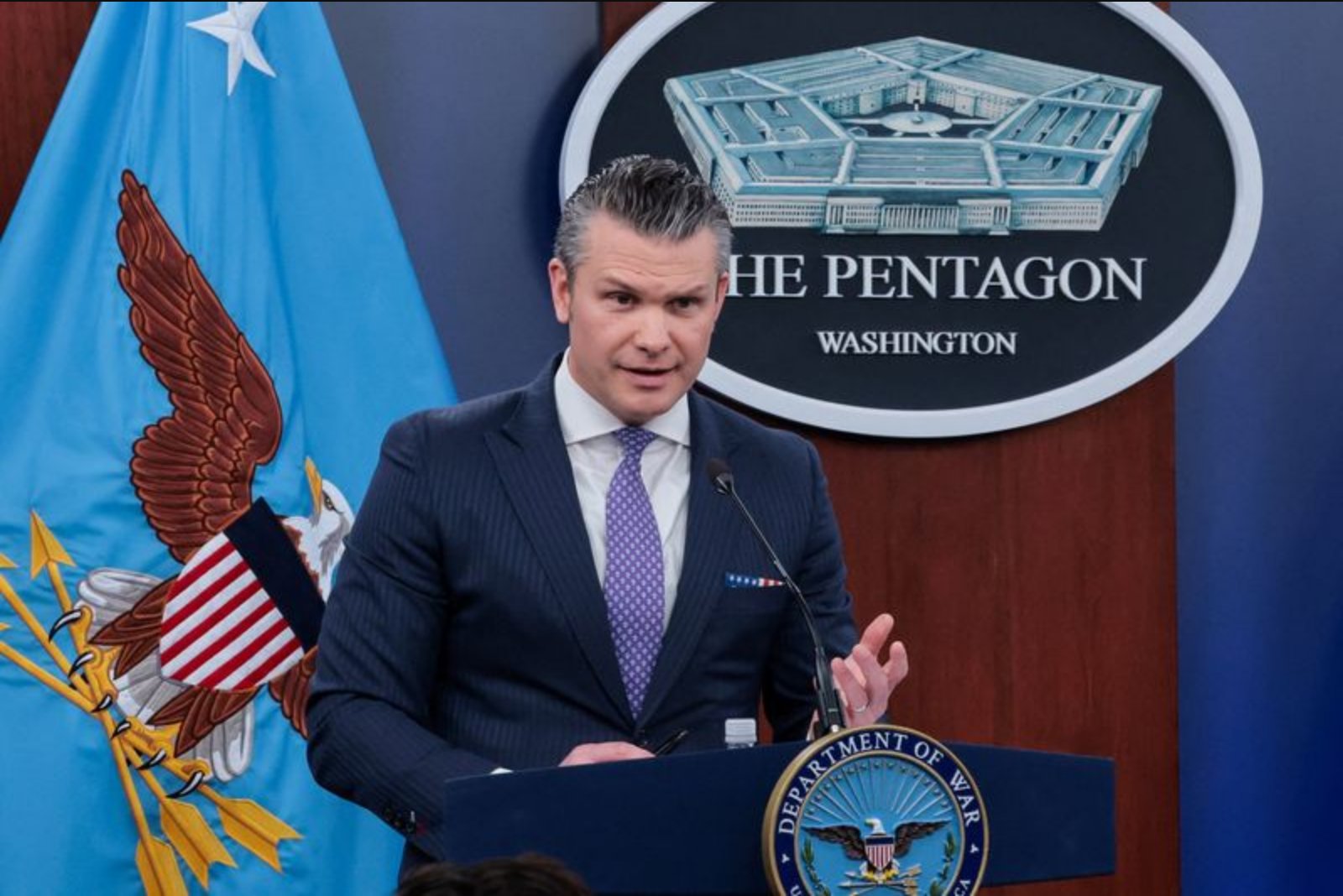
At a Pentagon news briefing on Tuesday, Defense Secretary Pete Hegseth said the question of whether the United States will uphold NATO’s collective defense is ultimately a decision for President Donald Trump, rather than an explicit recommitment from the Defense Department. Hegseth’s response followed public grievances by the president about European partners’ recent conduct related to U.S. military operations against Iran.
The exchange was notable because collective defense is a foundational principle of the NATO alliance. Formed in 1949, the alliance is organized around the idea that an armed attack on one member is deemed an attack on all, embodied in Article 5. Hegseth’s refusal to reaffirm the U.S. commitment drew attention for its potential to alter perceptions of the alliance’s durability.
Asked by Reuters whether the United States remains committed to NATO’s collective defense, Hegseth replied:
"As far as NATO is concerned, that’s a decision that will be left to the president. But I’ll just say a lot has been laid bare."
Hegseth went on to reference the president’s recent social media posts criticizing allies. The defense secretary pointed to Mr. Trump’s public complaints about France for denying overflight rights to U.S. resupply aircraft destined for Israel, and the president’s criticism of Britain for not joining the United States and Israel in military action against Iran.
Trump said on Friday the United States does not "have to be there for NATO."
Hegseth added: "You don’t have much of an alliance if you have countries that are not willing to stand with you when you need them. He’s simply pointing that out, and ultimately, it’ll be his decision of what that looks like."
Analysts and observers have warned that any explicit signal from Washington that it might not defend NATO allies in the event of an attack by Russia or another adversary could weaken the alliance, even if the president stops short of formally withdrawing the United States - a move that may require congressional consent. Such statements, these observers say, could also encourage adversaries to test NATO members’ willingness and readiness to invoke Article 5.
Hegseth’s comments came amid a highly publicized dispute between the United States and some European governments over military support and coordination related to actions against Iran. The secretary’s decision to leave a formal commitment to NATO to the president underscores a moment of uncertainty about U.S. policy toward the alliance and raises questions about how allies will interpret Washington’s security assurances going forward.
Summary - The defense secretary declined to reaffirm U.S. obligations under NATO’s collective defense, deferring to President Trump after European allies refused to participate in action against Iran.
- Key points:
- Hegseth said the pledge to NATO’s collective defense is a presidential decision - impacts defense policy and alliance stability.
- President Trump publicly criticized France and Britain for not supporting U.S. resupply and military action related to Iran - impacts diplomatic and military cooperation.
- Observers warn that ambiguity about U.S. defense commitments could embolden adversaries and affect markets tied to defense spending and geopolitical risk.
- Risks and uncertainties:
- Potential weakening of NATO cohesion if U.S. commitment is seen as conditional - relevant to defense and security sectors.
- Possible incentive for adversaries to test Article 5 enforcement - relevant to defense contractors and government bond markets sensitive to geopolitical risk.
- Uncertainty about whether formal withdrawal from NATO would be pursued and whether congressional consent would be required - relevant to diplomatic and fiscal policy planning.