
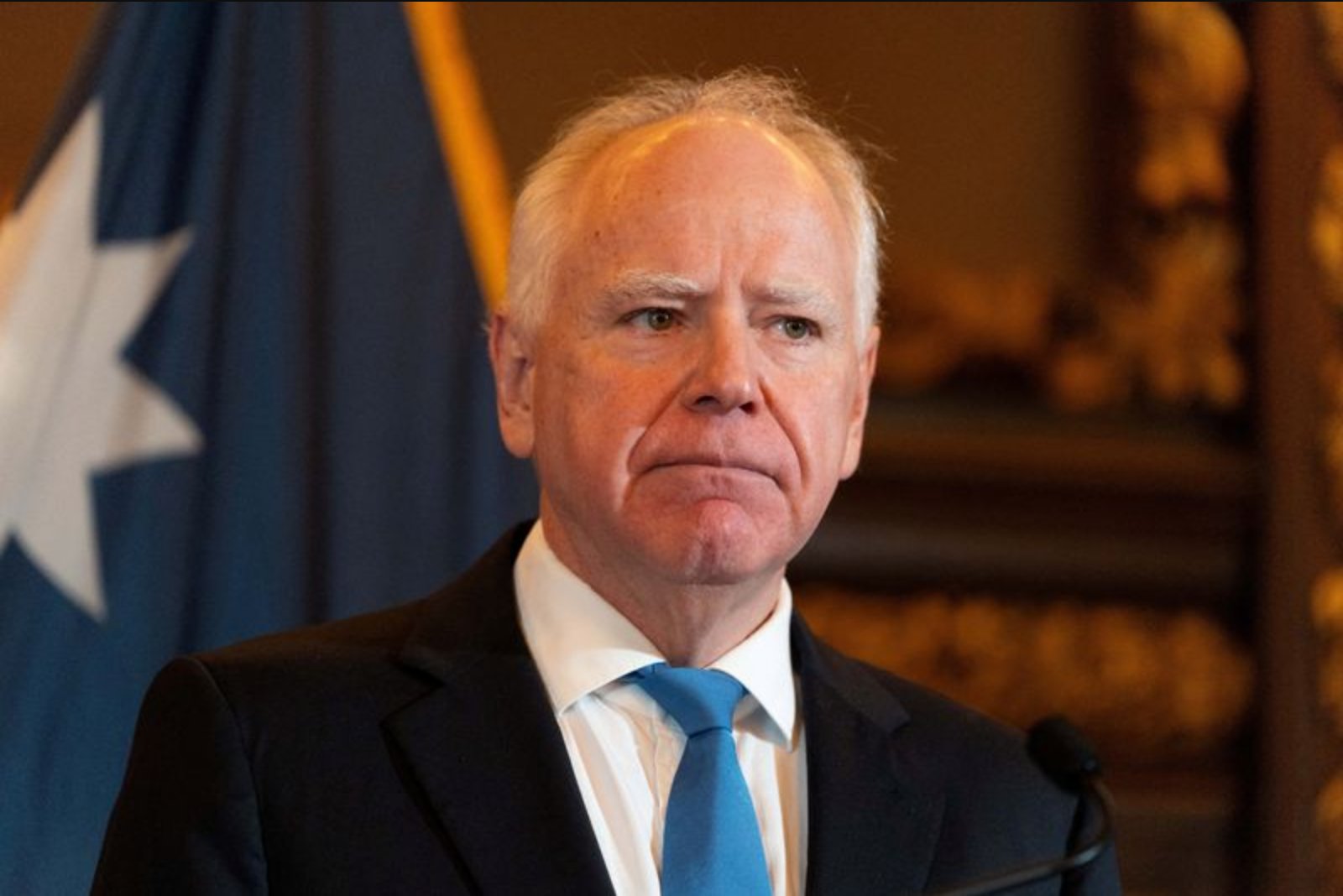
Minnesota Governor Tim Walz said on Wednesday that he will not run for any elective office again, describing himself as a political "lightning rod" and rejecting the idea of future campaigns.
Walz, 61, who ran as the 2024 Democratic vice-presidential candidate alongside Kamala Harris and was defeated by Republican Donald Trump, reiterated his decision in an interview on the cable channel MS Now. He said: "I have no political consideration, will never run for an elected office again. Never again."
The governor, now serving the second term that will end in early 2027, had already announced on January 5 that he would not seek a third term. At that time he said his priority would be confronting a growing fraud scandal involving the state's welfare system. The issue has expanded into a political flashpoint after it was highlighted by President Trump in attacks on Walz.
In the MS Now interview Walz expanded on the personal and political toll he has experienced, saying he recognized he was a "lightning rod." He added: "I know they hate me personally, and they take it out on my constituents."
Before being elected Minnesota's 41st governor in 2018, Walz served six terms in the U.S. House of Representatives and is a U.S. Army veteran. His decision to step away from future elective bids follows a period of intense federal scrutiny and political controversy centered on allegations of fraud tied to some nonprofits that administer childcare and other social services programs in Minnesota.
The Trump administration has singled out both Walz and the state of Minnesota - including its sizable Somali American and Somali immigrant communities - over allegations of fraud by nonprofit groups that receive federal support for administering state social services. Those allegations date back to 2020 and have been a focal point of federal criticism.
Earlier this month Walz described the fraud matter as a crisis and said he wanted to "let others worry about the election while I focus on the work." He said Minnesota welcomed federal assistance to address fraud, but criticized President Trump and other Republicans for exploiting the issue politically. Walz told reporters that they "want to make our state a colder, meaner place" and labeled them "opportunists who are willing to hurt our people to score a few cheap points."
The federal response has included deportation operations and increased enforcement activity in the Minneapolis-St. Paul area. Deportation raids began in early December when the Trump administration launched "Operation Metro Surge," deploying ICE and Border Patrol agents to the Twin Cities.
President Trump had earlier described Minnesota in November as a "hub of fraudulent money laundering activity" under Walz. Tensions have escalated further this month after two separate incidents in Minneapolis in which federal agents shot and killed U.S. citizens Renee Good and Alex Pretti. Those shootings prompted criticism of the Trump administration from Walz, Minneapolis Mayor Jacob Frey and other Democrats.
Context and implications
Walz's public renunciation of future electoral bids closes the door on any potential return to elective politics after his term ends in early 2027. He framed his decision as a commitment to address a state-level crisis tied to fraud allegations and federal scrutiny, rather than pursue further campaigns. The developments have kept Minnesota at the center of national attention and accelerated debates over federal enforcement, immigration-related operations, and oversight of federally funded social service programs.