
MINNEAPOLIS, Jan 28 - President Donald Trump accused Minneapolis Mayor Jacob Frey on Wednesday of "playing with fire" after the mayor reiterated that local police would refrain from enforcing federal immigration laws. The rebuke followed a brief period of apparent de-escalation signals from the White House and came as federal immigration enforcement operations in the city continued, albeit appearing more narrowly focused than in recent weeks.
Cities nationwide have witnessed demonstrations and clashes between protesters and federal immigration agents since the launch of Operation Metro Surge. Minneapolis has been at the center of those confrontations, which have intensified after two U.S. citizens were killed by federal officers - Renee Good on January 7 and Alex Pretti, who was killed on Saturday. The deaths have driven sustained unrest and public outcry in the city.
In the wake of those killings, protest activity in Minneapolis remained active on Wednesday, and the city's unrest drew attention beyond the political arena when singer-songwriter Bruce Springsteen released a protest song honoring Pretti and Good.
Federal enforcement tactics showed signs of change. An internal memo directed officers to avoid unnecessary communication and engagement with protesters, instructing personnel that antagonistic interactions "serve no purpose other than inflaming the situation." That guidance also limited enforcement to immigrants who have criminal charges or convictions rather than broadly questioning people about their immigration status.
Officials said the change in posture reflected a broader operational adjustment. The administration reassigned border czar Tom Homan to lead the effort, replacing Border Patrol official Gregory Bovino, whose tactics had sparked criticism and legal challenges for sweeping street-level enforcement. A senior administration official described Homan's arrival as a move toward more traditional, narrowly aimed operations rather than the broad street sweeps that had occurred under previous leadership.
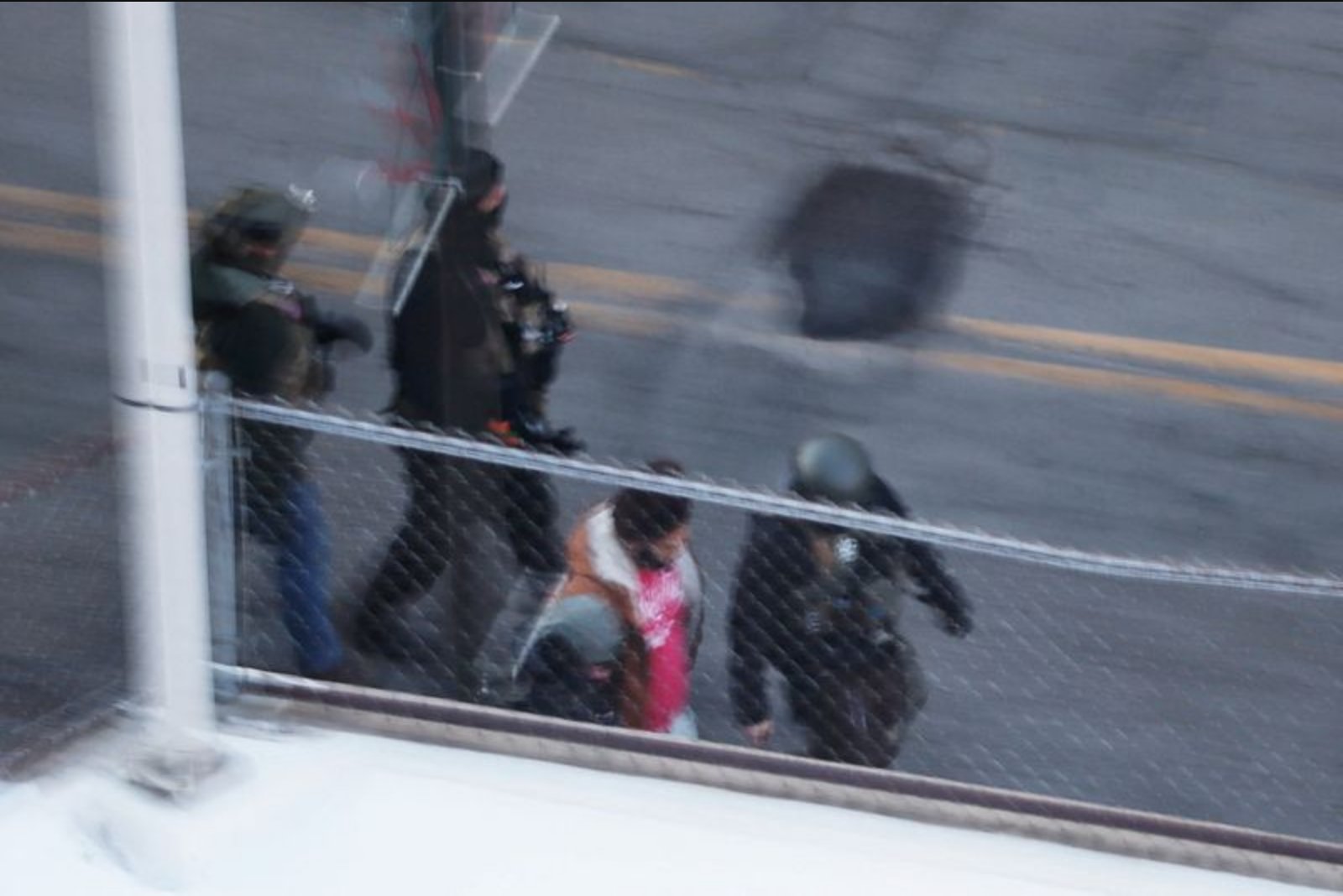
Observers and activists reported that federal activity in Minneapolis appeared to ebb somewhat on Tuesday, only to resume more fully on Wednesday in a more targeted manner. On Wednesday agents were observed arriving in groups of three vehicles, typically carrying six to eight agents, who knocked on doors at homes and businesses and looked for specific individuals. If the targeted person was not present, the agents departed. That contrasted with earlier weeks when officers sometimes approached people in public and demanded documentation of immigration status.
Despite signs of tactical refinement, top administration figures returned to a tougher tone. U.S. Attorney General Pam Bondi wrote on social media that federal agents had arrested 16 people in Minnesota on Wednesday for allegedly assaulting, resisting or impeding federal law enforcement. "Nothing will stop us from continuing to make arrests and enforce the law," she wrote.
At the same time, federal courts have raised serious concerns about the conduct of the enforcement surge. A U.S. District Judge in Minneapolis said on Wednesday that it was Immigration and Customs Enforcement that had been flouting the law by failing to comply with dozens of federal court orders during the recent enforcement activity. The judge canceled a contempt-of-court hearing for acting ICE chief Todd Lyons after the agency belatedly complied with an order to release a wrongly detained Ecuadorian man, but listed at least 96 court orders that he said ICE had violated in 74 cases.
"This list should give pause to anyone - no matter his or her political beliefs - who cares about the rule of law," the judge wrote. "ICE has likely violated more court orders in January 2025 than some federal agencies have violated in their entire existence."
Within the Department of Homeland Security, officials placed the two immigration officers who opened fire on Alex Pretti on administrative leave, a spokesperson said, describing that step as standard protocol.
Political pressure has shaped public remarks from the White House. After speaking with both Mayor Frey and Governor Tim Walz following Pretti's death, the president briefly softened his public rhetoric and said he intended to "de-escalate a little bit" in Minneapolis. But the president returned to a more confrontational posture on social media on Wednesday, criticizing Frey for restating local leaders' position that city police would not carry out federal immigration enforcement. The president wrote:
"Could somebody in his inner sanctum please explain that this statement is a very serious violation of the Law, and that he is PLAYING WITH FIRE!"
Trump has previously threatened to withhold federal funds from states that include so-called sanctuary jurisdictions that limit cooperation with federal immigration authorities. Mayor Frey responded on social media, stating: "The job of our police is to keep people safe, not enforce fed immigration laws."
The circumstances surrounding the killing of Alex Pretti became a focal point of debate over enforcement conduct. Pretti, a 37-year-old intensive care nurse, was shot dead during protests near his home on Saturday. Some administration officials initially said he had been preparing to kill officers, citing that he was carrying a handgun. Videos of the incident, however, showed Pretti holding only a phone when Border Patrol agents pushed him to the ground. Subsequent footage captured an agent finding Pretti's gun near his waist and removing it seconds before another agent shot the restrained man in the back.
The situation in Minneapolis remains fluid, with federal authorities modifying tactics even as legal, political and public scrutiny intensify. Officials and advocates continue to monitor enforcement patterns and court compliance as tensions between local leaders and the federal government persist.