
New York City Mayor Zohran Mamdani’s most prominent campaign promise - to freeze rents for regulated apartments - survived a turbulent preliminary hearing as the city’s Rent Guidelines Board provisionally approved ranges that preserve the possibility of a zero increase next month.
Late on Thursday, in a college auditorium filled with chanting tenants, the nine-member board set a preliminary range of 0-2% for one-year lease renewals and 0-4% for two-year renewals. The measure was approved by a vote of 7-1, with one member abstaining. The board will revisit the proposal ahead of a final vote scheduled for June 25.
The Rent Guidelines Board, which conducts an annual review that culminates in a June decision, determines how much landlords may raise rent for tenants in rent-stabilized apartments. Those units house approximately a quarter of New Yorkers and include roughly one million regulated apartments that would be affected if a freeze were imposed.
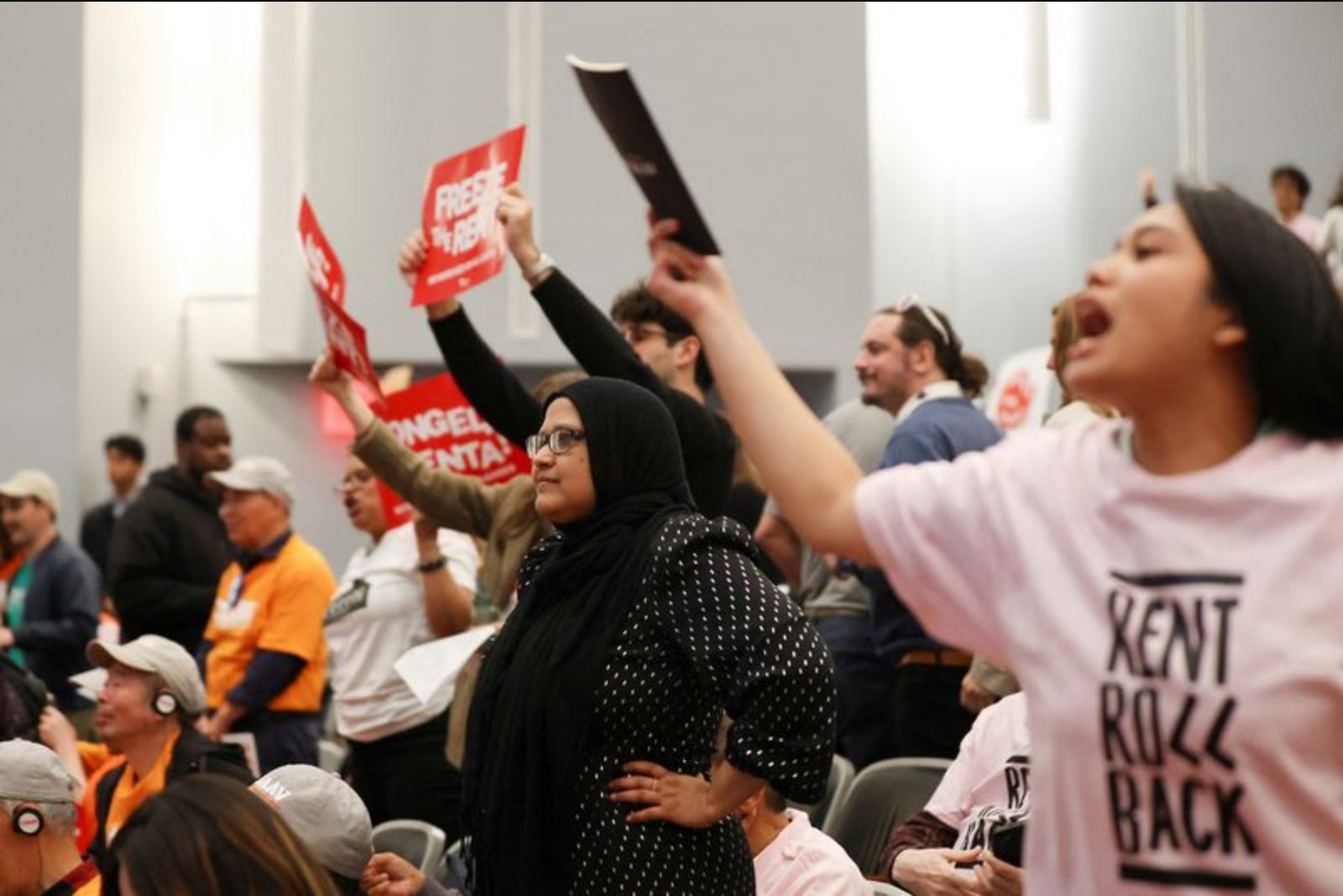
In the auditorium, the preliminary vote played out amid sustained noise and visible passion. Hundreds of tenants filled the audience, chanting "Freeze the rent!" and applauding whenever a board member referenced the word "zero." Numbers above zero drew boos. Tenants carried signs in English, Spanish, Chinese and Bengali, beat drums on the sidewalk outside, and attempted to bring whistles into the hearing until security intervened.
The atmosphere underscored the stakes for many long-term renters. Moreom Perven, a 49-year-old tenant who has lived in a rent-stabilized studio in Jamaica, Queens since 2000, said she expected the new mayor to understand the plight of tenants. Perven currently pays just under $1,300 a month and rents from a management company that owns more than 2,000 apartments in the city.
Perven described frequent maintenance problems in her building of 187 apartments: "Roaches, mice, broken tiles, then water leakage, mold, bed bugs," she said, and showed a second refrigerator-freezer she had purchased because the landlord-supplied appliance had stopped keeping food cold. City building records cited by tenants indicated 270 active complaints and 66 open housing code violations for her building.
At the hearing, tenants were broadly divided into two camps. The Tenants Bloc urged a rent freeze - an outcome that has occurred only three times in more than 50 years of the rent-stabilization system. A separate grouping, identified in testimony as the Rent Justice Coalition and described as including Pervem and others, pressed for a so-called "rent rollback" - a negative adjustment intended to offset a cumulative 12% increase enacted during the four-year term of the previous mayor, Eric Adams.
Property owners and their advocates also made their case. Representatives from the Real Estate Board of New York and similar groups told the board that operating costs have risen, particularly in older buildings, and that those pressures warrant rent increases. In a statement after the vote, REBNY executive Basha Gerhards said the preliminary ranges "ignore the clear financial distress shown in the data" and called a freeze or near-freeze "unjustifiable."
Mamdani, who ran as a democratic socialist and won voter attention with promises to tackle rising living costs, appointed six of the nine board members. Yet the mayor does not have direct authority to dictate the board’s decision. According to statements made during the hearings, his influence has been exercised through public outreach: city resources have been mobilized to inform tenants of their rights and to encourage turnout at the four remaining public hearings before the June 25 final vote.
The board considers a wide set of variables when setting rent guidelines each year. Its public calculations take into account tenant wages and landlords’ incomes from their properties, inflation, taxes, changes in housing supply and other factors that can affect building economics. The preliminary ranges reflect the board’s attempt to balance those competing pressures in a process closely watched by tenants, owners and housing advocates.
For tenants like Perven, the inclusion of zero in the preliminary range offered some relief, though she left the meeting skeptical that a full rollback would be possible this year. "We need to organize. We need to fight back," she said. She and other tenants expressed concern that past final votes have often landed in the middle of preliminary ranges, leaving outcomes that reduce the likelihood of a full freeze or a rollback.
The vote highlighted tensions at the intersection of policy-making and housing economics. Tenants focused on affordability and habitability problems, citing specific building violations and daily living hardships. Property owners emphasized rising operating costs and sought relief from constraints that, in their view, limit revenues needed to maintain buildings. The Rent Guidelines Board’s final decision will determine how those competing claims are resolved for the year to come.
Contextual note on timing: The board’s provisional vote took place in the weeks-long annual process that concludes with the final vote on June 25. Between the provisional and final votes, the board will hold public sessions intended to hear additional testimony and review data before setting binding rent guidelines.
This article documents the provisional decision, the public reaction at the hearing, and the primary claims advanced by tenants and property owner advocates as the board moves toward its June decision.