
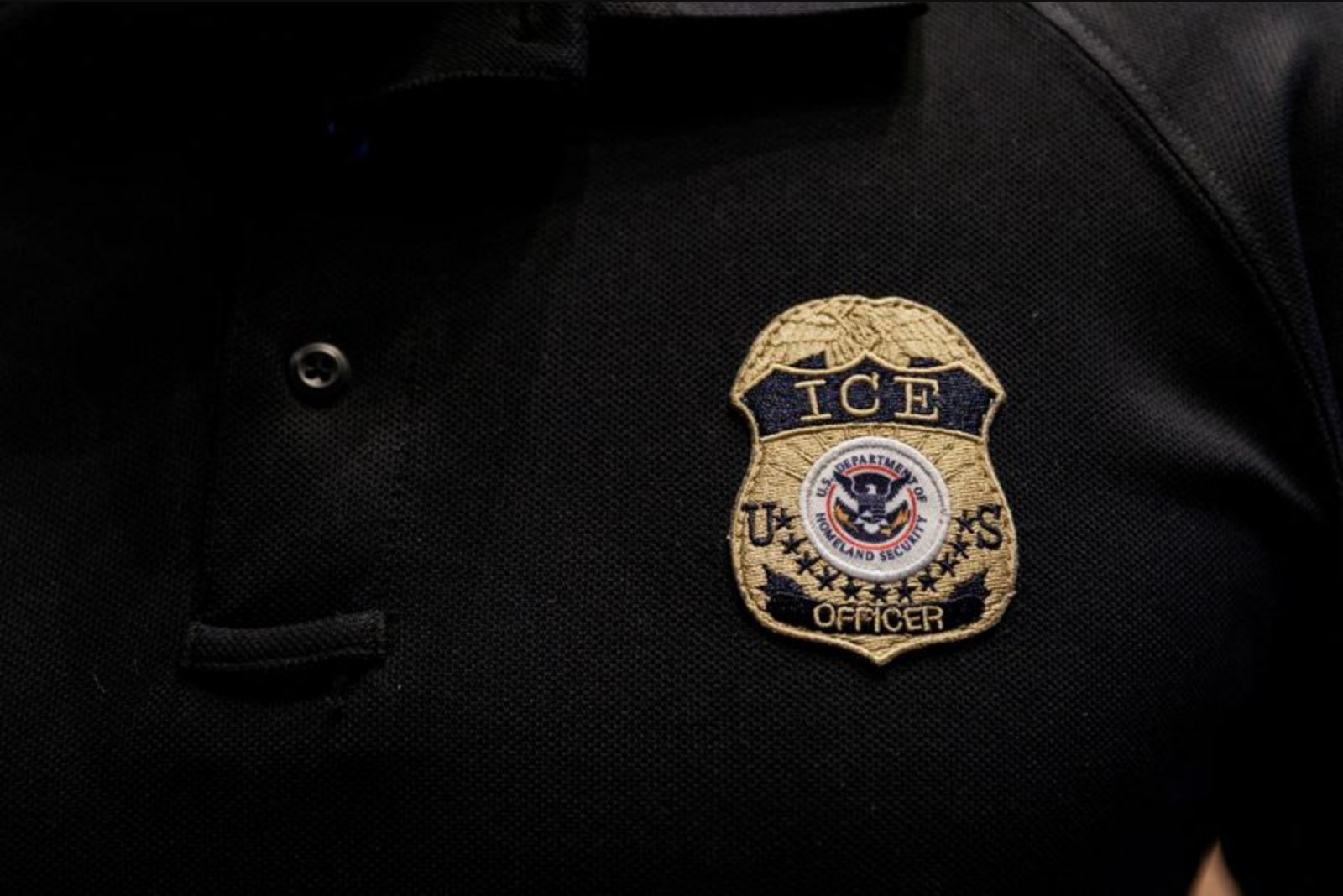
An internal U.S. Immigration and Customs Enforcement (ICE) email circulated on Thursday instructs investigative units across the country to prioritize a new "Birth Tourism Initiative," directing resources toward uncovering networks that allegedly aid pregnant foreign nationals in coming to the United States to deliver children who would receive U.S. citizenship at birth.
The initiative, as described in the email reviewed by Reuters, will concentrate on identifying fraud and organized facilitation that exploit lawful immigration channels to secure citizenship for newborns. The directive places Homeland Security Investigations (HIS), ICE's investigative branch, at the center of the operation.
The effort is consistent with the Trump administration's intensified campaign to reduce both legal and illegal immigration after the president took office in January 2025. The White House framed the initiative in security and fiscal terms; White House spokeswoman Anna Kelly said in a statement that, "Uninhibited birth tourism poses a tremendous cost to taxpayers and threatens our national security," and noted that most nations do not provide automatic citizenship at birth.
The Department of Homeland Security, ICE and the U.S. Department of Justice did not provide responses to requests for comment.
Federal law does not explicitly ban birth tourism, but a regulation enacted in 2020 during the president's first term bars using temporary tourist and business visas when the primary purpose of travel is to obtain U.S. citizenship for a newborn. Individuals found participating in birth tourism schemes may face prosecution for fraud or other related offenses under existing statutes and regulations.
There is no official government tally of how many foreign nationals travel to the United States explicitly to give birth, nor a comprehensive accounting of any taxpayer costs tied to those births. A 2020 analysis by the Center for Immigration Studies estimated that between 20,000 and 25,000 mothers traveled to the United States for that purpose during a one-year period spanning 2016-2017, though that organization advocates for lower levels of immigration.
By comparison, there were 3.6 million births in the United States in 2025, and authorities say births associated with birth tourism likely constitute only a fraction of total births.
Republicans have cited allegations of birth tourism as justification for efforts to narrow access to U.S. citizenship traditionally granted at birth under the Constitution. On his first day in office, the president issued an executive order directing federal agencies not to recognize the citizenship of children born in the United States when neither parent is an American citizen or a legal permanent resident. That approach marked a substantial departure from longstanding legal precedent.
Multiple federal judges issued injunctions blocking the executive order, and the legal dispute reached the Supreme Court, which heard oral arguments last week. Representing the administration, U.S. Solicitor General D. John Sauer argued that automatic citizenship had fostered "a sprawling industry of birth tourism," and said the promise of citizenship encouraged thousands of people from "potentially hostile nations" to travel to the United States to give birth, "creating a whole generation of American citizens abroad with no meaningful ties to the United States."
ICE's new initiative, led by Homeland Security Investigations, states it will advance efforts to safeguard the integrity of U.S. immigration and identification systems by focusing on fraudulent activities tied to birth tourism schemes. The internal email said HIS will work to disrupt "fraud, financial crimes, and organized facilitation networks that exploit lawful immigration processes."
How many actionable cases the operation may uncover is unclear. ICE emphasized fraud detection as a primary objective, but the agency did not offer an estimate of potential caseloads or the scale of networks it expects to find.
Prosecutors have pursued birth tourism cases in the past. In 2019, federal authorities charged more than a dozen people in what was described at the time as a scheme operating so-called "birth houses" in Southern California that catered to wealthy visitors from China. In that case, Chinese national Dongyuan Li pleaded guilty to federal charges linked to the operation and received a 10-month prison term; she was released in December 2019. Another defendant, identified as Chao "Edwin" Chen, was sentenced in 2020 to three years in prison but had already left the United States for China, according to ICE.
ICE's renewed focus on birth tourism places the agency in a visible role within the administration's wider immigration agenda. The initiative centers on enforcement and criminal investigations rather than changes to statutory citizenship rules, which remain the subject of ongoing litigation and high-court review.
Summary
ICE has launched a Birth Tourism Initiative, directing Homeland Security Investigations to pursue fraud and organized networks that allegedly facilitate pregnant foreign nationals coming to the U.S. to give birth and obtain citizenship for their children. The move dovetails with the Trump administration's broader push to limit immigration and follows a legal challenge to an executive order seeking to deny automatic citizenship to children born to non-citizen parents.
Key points
- The initiative targets networks and fraudulent schemes that allegedly assist pregnant visitors to obtain citizenship for newborns - primary agencies involved include ICE and Homeland Security Investigations.
- The administration links birth tourism to taxpayer costs and national security concerns; the regulation from 2020 already prohibits using tourist or business visas when the primary intent is to secure citizenship for a newborn.
- Legal challenges to executive actions on birthright citizenship are active - the Supreme Court recently heard arguments after lower courts blocked an executive order that sought to withhold citizenship in certain cases.
Risks and uncertainties
- Scope of the problem is unknown - there are no official federal figures quantifying how many visitors come to the U.S. specifically to give birth, making it difficult to estimate enforcement workload and associated costs; this uncertainty affects government planning and resource allocation.
- Ongoing litigation - court rulings and appeals related to the executive order on birthright citizenship create legal uncertainty that could influence policy direction and enforcement priorities; outcomes could alter administrative approaches or compel additional judicially mandated constraints.
- Enforcement effectiveness - it is unclear how many viable fraud prosecutions will emerge from the initiative, leaving questions about the initiative's ability to disrupt networks and the potential impact on immigration-related financial flows and services.