
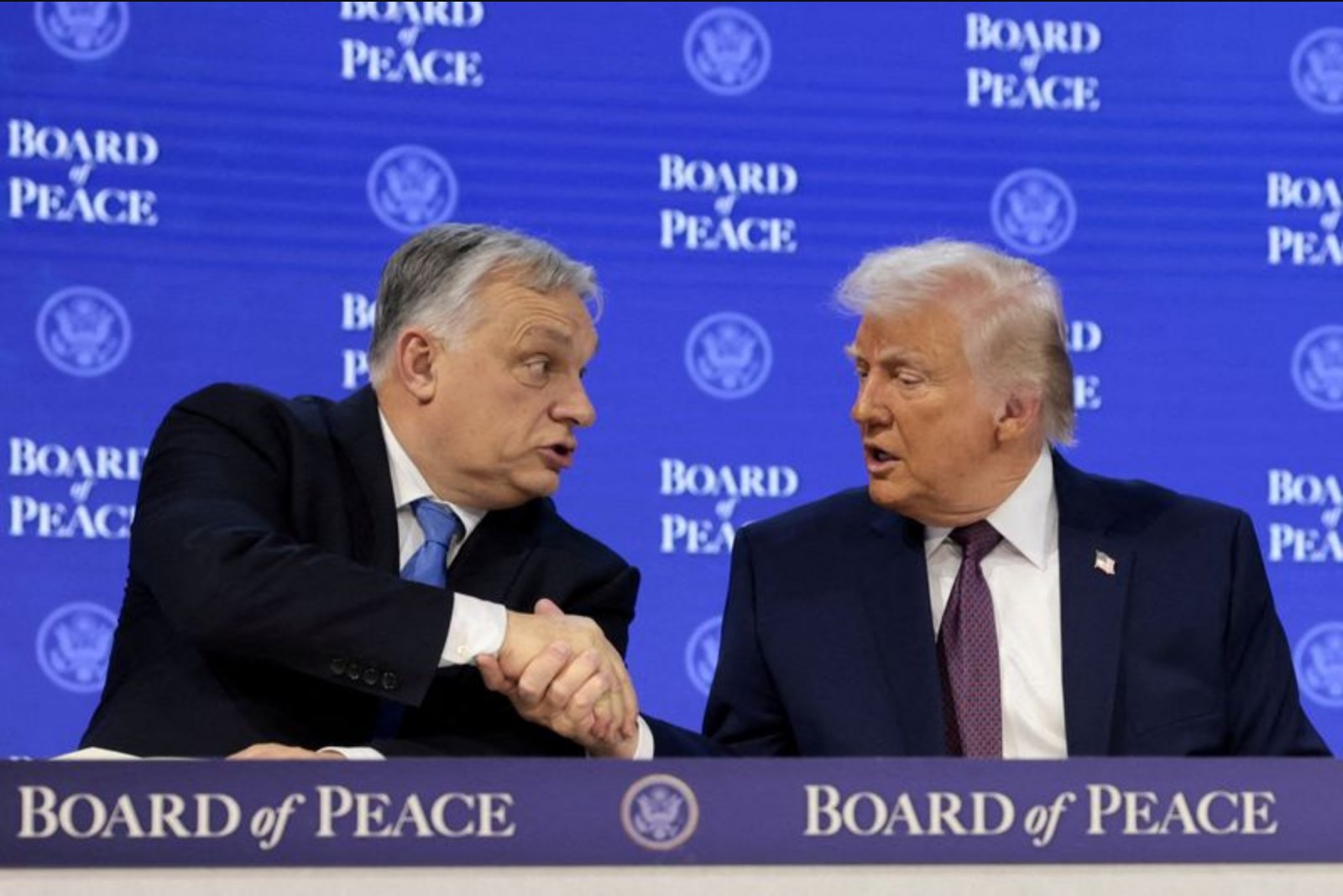
As Hungary approaches a parliamentary vote on April 12, the political scene has become a crucible for broader debates about the viability of a governance model championed by some on the American right. For years, U.S. conservatives have pointed to Prime Minister Viktor Orban as an example of a Western leader who can combine strict immigration controls, resistance to international institutions and a campaign against progressive social trends while retaining electoral support. That narrative now faces a severe test: after 16 years at the helm, Orban could be removed from office.
The potential defeat of Orban would have implications that extend beyond Hungary’s borders. If voters displace a leader who has promoted what he calls an "illiberal democracy" - a system critics say is characterised by strong nationalism and weakened checks on executive power - it could call into question whether that model can be sustained or replicated elsewhere.
Opinion polls indicate that Orban and his Fidesz party are confronting their toughest contest since the prime minister returned to power in 2010. In many independent surveys, the opposition centre-right Tisza party, led by Peter Magyar, holds an advantage. Magyar, 45, has built a campaign focused on both governance issues and everyday economic concerns. He has crisscrossed towns and villages, delivering speeches from a flatbed truck painted in the national colours - a vehicle that has become a signature of his campaign.
Magyar, a lawyer and a member of the European Parliament, has blamed corruption and democratic deterioration on Orban’s prolonged tenure. He has framed his campaign around improving living standards and public services, addressing low wages, rising food prices and the perceived decline of basic services. Those themes have resonated particularly with younger voters, who have demonstrated strong support for him. Observers attribute his electoral momentum to disciplined messaging and effective use of social media.
Orban, 62, has responded by presenting Magyar as a risky alternative who would align more closely with the European Union and potentially draw Hungary deeper into the Ukraine conflict. The prime minister has positioned himself as a bulwark against policies he says would draw Hungary away from its current posture, emphasising his opposition to providing support to Ukraine. Campaign materials across Budapest emphasise that portrayal, with Fidesz advertising Orban as "The Safe Choice."
Political analysts in Hungary point out that the effect of high‑profile endorsements from Washington is likely to be limited. Despite vocal backing from U.S. figures - including former President Donald Trump and planned visits from American conservatives - five analysts interviewed said domestic issues are shaping voter decisions. Cost of living concerns such as wages and food prices are dominating the public agenda and are expected to determine election outcomes more than external political endorsements.
Trump has publicly praised Orban, describing him as a powerful leader, and the Hungarian capital has hosted conservative gatherings that have drawn American figures interested in Orban’s political tactics. Orban’s rhetoric and policies echo aspects of the Trump era in the United States: a hardline stance on immigration, critical attitudes toward multilateral institutions, and confrontational approaches to media and civil society institutions. He was also the first European leader to endorse Trump during the 2016 presidential campaign.
During the Obama administration, Washington issued repeated warnings that Hungary’s institutions - including the judiciary, media and religious freedoms - were being undermined. Those criticisms diminished once Trump took office, and bilateral ties shifted. More recently, Hungary has aligned with Trump politically in some initiatives, including joining an effort described as a challenge to the United Nations’ traditional role.
Another dimension of Orban’s appeal to some on the American right is his willingness to confront the European Union. He has repeatedly taken positions at odds with the bloc, most notably opposing Ukraine’s bid for membership and maintaining close relations with Russia. Magyar has campaigned on a contrasting foreign policy pledge, promising to distance Hungary from Moscow and re‑anchor the country with Western partners.
Requests for comment from an Orban spokesperson went unanswered. In a prior interview, Magyar said the choice facing voters is between deeper integration with Europe and renewed development, or an extension of what he described as 16 years of decline under Orban.
Endorsements without equivalent financial backing
Support from American conservatives has been significant in tone but not matched by the kind of economic assistance that can shape market perceptions. On social media, Trump has lauded Orban for strengthening bilateral cooperation. The White House has characterised Orban as a respected and close partner, based on statements on the campaign trail and comments by White House officials.
However, Washington has not provided Hungary with a large economic package similar to the multibillion‑dollar support extended to another populist ally, Argentina, in the run‑up to its elections. Orban had publicly said he secured a U.S. agreement for a "financial shield" to protect Hungary’s economy following a White House meeting with Trump, but that claim was later denied by Trump. Secretary of State Marco Rubio, during a February 16 visit to Budapest, offered only general indications of potential assistance if Hungary faced economic strain.
Zsuzsanna Vegh, a Berlin‑based analyst at the German Marshall Fund, noted that the limited practical support from the United States might reflect uncertainty about Orban’s re‑election prospects. She suggested there may be constraints on what Washington is prepared to provide and a reluctance on the part of Trump to be seen backing a candidate who could lose. A White House spokesperson did not respond to a request for comment.
Electoral fairness and campaign environment
Observers have previously criticised the fairness of Hungary’s electoral environment. The last general election in 2022, which Orban won by a large margin, was judged free but not fair by monitors from the Organization for Security and Cooperation in Europe. Those observers pointed to pervasive state-funded advertising and media bias that gave Fidesz an advantage. Billboards and public advertising in Budapest remain heavily dominated by Fidesz messaging.
Legal changes enacted during Orban’s time in office have also affected the mechanics of translating votes into parliamentary majorities. Under new rules, Fidesz has been able to secure supermajorities while receiving less than half of the popular vote. That framework is part of the broader debate about democratic backsliding that Magyar emphasises in his criticism of the incumbent government.
Visits and conservative networks
The role of transatlantic conservative networks in Hungary’s political scene has been prominent in recent months. A planned visit by U.S. Senator J.D. Vance on April 7-8 underscores Orban’s significance within a network of leaders who share a broadly similar ideological frame. Earlier in March, Budapest hosted two conferences that attracted right‑wing politicians and activists from multiple countries.
CPAC Hungary - the local version of the Conservative Political Action Conference - convened on March 21 and included figures such as Argentina’s president Javier Milei, Alice Weidel of Germany’s Alternative for Germany, and two U.S. Republican congressmen, Russ Fulcher and Andy Harris. The event was closed to traditional media outlets. Speakers at the gathering aired public concerns about the election, reflecting a degree of unease in conservative ranks.
Conservative commentator Dave Rubin acknowledged a sense of "trepidation" among attendees. Representative Andy Harris warned against forces he described as seeking to undermine Christian values and urged Hungarians to take decisive action at the ballot box. Harris told Reuters that Orban’s leadership had helped pave the way for other right‑of‑center victories in Europe, but that those gains had also made Orban a target.
Two days after CPAC Hungary concluded, Orban met with leaders of at least 10 European far‑right parties, including Marine Le Pen and Geert Wilders. The coalition they established, Patriots for Europe, founded in 2024 by Orban and allied figures, has become the third‑largest group in the European Parliament. That alignment underlines Orban’s regional influence even as his domestic standing appears more precarious.
Polls, partisan analysis and campaign noise
Interpretations of polling data vary across the political spectrum. Pro‑Orban analysts argue that opposition‑friendly polls overstate the government’s difficulties and point to select surveys that show Fidesz with a lead. Zoltan Kiszelly, a pro‑government analyst, suggested that some U.S. conservative observers remain unconcerned about polling that paints Orban as trailing, arguing that Trump’s 2024 victory demonstrated the unreliability of conventional polling.
Kiszelly cited a survey by McLaughlin & Associates, a U.S. firm with experience working for conservative politicians, which he said showed Fidesz leading the Tisza party by six points. Most independent polls, however, portray a different picture and give an edge to Magyar. Kiszelly maintained that a margin like the one he referenced could allow Fidesz to continue governing either outright or in coalition with the far‑right Our Homeland party. Other polling aggregates indicate the opposition is more competitive and that the incumbent party is vulnerable.
Campaign tone and voter sentiment
Although Magyar’s platform includes conservative themes such as strict immigration policies, family values and nationalism - positions long associated with Orban’s rule - his messaging has emphasised domestic governance and tangible economic concerns. He campaigns under the slogan "Now or never," evoking urgency about the direction of the country and appealing to voters who want better wages and improved public services.
The closeness of the race is having visible effects on campaign events. Orban was jeered at a recent rally in the northwestern city of Gyor, a rare and striking breach of the controlled public appearances that have characterised much of his tenure. He later accused the hecklers of not supporting Hungarians, a response that underscores the heightened tensions on the campaign trail.
What is at stake
The outcome of the April 12 election will determine more than which party controls Hungary’s parliament. It will test whether a leader who has been showcased by some on the American right as a template for confronting global institutions and remaking democratic norms can retain public support when economic grievances and service decline are central voter concerns. The election will also influence Hungary’s foreign policy posture toward the European Union, Russia and the conflict in Ukraine, as the two main contenders present contrasting approaches.
While Washington’s symbolic endorsements have highlighted transatlantic ideological ties, practical economic support has been limited, and analysts say domestic factors will be decisive. Should Orban lose, the result could dampen the narrative that his model is easily exportable. Should he prevail, it would reaffirm his standing as a figure of influence for like‑minded politicians abroad.
Conclusion
Hungary’s vote is a focal point for broader debates about governance models within the Western conservative movement. With election day approaching, the contest pits Orban’s entrenched incumbency and international alliances against an opposition campaign emphasising everyday economic and public service concerns. The decision by Hungarian voters will send a clear signal about the resilience of Orban’s political project and its appeal beyond Hungary’s borders.