
Federal officials on Sunday reiterated their account of a fatal encounter between immigration agents and a U.S. citizen in Minneapolis, maintaining that the agents were forced to fire after being assaulted, even as bystander video footage inspected by Reuters appears to contradict key elements of the administration's narrative.
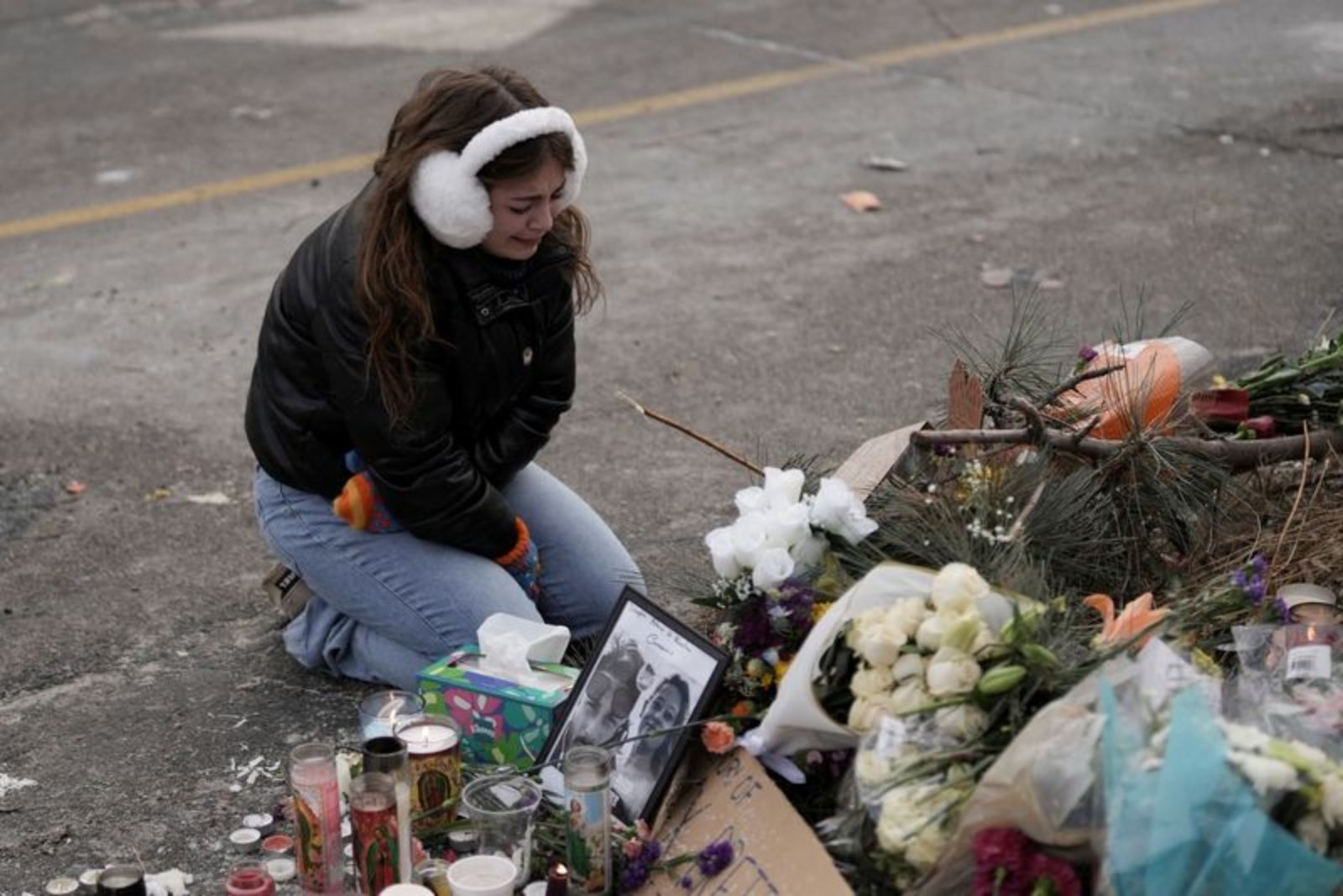
The shooting, which left 37-year-old Alex Pretti dead on Saturday, drew residents to a makeshift outdoor memorial of flowers and candles in freezing conditions. It also sharpened an already fraught standoff between local authorities and federal officers operating in the city.
Administration defense
Senior figures in the Trump administration described the episode as an instance in which agents were attacked and had to respond in self-defense. Gregory Bovino, Border Patrol commander-at-large, appearing on CNN's "State of the Union," emphasized that Pretti had a license to carry a gun and said the officers were victims, stating: "The victims are border patrol agents. Law enforcement doesn’t assault anyone." Bovino did not present evidence on the air that Pretti had attempted to impede a law enforcement operation.
Homeland Security Secretary Kristi Noem, on Fox News' "Sunday Briefing," repeated claims that Pretti had assaulted federal agents, participated in rioting and obstructed the officers. "We do know that he came to that scene and impeded a law enforcement operation, which is against federal law," Noem said. "It’s a felony. When he did that, interacting with those agents, when they tried to get him to disengage, he became aggressive and resisted them." Those assertions formed the basis of the administration's public explanation on Sunday.
Video evidence at odds with official account
Footage captured by bystanders and reviewed by Reuters shows a sequence that appears to differ from that official line. The videos depict Pretti holding a phone, not a firearm, as he moves to assist protesters who are being shoved to the ground by federal agents.
The clips begin with Pretti filming a federal agent push one woman and force another to the pavement. Pretti positions himself between the agent and the women, and raises his left arm to shield himself as an agent uses pepper spray. Several agents then grab Pretti, who struggles and is forced onto his hands and knees.
As agents pin him down, voices in the footage appear to shout a warning that a gun may be present. The video then seems to show an agent removing a firearm from Pretti and stepping away from the group while holding that weapon. Moments later, an officer with a handgun aimed at Pretti's back fires four shots in rapid succession. Additional gunfire follows as another agent appears to shoot at Pretti.
Questions about communication and conduct
Darius Reeves, the former head of ICE’s field office in Baltimore, told Reuters he found the apparent lack of coordination among federal agents troubling. "It’s clear no one is communicating to me, based on my observation of how that team responded," Reeves said. He noted that one officer seemed to have taken possession of Pretti’s weapon before Pretti was killed and pointed to officers scattering afterward as evidence of confusion. "The proof to me is how everyone scatters," he said. "They’re looking around, trying to figure out where the shots came from."
Minneapolis Police Chief Brian O’Hara told CBS' "Face the Nation" that "the videos speak for themselves," calling the administration's portrayal "deeply disturbing." He said he had seen no evidence that Pretti brandished a firearm.
Context of heightened tension in Minneapolis
City tensions were already elevated after another federal agent shot and killed U.S. citizen Renee Good on Jan 7. Federal officials have said she was attempting to ram an agent with her vehicle, a claim disputed by observers who say bystander video suggests she was trying to steer away from the officer who shot her.
Local authorities have reported being excluded from the federal investigation into Good's death, and that lack of participation remains a point of contention. Following Pretti's death, Minnesota U.S. Senator Amy Klobuchar told ABC's "This Week" that the federal surge of agents into Minneapolis was "completely out of control and out of balance," and she called for their withdrawal from the state. Klobuchar described the shooting of Pretti as "simply horrific."
Large protests have erupted in Minneapolis since Good's death, and demonstrations have spread to other cities. The article's reporting notes that rallies have been held in places including Los Angeles and Washington, D.C., led by Democratic politicians, in response to the federal deployments that began last year. On Sunday morning, the location where Pretti was killed was calm, though grief and anger were still visible in the community.
One woman in nursing scrubs, who said she had worked with Pretti, visited the memorial despite the cold, sobbing when asked why she had come. She declined to be identified, citing fear of potential retribution from the federal government. "He was caring and he was kind. None of this makes any sense," she said.
Legal actions and court orders
The shooting prompted immediate legal filings late Saturday, with state and local officials among those initiating suits. In response to a lawsuit filed by Minnesota's attorney general, the Hennepin County Attorney's Office and the Bureau of Criminal Apprehension, a U.S. district judge issued a temporary restraining order that bars federal officials from destroying or altering any evidence connected to the shooting. A full hearing on the matter is scheduled for Monday.
Separately, lawyers representing protesters in Minnesota requested that an appeals court reinstate a prior lower-court order that had barred violent retaliation by federal agents against demonstrators. Those attorneys cited Pretti's death and warned of the potential for renewed surges of people taking to the streets.
Political and public reaction
Federal officials have framed the deployment of immigration agents and National Guard troops to several cities as part of an effort to reduce crime and enforce immigration laws. The administration's public defense of its agents' actions in Minneapolis on Sunday, however, met with intense criticism from local leaders and some members of Congress who point to the bystander videos as evidence that contradicts the federal account.
The combination of visual evidence, conflicting narratives and an active legal response has amplified scrutiny of federal tactics in Minneapolis and elsewhere, and it has intensified debate about the role and oversight of federal law enforcement operating in jurisdictions run by local governments.
Reporting on this developing story included review of bystander video and statements made by federal and local officials during broadcast interviews on Sunday.