
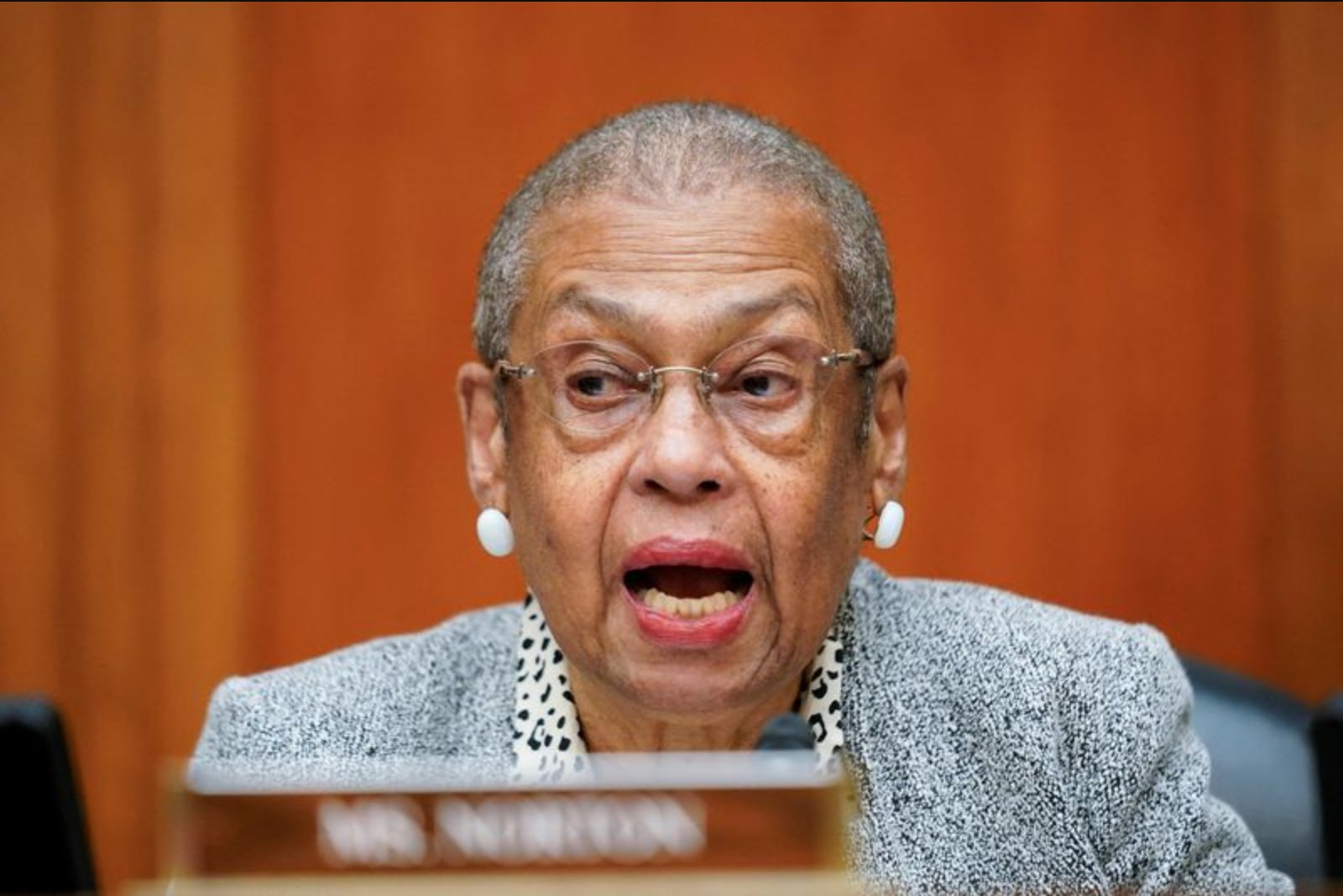
Eleanor Holmes Norton, long recognized for her advocacy on behalf of Washington, D.C., said on Tuesday she will leave Congress next year, concluding a tenure that centered on defending D.C. autonomy and resisting federal encroachment on the city.
Norton, 88, served as the District's non-voting delegate and built a reputation as a persistent voice for home rule in the face of repeated federal intervention. In announcing her decision, she said: "The privilege of public service is inseparable from the responsibility to recognize when it’s time to lift up the next generation of leaders," adding, "For D.C., that time has come."
Her retirement follows growing scrutiny in recent years about whether she remained able to carry out her duties as the oldest member in the House of Representatives. Those questions touched on concerns about both her fitness for office and her effectiveness representing the district.
Norton frequently clashed with Republicans in Congress over efforts to limit local authority. The article cited one notable policy clash last year when President Donald Trump pushed to federalize law enforcement in an effort to reduce crime - a move Norton opposed as part of a broader pattern of federal intervention that she resisted on behalf of the District.
The announcement comes as a sizable field of Democrats had already mobilized to challenge Norton if she sought another term. "A dozen or so" Democrats had launched campaigns to replace her, positioning a contested primary should she not choose retirement. Norton filed paperwork to terminate her campaign on Sunday, ahead of Tuesday's public statement.
The primary, scheduled for June 16, takes on heightened importance in this overwhelmingly Democratic district because the winner will be strongly favored in the November midterm election. While control of Congress is very much in play nationwide, the individual who represents D.C. cannot vote on final passage of legislation on the House floor, meaning the election of the District's delegate does not change the current balance of power in the chamber.
Republicans currently hold a 218-213 majority over Democrats in the House. Norton's departure will therefore shape the immediate contest for D.C.'s representation and the local political landscape, even as it leaves the chamber's overall voting arithmetic unchanged.
Context and implications
Norton's decision closes a chapter that began with her first election in 1990. Her long incumbency and singular role as a non-voting delegate made her a central figure in repeated debates over the District's governance and the limits of federal authority over local policy. With multiple Democrats already in the field, the primary outcome will determine who carries Norton’s mantle in Congress and who will advocate for D.C.'s interests in the years ahead.