
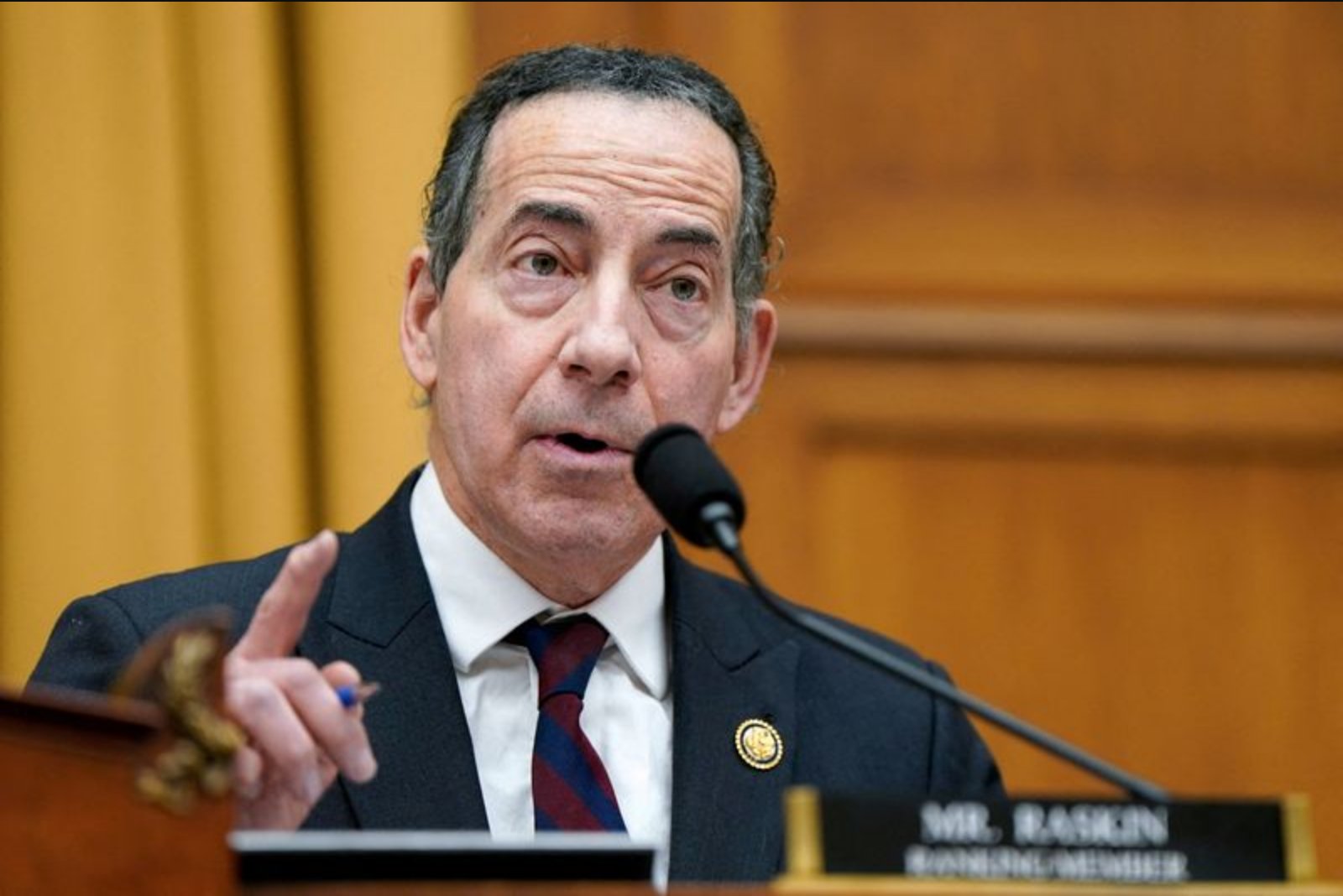
Representative Jamie Raskin of Maryland informed his House Democratic colleagues on Friday that he intends to file legislation creating a formal mechanism to address situations in which a president may be unable to fulfill the responsibilities of the office, a spokeswoman for the House Judiciary Committee said.
The measure, titled the "Commission on Presidential Capacity to Discharge the Powers and Duties of the Office," was originally introduced by Raskin when he served earlier on the committee during the prior presidential term. Raskin now holds the position of senior Democrat on the House Judiciary Committee and is reviving the proposal.
The plan emerges amid renewed debate among congressional Democrats about whether to pursue impeachment proceedings against President Trump, now serving a second term, or to seek activation of the 25th Amendment of the U.S. Constitution. That constitutional provision outlines a minimal process separate from impeachment for removing a president's power when they are judged unable to perform their duties.
Tensions within the Democratic conference have risen after recent comments and actions by President Trump. Earlier this week, Trump said "a whole civilization will die" in Iran unless its government agreed to allow ships to freely pass through the Strait of Hormuz, a remark that provoked widespread alarm and anger. Shipping through the Strait has been interrupted following Trump's decision to launch, along with Israel, a military attack on Iran that began on February 28.
Under the draft legislation, a 17-member bipartisan commission would be constituted if it is determined that the president cannot carry out the duties of the office because of a physical disability, mental deficiency, drug or alcohol use, or other conditions. The bill sets out the commission structure and the criteria under which it could be convened to evaluate presidential capacity.
Political prospects for the Raskin bill are limited in the current congressional environment. The House is controlled by Republicans, and Speaker Mike Johnson has been a prominent defender of President Trump. That alignment makes it unlikely the proposal will advance in the House. Separately, Republicans in both chambers have blocked Democratic efforts to pass a resolution aimed at ending the conflict with Iran, a measure described by lawmakers as not having been authorized by Congress.
President Trump faced two separate impeachment proceedings during his first term; both resulted in acquittal by a Senate controlled by Republicans. In the period since those proceedings, most Democrats have largely avoided pushing impeachment as a course of action. However, recent military operations in Iran and what some Democrats describe as the president's failure to articulate clear objectives for those actions have prompted a renewed conversation among many in the Democratic caucus about exploring removal options - a course of action that is not uniformly supported across the party.
Context and next steps: Raskin plans to reintroduce the commission bill to provide a statutory mechanism to evaluate presidential fitness. Given the partisan split in the House and support for the president from his party's leadership, the immediate legislative pathway for the proposal appears constrained.