
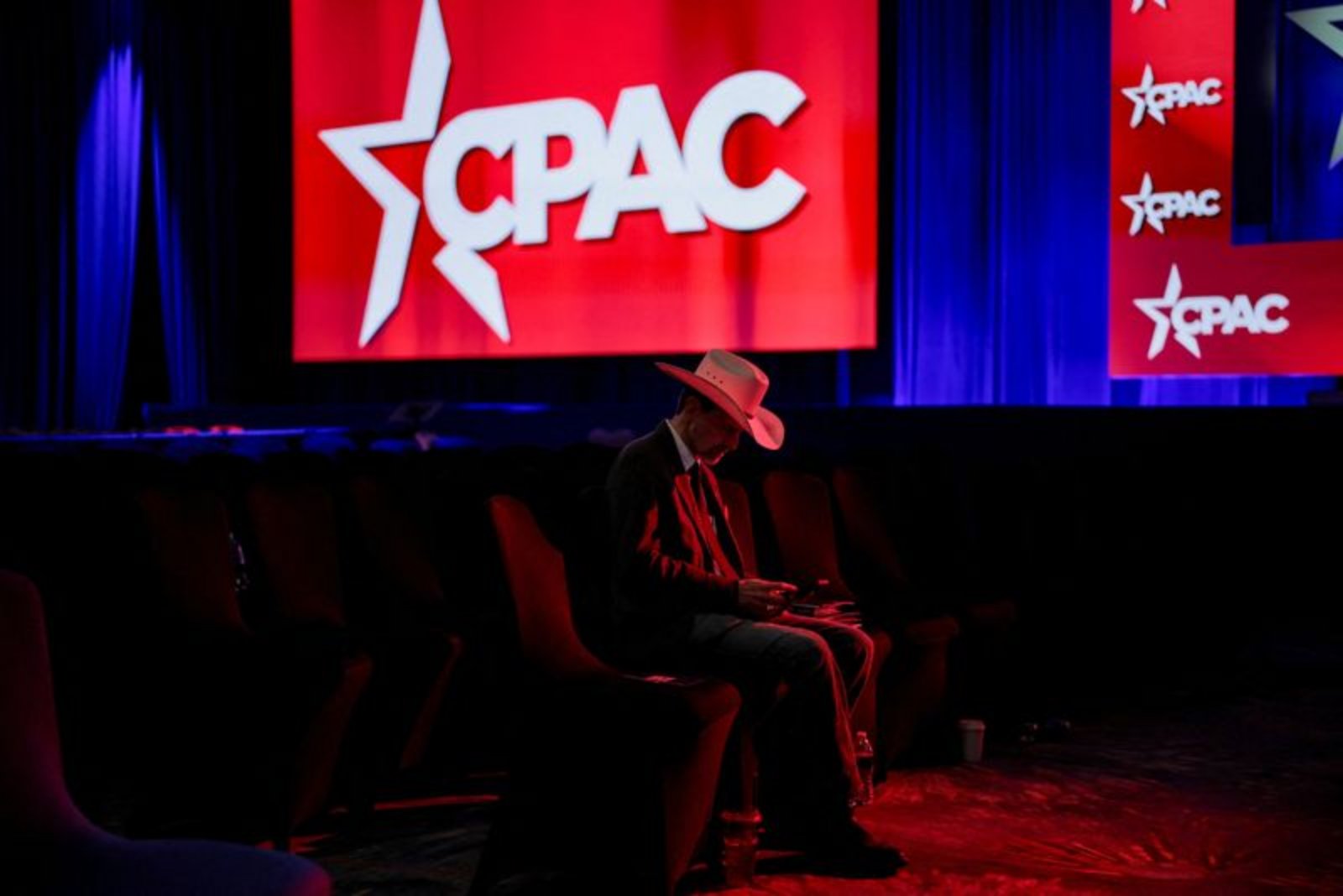
The annual Conservative Political Action Conference in Grapevine, Texas, provided a unified front among many Republicans on U.S. military strikes against Iran, with speakers and attendees largely endorsing President Donald Trump’s handling of the conflict. The tone at the gathering emphasized moral and strategic arguments for the strikes even as national opinion shows widening doubts and concern about the economic effects of the confrontation.
On the conference’s opening day, voices across the main stage and side events made the case that the strikes were justified. A mix of religious leaders, former administration aides and Iranian political activists addressed the crowd, arguing the attacks were necessary to confront Iran’s leadership and to support Iranians who have protested the regime. Support at CPAC ran counter to broader public skepticism about the war and the administration’s upbeat accounts of military progress.
CPAC senior fellow Mercedes Schlapp, who served as a senior adviser to Trump during his first term, framed the conflict as a fight for liberation during a session titled "MAGA vs. Mullah Madness." Quoting her remarks, Schlapp said, "The madness needs to stop. We’ve got to make Iran free again and we are going to make sure America stands strong by their side." She used a segment that highlighted two Iranians wounded by security forces in 2022 protests to press the moral case for the strikes.
Yet the conference’s consensus did not erase broader indicators of public uncertainty. Polling completed on Monday by Reuters/Ipsos found Trump’s approval rating at 36%, its lowest since he returned to the White House, a sign that the war has not solidified wider public support. Still, backing among Republicans for the strikes remains strong, with 74% of party respondents expressing support.
Organizers and speakers at CPAC largely avoided outright criticism of the military operation. That said, a handful of conservative figures voiced reservations. Former U.S. Representative Matt Gaetz warned that the United States was overly aligned with Israel’s interests, repeating a criticism he has raised previously. Such dissent was rare on the main stage.
Religious leaders offered a strongly pro-action perspective. Reverend Franklin Graham, a prominent evangelical voice, presented the strikes through a religious lens and argued they were necessary to protect Israel. He told the CPAC audience that the president had acted to shield Israel and the Jewish people from what he described as a nuclear threat posed by the Iranian regime, concluding, "Thank God for President Trump." Evangelicals, a key segment of Trump’s base, view Israel’s security as an issue of deep theological as well as political importance.
Conference-goers included dozens of Iranian-Americans, many carrying both Iranian and American flags to demonstrate support for the strikes. A group of Iranian-Americans planned an evening rally outside the venue to back Reza Pahlavi, the exiled son of Iran’s toppled shah, who has advocated for a transitional government in Iran and is scheduled to speak later in the conference. Pahlavi’s campaign for recognition has faced hurdles in securing formal backing.
Among attendees, Nima Poursohi, whose parents emigrated from Iran, wore a "Persians for Trump" T-shirt and described his presence at CPAC as an endorsement of military action. "It is time for this regime to go after 47 years," he said, adding that while "dropping bombs and military action is scary, living under an Islamic regime is a lot scarier."
Support for the strikes extended beyond the main program into ancillary events and broadcasts affiliated with the MAGA movement. Conservative journalist John Solomon highlighted the lethal effect of the strikes on Steve Bannon’s online program, while former actor Dean Cain praised U.S. military strategy during a live recording of his MAGA-aligned podcast.
Personal testimonies from Iranian activists resonated with some attendees. Mersedeh Shahinkar and Raheleh Amiri, who said they had been shot by security agents during 2022 protests, spoke to the CPAC crowd about their experiences. Frederick and Carol Kurpiel, both 79, said they were moved by those accounts. Carol Kurpiel remarked that she was glad about the death of the Iranian Supreme Leader and said, "His death made me happy." The remark referenced Ayatollah Ali Khamenei.
Despite the strong backing at CPAC, the broader political environment is more fraught. The war and rising fuel prices have contributed to voter unease that could imperil the Republican Party’s narrow majorities in both the Senate and the House of Representatives in November. Many Americans report uncertainty about the rationale for the conflict and express skepticism about the administration’s assessments of military progress, increasing political pressure on the president to consider an exit from the campaign that has disrupted markets.
The gathering illustrated a contrast between the Republican base represented at CPAC and the national mood. While the party’s core supporters maintained firm backing for the strikes, the conference underscored the challenge Republican leaders face in translating that base energy into broader electoral stability amid concerns about the conflict and its economic side effects.
Summary
At CPAC in Grapevine, Texas, many Republican speakers and attendees publicly supported recent U.S. strikes on Iran and backed President Donald Trump, despite national polling that shows eroding approval and widespread uncertainty about the conflict and its economic fallout. Religious leaders, former advisers, Iranian activists and Iranian-American attendees made the case for sustained military pressure, while a few conservative figures urged caution.
Key points
- CPAC speakers and many attendees largely endorsed U.S. strikes on Iran and aligned with President Trump on the issue, presenting moral and strategic arguments for the action.
- Nationally, the conflict has driven voter unease and contributed to a decline in the president’s approval rating to 36% per a Reuters/Ipsos poll; the war and higher fuel prices are cited as factors that could affect the Republican Party’s hold on narrow congressional majorities.
- Sectors likely affected by the conflict and public reactions include energy - given rising fuel prices and market volatility - and defense, where military operations and rhetoric can influence industry and investor sentiment.
Risks and uncertainties
- Political risk: Continued voter unease about the war and its costs could jeopardize the Republican Party’s chances of retaining slim majorities in Congress, affecting fiscal and legislative agendas.
- Economic risk: Rising fuel prices tied to the conflict have the potential to further rattle consumers and markets, creating headwinds for growth-sensitive sectors.
- Information risk: Public uncertainty about the rationale for the conflict and skepticism of official assessments raise the prospect of increased political pressure on the administration to change course, which could in turn alter geopolitical and market dynamics.