
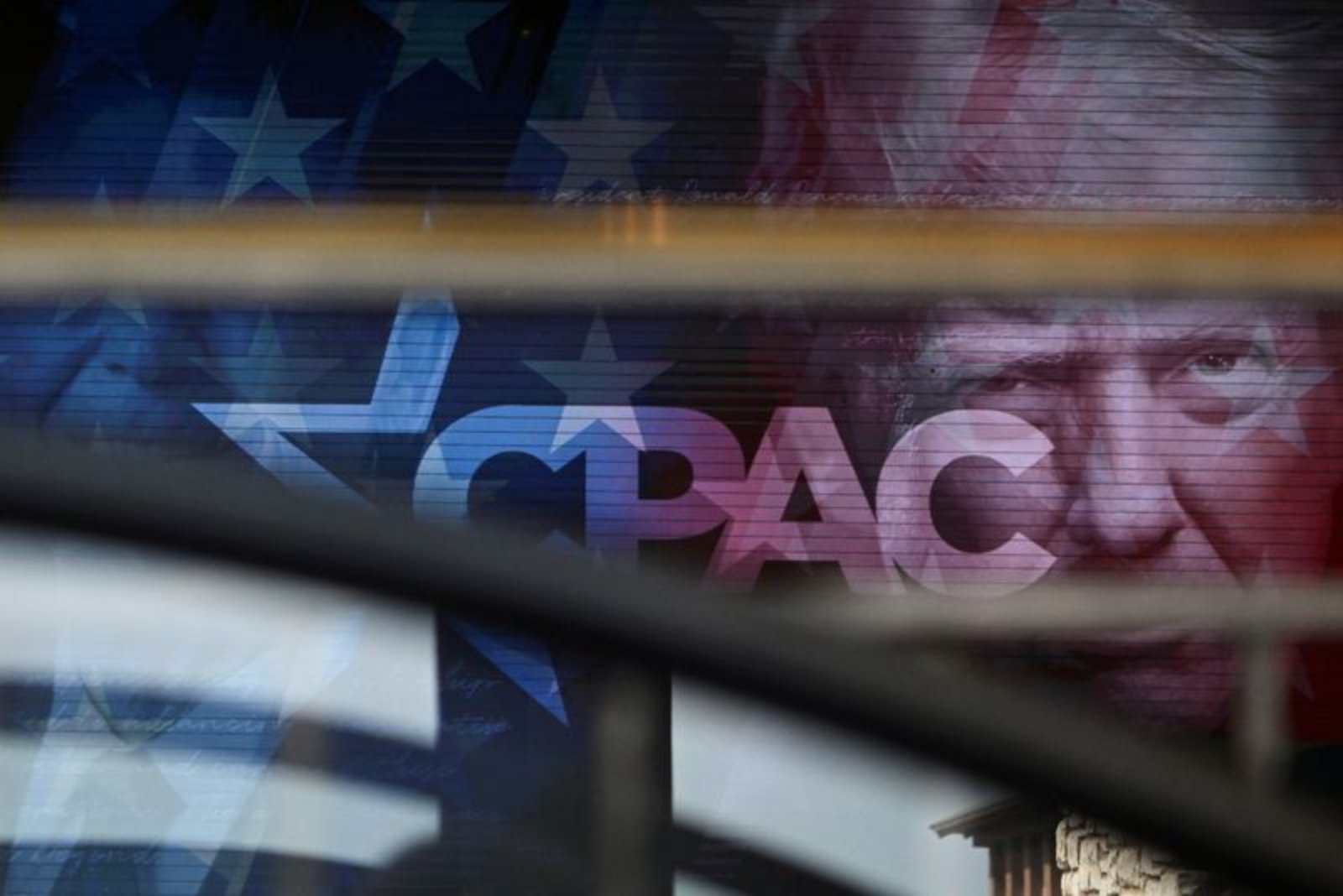
The Conservative Political Action Conference (CPAC) opened this week just outside Dallas, with its chairman saying the event will focus on reining in internal Republican disputes that he warned could weaken the party’s prospects in the November midterm elections.
CPAC, kicking off on Thursday and running through Saturday, arrives at a fraught political moment. Organizers say they are concerned that visible divisions within the Make America Great Again movement could hurt efforts to retain control of narrow majorities in both the Senate and the House of Representatives. Historically, the president’s party faces headwinds in midterm cycles, a dynamic that Republican strategists and CPAC leadership say underscores the need for cohesion.
"If some of the luminaries of MAGA are all at each other’s throats in a kind of continued disunity, I think that could be devastating in the midterm elections," CPAC chairman Matt Schlapp told Reuters in an interview. He added the conference is intended in part to help the party "pull together to get the right guys elected and hold on to the majorities."
Organizers are confronting a range of voter concerns that they say are deepening fissures within the conservative movement. Those concerns include a spike in gasoline prices linked to U.S. strikes on Iran, broader inflationary pressures, and unease about the U.S. response to conflict in the region. Some prominent MAGA-aligned voices have publicly disagreed with former President Donald Trump over the Iran conflict, characterizing recent actions as a departure from his 2024 campaign promise to end U.S. participation in "forever wars." The handling of the Jeffrey Epstein files has also been a point of contention among leading figures.
Trump is not scheduled to attend this year’s CPAC, marking his first absence from the conference in a decade as he contends with fallout from a military confrontation the U.S. and Israel launched against Iran nearly four weeks ago. The former president’s approval rating has recently dipped to 36%, its lowest point since his return to the White House, according to a Reuters/Ipsos poll completed on Monday cited by organizers and attendees. Conference leaders say that decline, together with rising fuel costs and public unease about the war, heightens the urgency of presenting a unified Republican front.
The speaker lineup underscores CPAC’s intent to highlight active political operatives and officials rather than only commentators. The program includes several figures from the administration: Health Secretary Robert F. Kennedy Jr., Deputy Attorney General Todd Blanche, and Federal Communications Commission member Brendan Carr. Elected officials and conservative influencers slated to speak include Senator Ted Cruz of Texas, former Trump adviser and podcaster Steve Bannon, and online content creator Nick Shirley, who became prominent after posting cellphone videos in December that purported to expose fraud at Minnesota day care centers.
CPAC has continued its push to broaden its international reach. Poland’s nationalist president, Karol Nawrocki, and Brazilian Senator Flavio Bolsonaro, who is challenging President Luiz Inacio Lula da Silva in this year’s election, are set to appear, highlighting the conference’s interest in featuring conservative figures with global profiles.
This year’s theme, "action over words," reflects an emphasis on speakers who are actively engaged in efforts to elect Republicans or to advance conservative causes rather than merely offering commentary online, Schlapp said. The approach aims to elevate those taking concrete steps in political organizing and campaigning.
Observers note the event’s speaker roster also reflects the party’s current dynamics. John K. White, professor emeritus at The Catholic University of America, said the absence of speakers likely to criticize Trump underscores how tightly the party remains aligned behind him. "It seems to me that they are engaged in a kind of politics of comfort," White said. "They’re isolating themselves in a way that prevents the party, in a lot of ways, from moving forward to being a majority party in the country."
CPAC will stage a straw poll for the 2028 presidential field on Saturday. Organizers point to last year’s results in Oxon Hill, Maryland, as illustrative of the conference’s influence: J.D. Vance led the poll with 61% of the vote, followed by Steve Bannon at 12% and Florida Governor Ron DeSantis at 7%. Secretary of State Marco Rubio captured 3% of the vote last year but has increased his profile during Trump’s second term, according to attendees and participants.
Speakers and highlights
- Administration figures: Health Secretary Robert F. Kennedy Jr., Deputy Attorney General Todd Blanche, FCC member Brendan Carr.
- Notable conservative figures: Senator Ted Cruz, Steve Bannon, influencer Nick Shirley.
- International guests: Karol Nawrocki of Poland and Brazilian Senator Flavio Bolsonaro.
As CPAC convenes, its leadership is hoping to convert rhetorical unity into electoral results - in particular, by supporting candidates who can help the Republican Party defend its slim congressional majorities this November. The conference’s mix of administration officials, high-profile conservative influencers, and international speakers is intended to reflect a movement focused on political action amid a fraught policy environment marked by conflict abroad and economic pressures at home.