
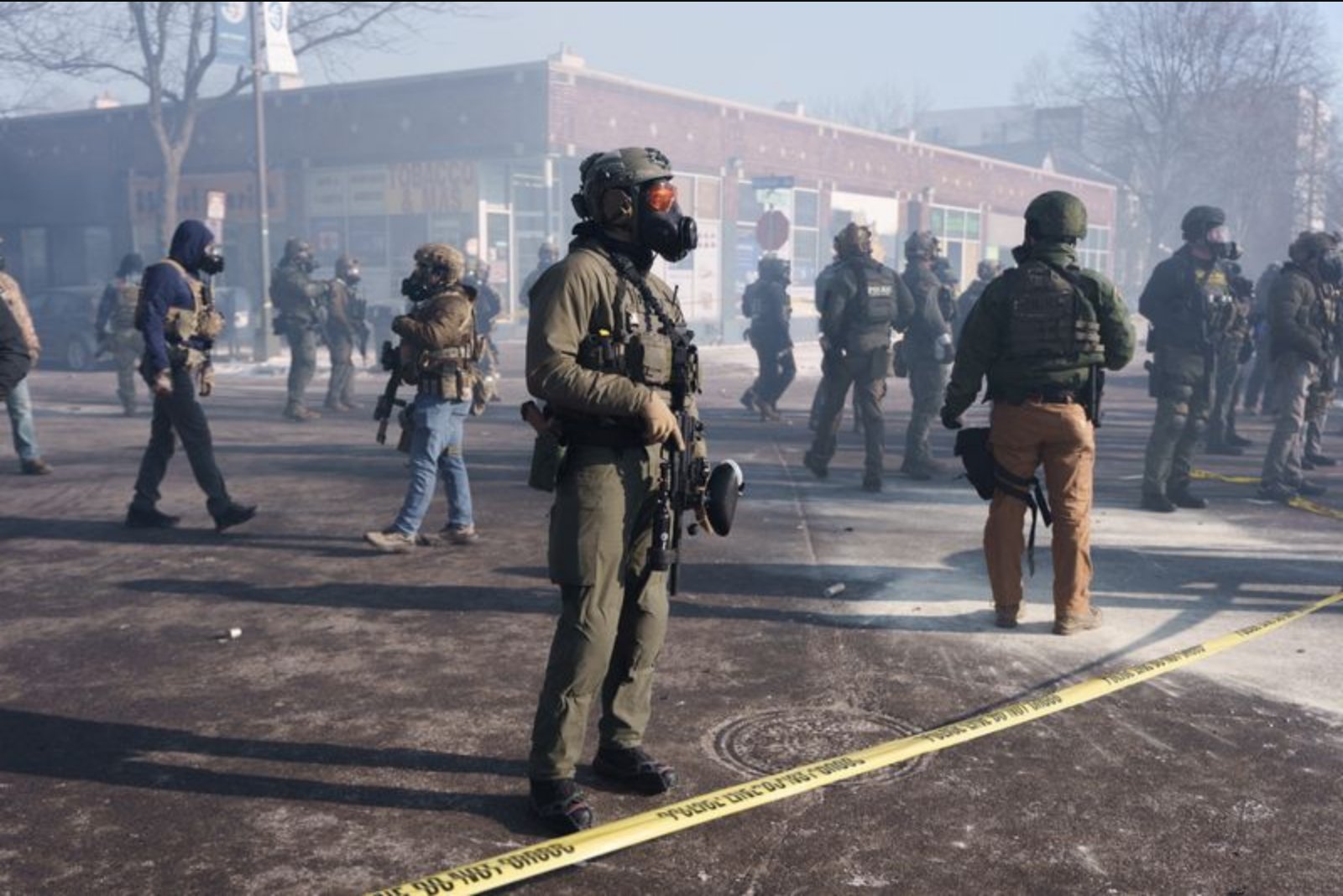
Washington - The administration of President Donald Trump moved last year to slow the expansion of body-worn cameras for immigration officers and significantly pared back internal oversight staffing even as it surged agents into Minneapolis and other cities, according to agency records and public accounts.
Footage captured by bystanders of at least two fatal shootings of U.S. citizens, including a recent incident in which an intensive care unit nurse was killed, has underscored how video footage can challenge official narratives that describe the deceased as the initial aggressors. Advocates and reformers have long said that cameras are central to improving transparency in law enforcement.
Despite that, the administration took steps in 2025 and in its 2026 budget request to slow and shrink a pilot program to equip U.S. Immigration and Customs Enforcement (ICE) officers with body cameras. In June, the administration urged Congress to cut the pilot’s funding by 75%, a move that bucked a broader trend of expanding camera use across law enforcement agencies.
Officials also placed nearly all staff assigned to three internal watchdog offices within the Department of Homeland Security (DHS) on paid leave early in 2025 as thousands of federal agents were redirected to support immigration enforcement operations. That personnel action left the oversight offices with only a handful of employees and diminished their capacity to handle complaints and investigate alleged abuses.
Pilot program rollout and funding changes
ICE initiated a body-camera pilot in 2024 and deployed cameras to officers in five cities: Baltimore, Buffalo, Detroit, Philadelphia, and Washington, D.C. The administration retained the program but requested a halt to its expansion and a substantial reduction in funding in the fiscal 2026 budget submission.
The budget proposal sought to maintain roughly 4,200 ICE body-worn cameras but reduce the program’s dedicated staff from 22 people to three, saying the program would be run in a more "streamlined" fashion. DHS has described ICE’s officer count as approximately 22,000, while a federal workforce database indicates a smaller number.
Separately, U.S. Customs and Border Protection (CBP), the parent agency of Border Patrol, had about 13,400 cameras available for roughly 45,000 officers as of June, according to a congressional aide. A homeland security spending bill approved last week by the Republican-controlled House rejected the administration’s staffing cuts and instead allocated $20 million for cameras for ICE and Border Patrol. That bill, however, does not require the agencies to activate or use the devices and faces a difficult path in the Senate.
Operational issues when officers are surged
Officials and former agency staffers say the portability and availability of cameras can become problematic when officers are detailed to locations outside their usual areas of operations. Scott Shuchart, who served as a top ICE official under President Biden, noted that officers often do not take their assigned cameras when they are sent to other jurisdictions, a practical issue that has become more acute amid frequent deployments.
In the recent Minneapolis incident, a Reuters review of verified video showed that at least three of the eight or more Border Patrol agents present were wearing body cameras. Reuters was not able to determine from the footage whether the cameras were activated or whether agents involved in the physical encounter were wearing them at the moment of the shooting.
Oversight offices curtailed
In early 2025, the administration placed approximately 300 employees across three DHS oversight offices on paid leave while redirecting federal agents to support its enforcement surge. Critics, including Democrats and civil rights groups, said the action effectively undermined the watchdogs' ability to investigate misconduct.
A lawsuit filed over the staffing reductions contends the administration effectively eliminated the oversight offices without Congress doing so and left detainees and others with no adequate avenue to report and address abuses. In May, a career civil servant, Ronald Sartini, was assigned to lead roles at three of the oversight bodies, including the office responsible for handling allegations of abuse in immigration detention.
By December, each office retained only a few employees. The Office of the Immigration Detention Ombudsman (OIDO) had three full-time staff and two detailees, down from more than a hundred employees in March. Court documents show that OIDO received more than 11,000 in-person complaints and 282 web complaints in 2023; between March and December of 2025, it recorded a total of 285 complaints.
Public rhetoric and political response
When ICE or Border Patrol officers have been involved in violent incidents, including fatal shootings of U.S. citizens Renee Good and Alex Pretti in Minneapolis, senior administration officials have frequently characterized the deceased as aggressors rather than calling for comprehensive independent investigations.
White House spokeswoman Abigail Jackson defended agency personnel in response to questions, saying ICE officers "act heroically to enforce the law and protect American communities." She added, "Anyone pointing the finger at law enforcement officers instead of the criminals is simply doing the bidding of criminal illegal aliens."
White House senior staff have amplified that tone. Stephen Miller, the White House deputy chief of staff and architect of the administration’s immigration agenda, called Alex Pretti a "domestic terrorist" and a "would-be assassin" in social media posts made hours after Pretti was fatally shot by a Border Patrol agent.
The shooting has prompted some Democratic senators to say they will oppose a spending bill to fund DHS unless Congress imposes new limits on immigration enforcement activities.
Legal and oversight challenges
Critics and legal filings argue that the staffing reductions and the shift in resources have left oversight mechanisms weakened at a moment when large numbers of federal agents are being deployed around the country. The lawsuit claims the move left no correctable path for complaints, while public records show oversight offices received dramatically fewer complaints after the staffing changes compared with earlier years.
DHS did not immediately reply to requests for comment on the staffing and camera program matters.
What is known and what remains unclear
- The administration requested steep cuts to funding and staff for ICE’s body-camera program in its FY2026 budget proposal while preserving a limited number of cameras already deployed.
- Oversight offices saw large reductions in on-duty staff after hundreds of employees were placed on paid leave in early 2025, leaving only a few employees in each office by December.
- Verified bystander video shows some Border Patrol agents at the Minneapolis scene were wearing body cameras, but it is not possible from the video to confirm whether cameras were active during the shootings.