
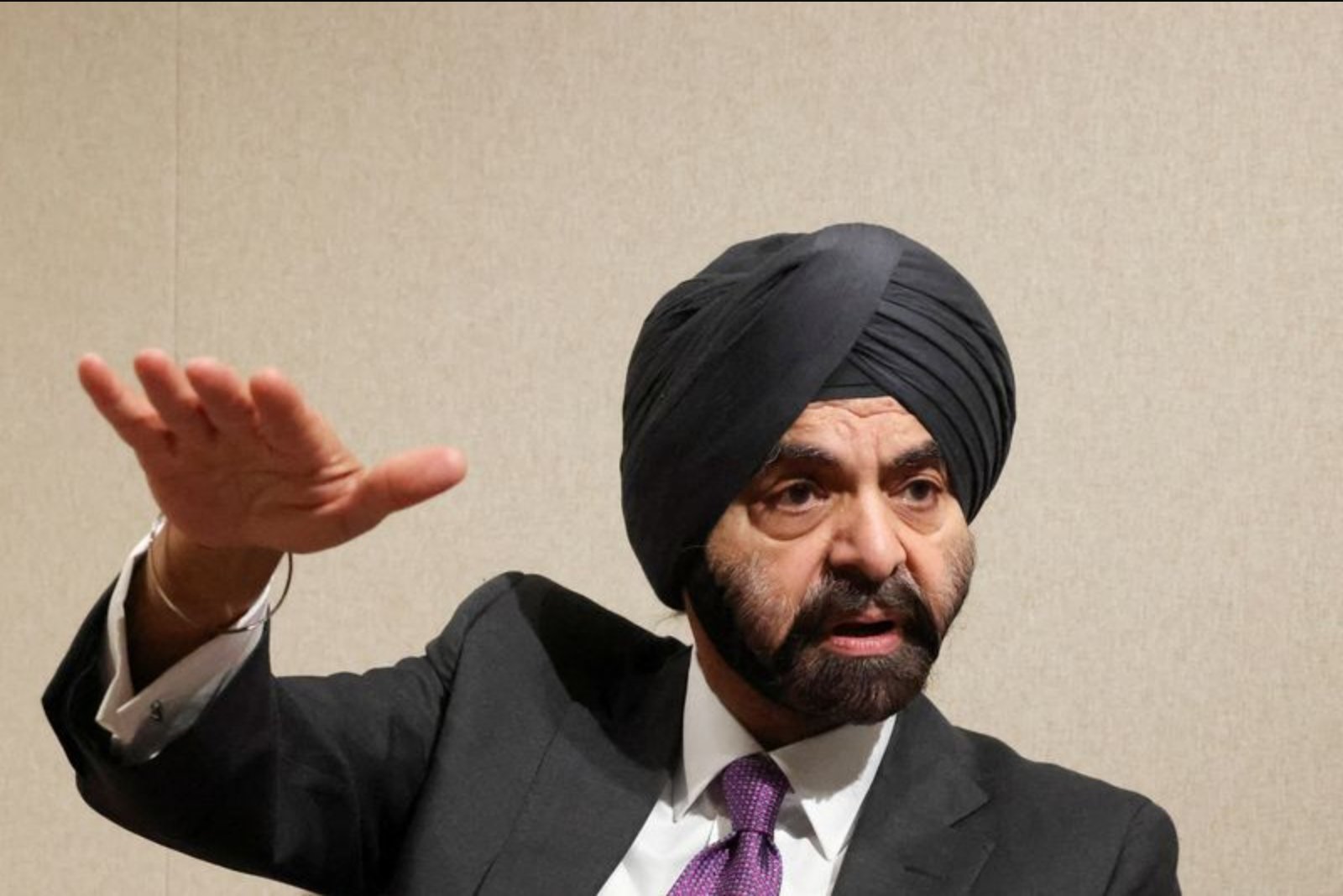
World Bank President Ajay Banga said the ongoing war in the Middle East will produce some degree of weaker global growth and higher inflation, irrespective of the speed with which the conflict is resolved.
Speaking at an event hosted by the Atlantic Council, timed ahead of next week's meetings of the World Bank and the International Monetary Fund, Banga said the World Bank has mechanisms that allow it to move funds rapidly to countries affected by the hostilities. He noted the institution used similar crisis windows to quickly disburse billions of dollars during the height of the COVID-19 crisis.
The magnitude of the economic hit, Banga said, will hinge on how severely and for how long energy markets are disrupted. A quick resolution, he said, would permit some normalization within a few months, while a protracted disruption could stretch effects out to six to eight months.
Banga set out potential effects on headline growth and inflation using the World Bank's baseline before the conflict as a reference point. He said the world was on track for probable GDP growth of 2.83% before the recent fighting. From that starting point, he estimated the conflict could shave between 0.3% and 0.4% off global growth in a baseline scenario, and could reduce growth by more than 1 percentage point if disruptions are longer and more severe.
On prices, he said inflation could be pushed up by as much as 0.9 percentage points as a result of the conflict.
Banga said finance ministers and central bankers gathering in Washington were expected to talk about how the World Bank and the IMF could assist countries that are suffering from higher energy costs and supply chain interruptions stemming from the war. He highlighted the World Bank's crisis response windows - provisions within World Bank rules that let countries request quick access to 10% of undisbursed funds from previously approved programs.
Using those crisis windows, Banga said countries hit by the conflict could potentially obtain around $30 billion over the next two to three months, and that up to $70 billion could be made available over a six-month period.
At the same time, he warned policymakers that responding to price shocks by expanding subsidies could exacerbate fiscal strain. Banga urged caution so that short-term support measures do not create larger fiscal problems in later years.
The World Bank chief's remarks framed the immediate policy challenge as twofold: deploy timely financial support where needed, while avoiding measures that would deepen fiscal vulnerabilities over time. The ultimate scale and timing of the macroeconomic impact, he said, will depend on how energy market disruptions evolve and how long they persist.