
Economy March 29, 2026

White House Weighs Plan to Remove Iran’s Uranium by Force, Officials Say

President Trump reviews a risky military option to seize nearly 1,000 pounds of uranium as hostilities in the region continue into a fifth week

By Caleb Monroe
White House Weighs Plan to Remove Iran’s Uranium by Force, Officials Say

U.S. officials say President Trump is considering a military operation to extract roughly 1,000 pounds of uranium from Iran but has not decided, citing concerns over risk to American personnel. The proposal is part of broader U.S. and Israeli efforts to prevent Tehran from advancing a weapons program amid escalating regional conflict.

Key Points

  • President Trump is evaluating a military option to remove nearly 1,000 pounds of uranium from Iran but has not approved any operation due to concerns about risks to U.S. personnel.
  • Mr. Trump has asked advisers to pursue Iran’s voluntary surrender of the uranium as a condition for ending the conflict; the U.S. and Israel continue to frame actions as aimed at curbing Tehran’s nuclear capabilities.
  • The article reports continued hostilities that have entered a fifth week, including air strikes last year that targeted Iranian nuclear sites and recent involvement by the Yemen-based, Iran-backed Houthi group; roughly 3,500 U.S. troops were moved aboard the USS Tripoli.

U.S. officials told the Wall Street Journal that President Donald Trump is weighing a plan to undertake a military mission to seize nearly 1,000 pounds of uranium from Iran, though no decision has been reached.

According to those officials, Mr. Trump remains broadly receptive to the proposal but has paused on authorizing any operation because of the potential danger it could pose to U.S. service members. The consideration of a direct extraction reflects the continued emphasis by Washington and its partners on blocking Tehran’s path to a nuclear weapon.

The reported plan to remove Iran’s uranium would be technically complex and fraught with risk, the officials said, and could generate sharp retaliation from Tehran if carried out. That risk is one of the factors weighing on the president’s decision.

Officials also told the newspaper that Mr. Trump has instructed advisers to press Iran to surrender the material as a condition for ending the current hostilities. The leadership in Washington and in Jerusalem have framed their recent operations as part of a campaign aimed at curbing Iran’s nuclear capabilities.

Last year, coordinated air strikes by the U.S. and Israel targeted Iranian nuclear facilities at a time when Iran was thought to possess over 400 kilograms of 60% highly enriched uranium and nearly 200 kilograms of 20% fissile material. Those strikes and the possible extraction under discussion are presented by U.S. and Israeli officials as linked efforts to deny Tehran key nuclear material.

Fighting in the region has continued with little sign of de-escalation. The conflict entered its fifth consecutive week, and new participants have emerged: the Yemen-based, Iran-backed Houthi group has begun attacks against Israel, while Iran has warned the United States against planning a ground invasion.

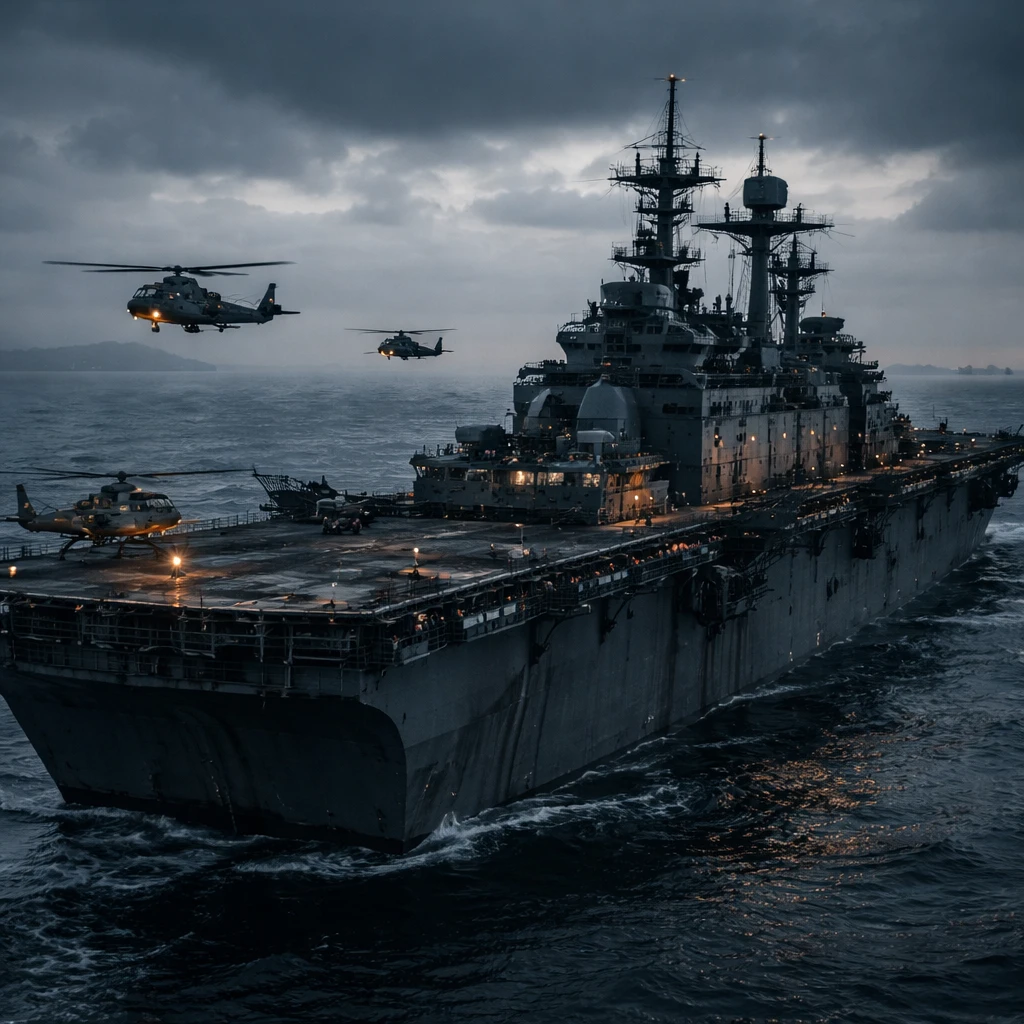
U.S. forces were reported to be moving roughly 3,500 troops into the Middle East over a recent weekend, transporting personnel aboard the USS Tripoli warship, according to the reporting cited by officials.


Summary

President Trump is reportedly considering a military operation to extract nearly 1,000 pounds of uranium from Iran. He has not authorized the mission, citing concerns about risks to U.S. troops, and has also urged advisers to seek Iran’s surrender of the material as part of ending hostilities. The consideration comes amid continued strikes and tensions involving the U.S., Israel, Iran and Iran-backed groups, and troop movements including roughly 3,500 U.S. forces aboard the USS Tripoli.

Risks

  • A direct operation to extract Iran’s uranium would be complex and risky and could provoke strong retaliation from Tehran - this risk is explicitly cited in the reporting. (Affected areas noted in the article include military forces and regional security.)
  • The potential danger to U.S. troops is a principal reason a decision has not been made; troop safety and force protection are explicitly described as considerations. (Implications for military deployment and defense planning are noted in the article.)
  • Hostilities show few signs of easing and have broadened geographically, with the Houthi group joining attacks and Iran warning against a ground invasion; these developments introduce additional uncertainty for military operations. (The article links these developments to continued regional tensions.)

More from Economy

Dollar Strengthens as Fears of Prolonged Middle East Conflict Weigh on Risk Appetite Mar 29, 2026 Trump Says Direct Talks With Iran Are Underway; Says a Deal Could Be Near Mar 29, 2026 BOJ Officials Weighed Additional Rate Increases as Oil Shock Raises Inflation Risk Mar 29, 2026 Senate Banking Committee Eyes April 13 Hearing for Warsh Fed Nomination Mar 29, 2026 Villeroy: ECB Prepared to Act on Energy-Driven Inflation but Timing Remains Premature Mar 29, 2026