
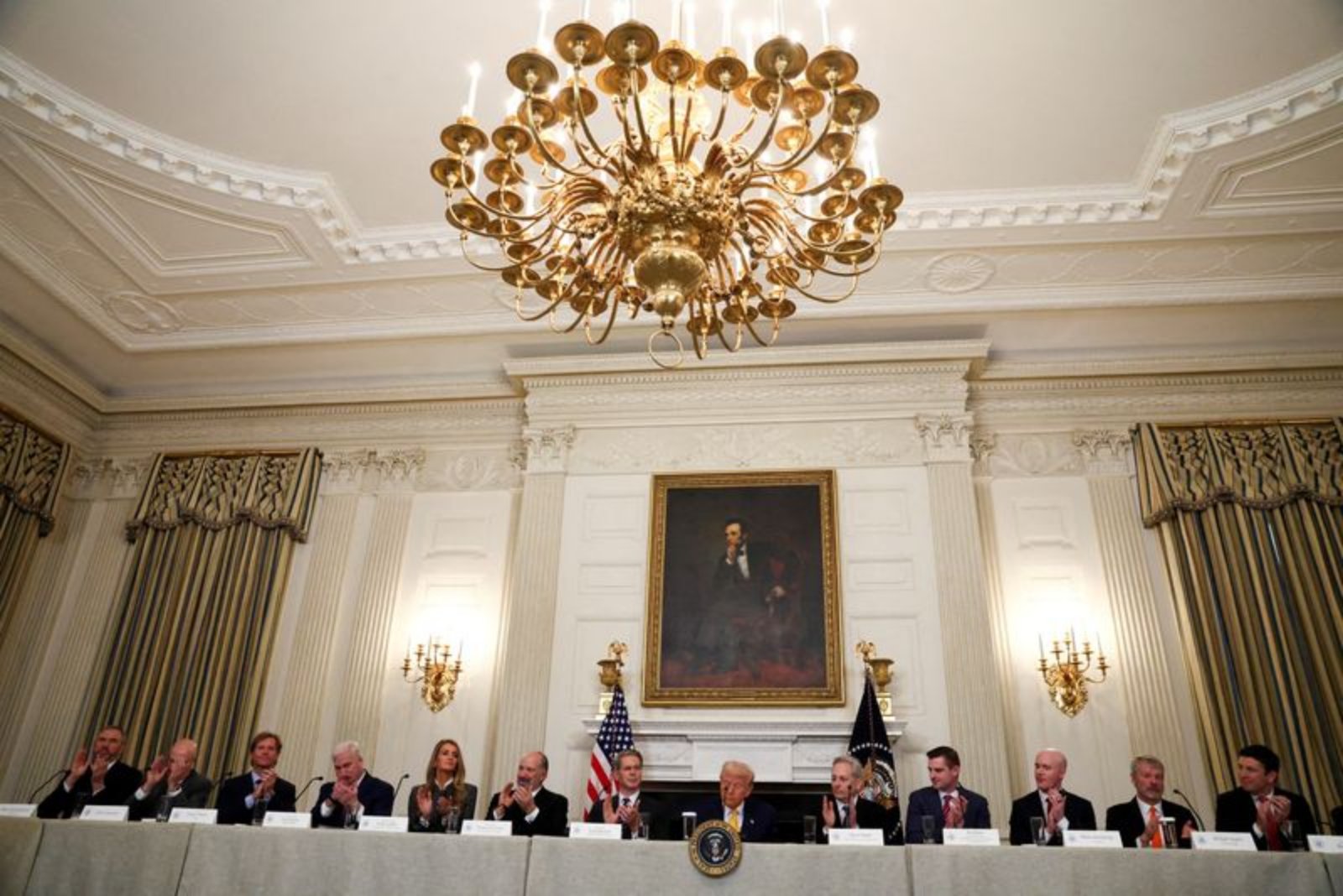
The White House hosted a closed-door meeting on Monday that brought together officials from the banking sector and the cryptocurrency industry in an effort to break a prolonged stalemate over federal digital-asset legislation. The session, organized by the administration's crypto council, concluded without an agreement, leaving a central policy fight unresolved.
Attendees included representatives of major trade groups from both industries. From the banking side, the American Bankers Association and the Independent Community Bankers of America were present. From the crypto sector, membership organizations such as the Blockchain Association and The Digital Chamber took part. The meeting had been intended as a forum to hammer out compromises on language in the stalled market structure bill for crypto assets.
At the heart of the dispute is a contentious provision in the proposed legislation that would govern the treatment of interest and other rewards paid to users holding stablecoins. For months, banks and crypto firms have been at odds over whether such rewards should be allowed.
Banks have pushed for statutory language that would prohibit crypto companies from paying interest or other incentives on stablecoin holdings. Their position rests on concerns that such practices could draw deposits away from insured lenders - deposits that are a primary funding source for many banks - and that a substantial outflow of deposits could pose a threat to financial stability.
Crypto firms counter that offering rewards, including interest, is critical to attracting new customers and maintaining competitiveness. Industry representatives argue that banning these incentives would amount to an anti-competitive measure that could hinder the ability of digital-asset businesses to operate and grow.
Legislative momentum for the Clarity Act has already been slowed. The Senate Banking Committee postponed a markup last month amid rising objections from both the banking and crypto sectors and concerns that the bill lacked sufficient support to advance to the full Senate. The House of Representatives approved its version of the bill in July.
Participants left Monday's meeting describing it as constructive, but no consensus was reached, according to a person who attended and declined to be identified when discussing private policy deliberations. That source said they expect the White House to hold additional meetings in an attempt to resolve the impasse.
Requests for comment to the White House were not answered. The source’s account indicates that while the administration succeeded in bringing the opposing sides into the same room, bridging the central policy gap over stablecoin rewards remains elusive.
Context and outlook
The Clarity Act is designed to establish federal rules for digital assets, reflecting long-standing industry demands for legal certainty in the United States. Crypto companies have maintained that existing regulatory frameworks are inadequate for the sector and that explicit legislation is necessary for continued operation within the U.S. The bill’s progress now hinges on whether the administration can mediate a compromise acceptable to both banks and crypto firms.