
Economy March 10, 2026

White House Says U.S. Did Not Escort Tankers Through Strait of Hormuz

Press secretary corrects Energy Secretary's deleted social post; no update on energy sanctions, White House reiterates Iran operations end condition

By Ajmal Hussain
White House Says U.S. Did Not Escort Tankers Through Strait of Hormuz

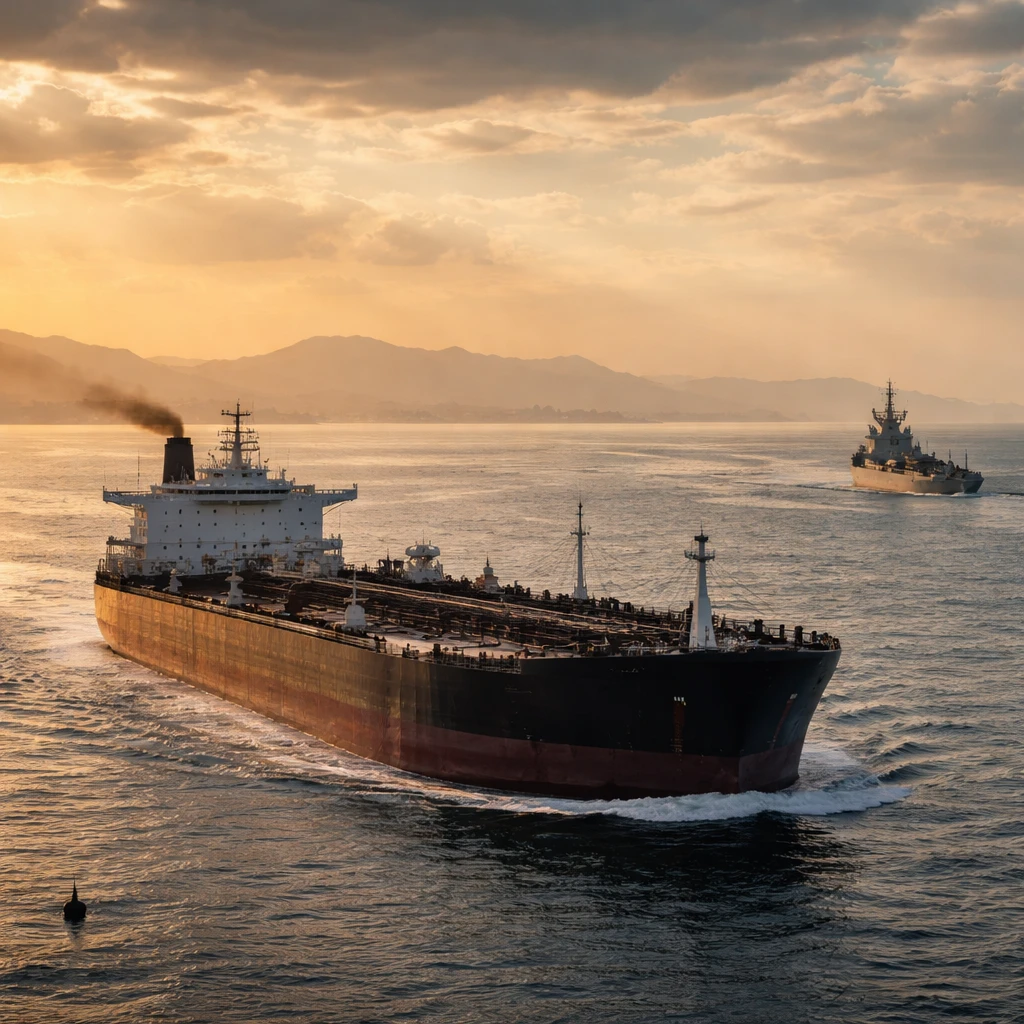
The White House clarified that the United States has not escorted any oil tankers or other vessels through the Strait of Hormuz, after an Energy Department post on the social platform X claiming otherwise was removed. Officials also said there is no announcement on lifting energy sanctions and reiterated conditions for ending operations related to Iran.

Key Points

  • White House press secretary Karoline Leavitt said the U.S. has not escorted any vessels through the Strait of Hormuz.
  • Energy Secretary Chris Wright deleted a post on X that had said a U.S. Navy escort had taken place.
  • The White House has no announcement on lifting energy sanctions and said Iran-related operations will end only when the president determines objectives are met and Iran is in unconditional surrender.

The White House on Tuesday stated that U.S. forces have not provided escort to oil tankers or other vessels transiting the Strait of Hormuz. Press Secretary Karoline Leavitt made the clarification during a briefing with reporters after an Energy Department social media post was deleted earlier in the day.

Energy Secretary Chris Wright had posted on X that the U.S. Navy had escorted an oil tanker through the strait, saying the action was taken to ensure oil continued to flow to global markets. That post was later removed by the secretary.

When reporters questioned the White House about the deletion of Mr. Wright's message, Ms. Leavitt plainly stated that the United States has not escorted any vessel through the Strait of Hormuz. The White House offered no additional operational details beyond that correction.

Separately, the administration said it had no announcement to make regarding the lifting of energy sanctions. Officials did not provide further information about the status or timing of any sanctions decisions.

On the broader subject of operations related to Iran, the White House reiterated a clear condition for ending those operations: they will conclude only when the U.S. president determines the stated objectives have been achieved and when Iran is in unconditional surrender. No additional criteria or timelines were provided.

The sequence of events in this brief exchange involved a public statement by an Energy Department official on X that was subsequently removed, followed by a formal clarification from the White House press office correcting the record. Beyond confirming that no escort occurred, the administration did not expand on either the reasons for the deleted post or any internal review of communications.

The White House correction and the statement on sanctions leave several procedural and policy questions unaddressed in the public record. Officials did not elaborate on whether the deleted social post prompted any internal action, nor did they indicate when or if updates on energy sanctions might be announced.

As conveyed in the briefing, the sole definitive public points are the denial of any U.S. escort through the Strait of Hormuz, the absence of an announcement about lifting energy sanctions, and the stated condition under which related operations tied to Iran would end.

Risks

  • Public communications inconsistency - The deleted social post and subsequent correction create uncertainty about official messaging and could complicate coordination among government agencies (impacts communications and government credibility).
  • Unclear sanctions trajectory - The absence of a public decision on lifting energy sanctions leaves market participants and energy-sector stakeholders without clarity (impacts energy markets and related financial instruments).
  • Open-ended operational timeline - The statement that Iran-related operations will end only when the president decides objectives are met and Iran is in unconditional surrender creates uncertainty about the duration and scope of those operations (impacts defense planning and regional stability considerations).

More from Economy

Paper Wealth Favors Eurozone, Financial Wealth Tilts Toward U.S., UBS Says Mar 22, 2026 China Pledges Greater Market Access and More Balanced Trade After Record Surplus Mar 22, 2026 Oil Surge Seen as Immediate Margin Threat to Consumer Stocks Mar 22, 2026 Beijing Defends Record Goods Surplus as Officials Promise More Market Access Mar 22, 2026 Tencent embeds OpenClaw agent into WeChat with new 'ClawBot' contact Mar 22, 2026