
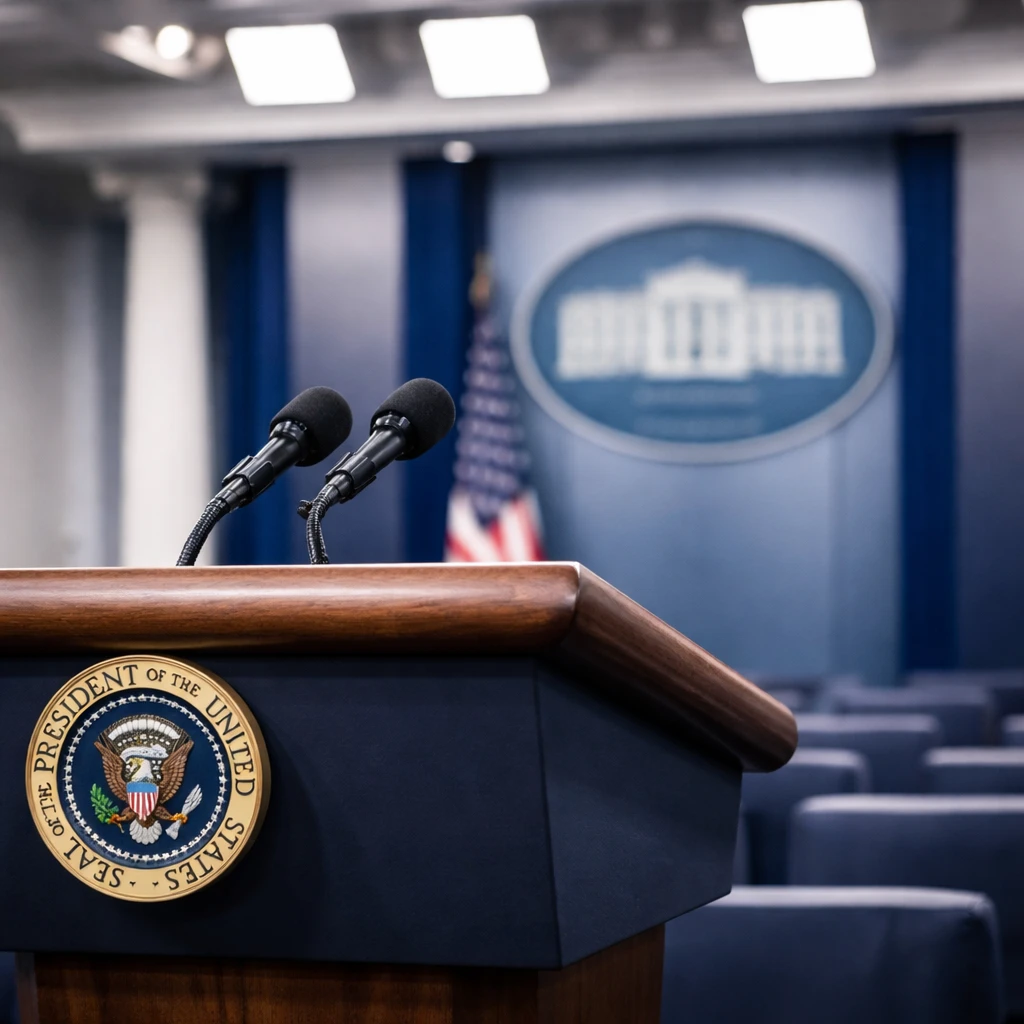
The White House said Monday that diplomatic talks with Iran remain underway and are making headway, even as public statements from Tehran differ sharply from what American officials are hearing in private.
In comments to reporters, White House Press Secretary Karoline Leavitt described the negotiations as proceeding in a constructive fashion, while underscoring a notable contrast between Iran's external rhetoric and its internal communications with U.S. interlocutors.
Leavitt said, "Despite all of the public posturing you hear from the regime and false reporting, talks are continuing and going well. What is said publicly is, of course, much different than what’s being communicated to us privately." Her remarks framed the current state of discussions as one in which public messaging does not mirror the private exchanges taking place between Tehran and American representatives.
The White House also emphasized that any private statements originating from Iranian officials would not be accepted at face value; rather, those communications would be tested for accuracy and verified before being treated as reliable inputs to the talks.
Officials did not provide further detail about the content of private communications, the mechanisms for verification, or a timetable for the negotiations. The administration limited its public commentary to the contrast between Tehran's public posture and the private messages conveyed to U.S. officials, and to the assurance that private statements will be subject to verification.
Taken together, the White House characterization presents the talks as ongoing and productive while simultaneously cautioning that public-facing Iranian statements may not reflect the substance of what is being discussed behind closed doors. Beyond the verbal assurance that verification processes will be applied to private statements, no additional specifics were offered by the administration in the public briefing.
Note: The article confines itself to the statements and positions described by White House officials in the public briefing and does not introduce additional facts or conclusions beyond those remarks.