
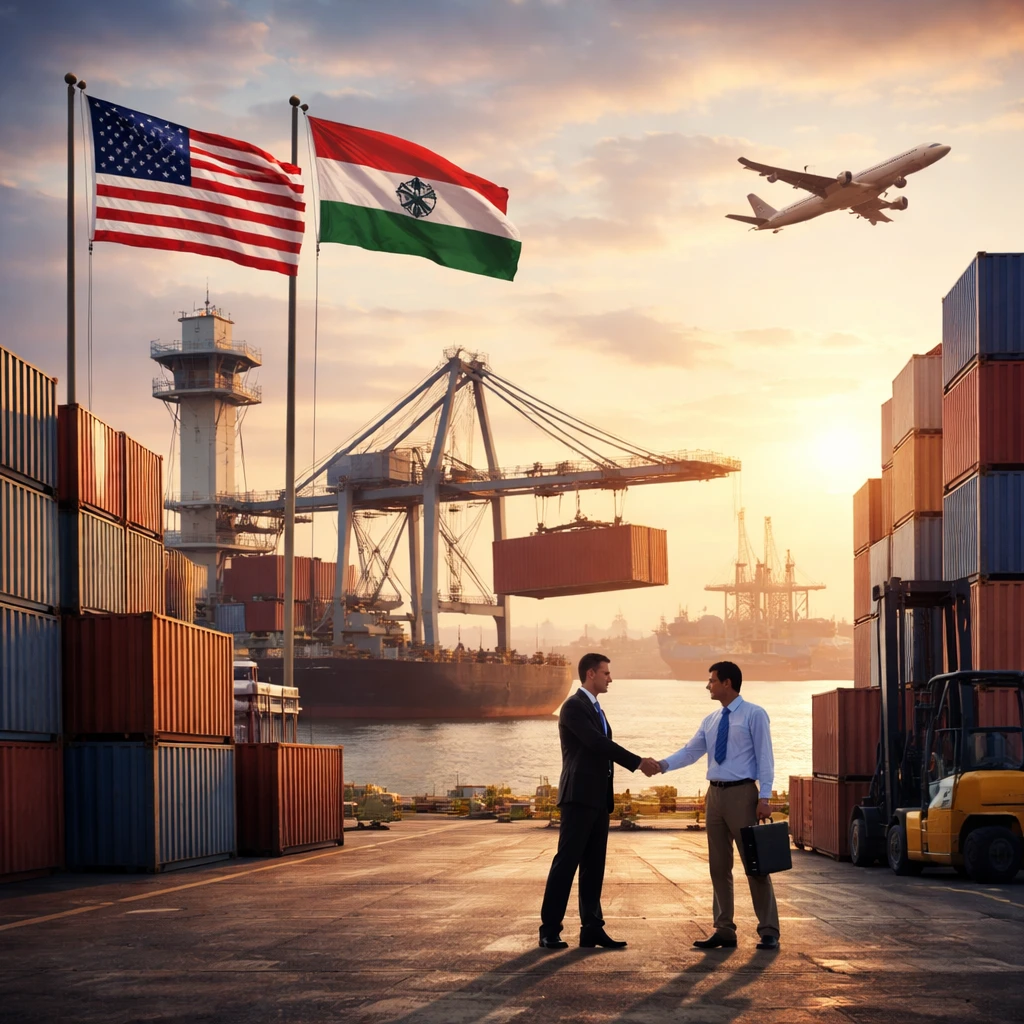
Economy February 6, 2026

White House Removes 25% Russia-Related Surcharge on Indian Imports, Sets New Reciprocal Levies

Executive order ties tariff rollback to India's shift away from Russian energy and a $500 billion U.S. purchase pledge over five years

By Hana Yamamoto
White House Removes 25% Russia-Related Surcharge on Indian Imports, Sets New Reciprocal Levies

The White House has issued an executive order eliminating a 25% Russia-related surcharge on Indian goods, effective Feb. 7, as part of a broader trade and security framework that ties tariff changes to India’s commitments to reduce ties with Russian energy and expand defense cooperation with the United States. The arrangement introduces a new reciprocal 18% baseline levy on a range of Indian exports while removing certain additional duties on sensitive sectors and securing tariff reductions by India on select U.S. agricultural and industrial products.

Key Points

  • 25% Russia-related surcharge on Indian goods eliminated effective Feb. 7; new reciprocal baseline levy of 18% established on certain Indian exports (textiles, leather goods, organic chemicals).
  • India committed to stop direct or indirect imports of Russian oil and to purchase $500 billion in U.S. energy, aircraft, and technology over five years; the order also references expanded U.S.-India defense cooperation over the next 10 years.
  • U.S. will remove additional duties on selected Indian sectors (generic pharmaceuticals, gems, aircraft parts); India agreed to lower or eliminate tariffs on U.S. agricultural and industrial products and to address non-tariff barriers for U.S. medical device and ICT exporters.

President Donald Trump signed an executive order removing the 25% Russia-related penalty tariff on Indian goods, a move presented as the enforcement mechanism for a comprehensive trade arrangement aimed at reducing India’s economic reliance on the Russian Federation.

The order includes a detailed statement of India’s commitments. In the text of the order the president said:

“India has committed to stop directly or indirectly importing Russian Federation oil, has represented that it will purchase United States energy products from the United States, and has recently committed to a framework with the United States to expand defense cooperation over the next 10 years,”
and it notes India’s pledge to buy $500 billion in American energy, aircraft, and technology across the coming five years.

As part of the new arrangement, the United States will implement a reciprocal levy of 18% as the baseline tariff on a set of Indian exports, specifically naming categories such as textiles, leather goods, and organic chemicals. That 18% baseline remains in place even as the administration agreed to eliminate certain extra duties that had applied to strategic sectors.

The agreement explicitly removes additional U.S. duties on selected critical Indian exports, citing exemptions for products including generic pharmaceuticals, gems, and aircraft parts. Those sector-specific duty removals sit alongside concessions secured from New Delhi.

On the other side of the ledger, India has agreed to reduce or remove tariffs on a range of U.S. products that are important to American agricultural and industrial producers. The list of items identified for tariff relief includes soybean oil, distilled spirits, dried distillers’ grains, and fresh fruit. The deal also requires India to address long-standing non-tariff barriers that have impeded U.S. medical device and information and communications technology (ICT) exporters.

A joint statement referenced by the order frames these measures within an economic security agenda: the two countries intend to "strengthen economic security alignment to enhance supply chain resilience and innovation through complementary actions to address non-market policies of third parties."

The formal removal of the 25% Russia-related surcharge becomes effective at 12:01 a.m. Washington time on February 7. Both governments describe the arrangement as an interim milestone on the path to a broader Bilateral Trade Agreement that would establish a more permanent economic and security framework.


While the order adjusts tariff levels and outlines reciprocal commitments, it stops short of declaring a final, comprehensive trade accord. The interim nature of the steps adopted suggests further negotiations will be required to convert the framework into a lasting bilateral architecture.

Risks

  • The agreement is described as an interim milestone toward a broader Bilateral Trade Agreement, indicating uncertainty about whether a permanent, comprehensive trade and security architecture will be finalized - affects policy and defense sectors.
  • An 18% reciprocal baseline tariff remains on various Indian exports, so some trade frictions persist even as the 25% surcharge is lifted - impacts textiles, leather, and chemical exporters and importers.
  • The commitments depend on India implementing tariff cuts and dismantling non-tariff barriers; the pace and completeness of those domestic reforms are not detailed in the order, creating uncertainty for U.S. medical device, ICT, and agricultural exporters.

More from Economy

Barclays Says Private Credit Strains Fall Short of a 2008-Style Crisis Mar 22, 2026 Persistent Middle East conflict and energy shock weigh on fragile equities rally Mar 22, 2026 Israel Orders Destruction of Bridges Over Litani River, Increases Home Demolitions Near Lebanon Border Mar 22, 2026 Paper Wealth Favors Eurozone, Financial Wealth Tilts Toward U.S., UBS Says Mar 22, 2026 China Pledges Greater Market Access and More Balanced Trade After Record Surplus Mar 22, 2026