
Economy April 1, 2026

White House Pushes GOP-Only Border Funding Plan, Seeks Bill by June 1

President directs Republican leaders to advance funding for ICE and Border Patrol without Democratic votes, urging action before June deadline

By Marcus Reed
White House Pushes GOP-Only Border Funding Plan, Seeks Bill by June 1

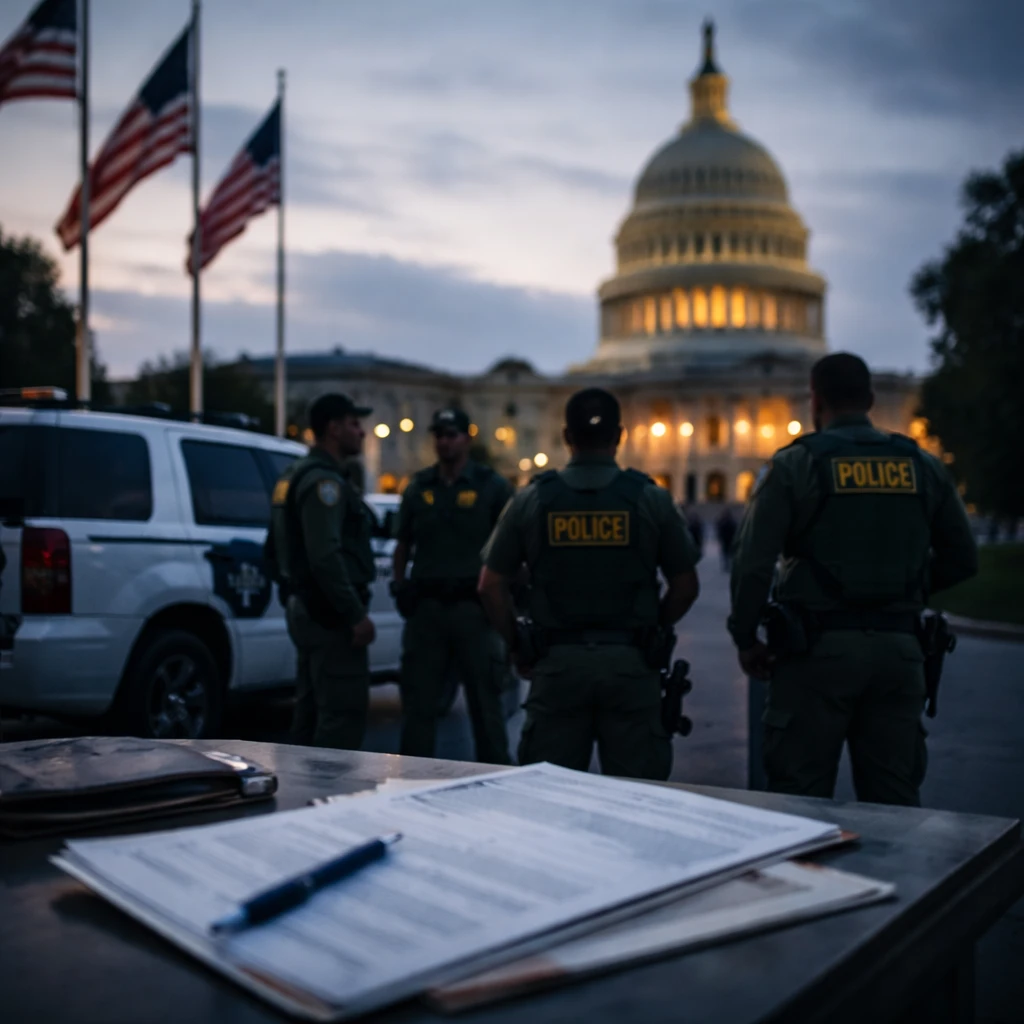
President Donald Trump said he is coordinating with House and Senate Republican leaders to move a bill that would fund Immigration and Customs Enforcement (ICE) agents and Border Patrol personnel through a process that does not require Democratic support. He has asked that the measure reach his desk by June 1 and said his administration has been using funds from what he called "THE GREAT BIG BEAUTIFUL BILL" to keep agents paid during the current funding gap. The president also criticized Democrats on immigration policy, urged voters to back Republican candidates in the midterms, and suggested repealing the Senate filibuster without providing implementation details.

Key Points

  • Republican leadership is being asked to advance a bill to fund ICE and Border Patrol without Democratic votes - impacts federal agencies and government contracting.
  • The president requested that the bill be delivered to his desk by June 1 - sets a firm legislative timeline.
  • Administration has been using money from what the president called "THE GREAT BIG BEAUTIFUL BILL" to ensure ICE and Border Patrol agents are paid during the funding gap - relevant to federal payroll and agency operations.

President Donald Trump announced on Truth Social that Republican lawmakers will pursue legislation to finance Immigration and Customs Enforcement agents and Border Patrol personnel without Democratic backing, a move intended to circumvent the Senate filibuster.

In his post, the president said he is coordinating with House Speaker Mike Johnson and Senate Leader John Thune to take the funding measure through a parliamentary route that does not require votes from Democrats. He set a firm deadline, requesting that the bill be on his desk no later than June 1.

Trump said that during the current lapse in appropriations his administration has relied on money from what he referred to as "THE GREAT BIG BEAUTIFUL BILL" to ensure ICE and Border Patrol agents continue to receive timely and full pay.

The president leveled criticism at Democrats, charging that the party seeks to defund law enforcement and immigration agencies. He also accused the previous administration of permitting illegal immigration throughout its four-year term.

Trump used his post to appeal to voters, urging support for Republican candidates in the upcoming midterm elections and arguing that unified Republican control would allow the party to pass legislation without Democratic involvement.

He further suggested that the Senate filibuster should be repealed immediately but did not outline any steps or mechanisms for how such a procedural change would be made.

The announcements present a clear legislative timetable and political strategy: advance a targeted funding bill through Republican channels and seek rapid enactment ahead of the June 1 deadline. Beyond the scheduling and the assertion about the interim use of funds, the president did not supply additional details on the bill's language, vote counts, or the process for altering Senate rules.


Clear summary

President Trump announced that Republicans will move to pass a bill funding ICE and Border Patrol without Democratic support, coordinating with House Speaker Mike Johnson and Senate Leader John Thune, and requested the measure reach his desk by June 1. He said interim funds from "THE GREAT BIG BEAUTIFUL BILL" have been used to pay agents, criticized Democrats on immigration, urged midterm voter support for Republicans, and called for an immediate repeal of the filibuster without specifying how to proceed.

Risks

  • Uncertainty over the ability to bypass the Senate filibuster: the president urged repealing the filibuster but provided no implementation details - this procedural uncertainty affects legislative risk for passage of the bill.
  • Potential political backlash or escalation: moving forward without Democratic support and framing the effort as a partisan push could heighten political tensions ahead of the midterm elections - this creates electoral and policy risk.
  • Lack of disclosed legislative details: the announcement did not include the bill's specific provisions, vote margins, or the process for changing Senate rules - leaving execution and timing uncertain.

More from Economy

White House Threatened Ukraine Arms Cutoff to Pressure Europe on Hormuz, Report Says Apr 1, 2026 IEA, IMF and World Bank Launch Joint Coordination Group to Address Economic Fallout of Middle East War Apr 1, 2026 Bank of Canada to Rely Heavily on Judgement as Global Risks Rise Apr 1, 2026 Bank of Canada to Lean on Judgment as Global Uncertainty Mounts Apr 1, 2026 UAE Asks UN to Authorize Force to Reopen Strait of Hormuz Apr 1, 2026