
There is a widening gap between the White House's public assertions of complete military control and the tactical picture unfolding in the Middle East.
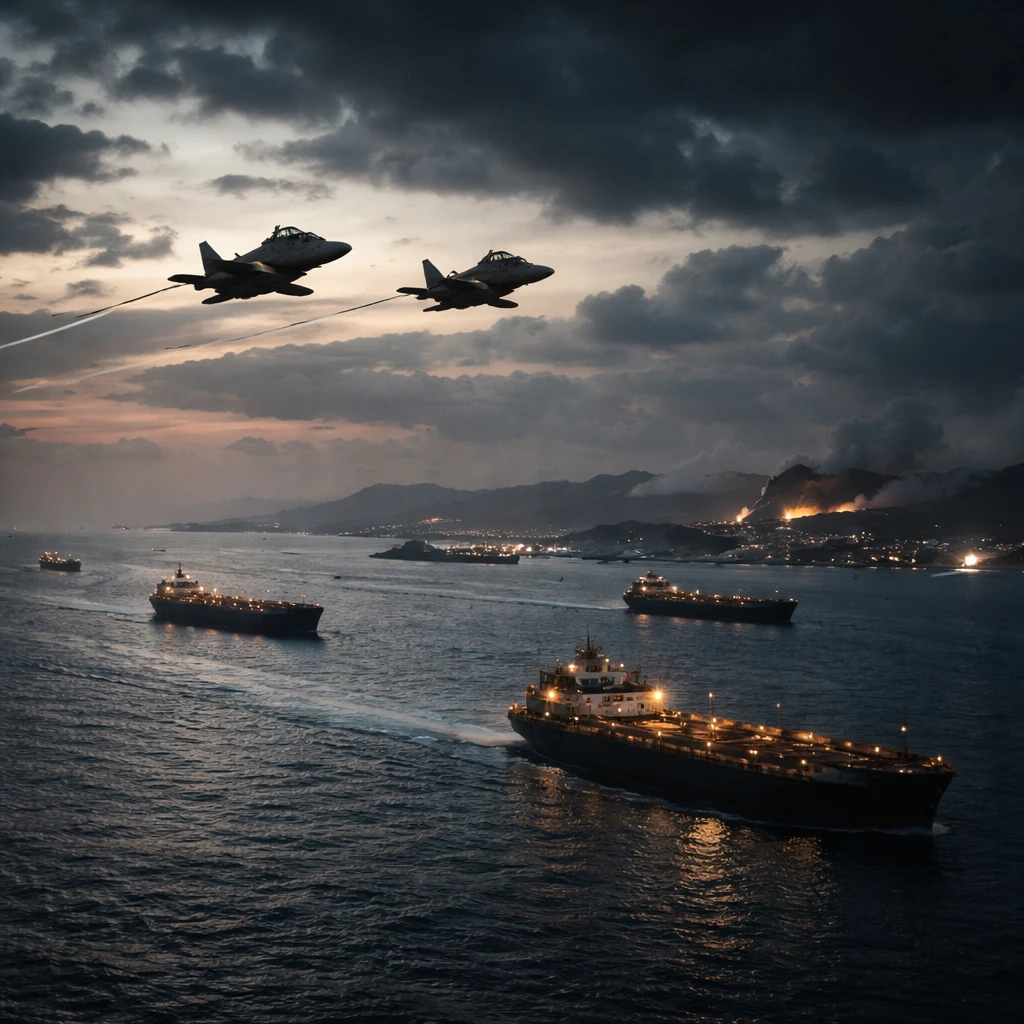
Just two days after the President asserted that Tehran was "militarily defeated" and seeking a way out, Iranian forces successfully shot down two U.S. aircraft. The incident demonstrates that, despite five weeks of intensive strikes, the Islamic Republic retains defensive and offensive capabilities sufficient to continue high-stakes operations.
On social media, the President issued a 48-hour demand for Iran to fully reopen the Strait of Hormuz, warning that failure to comply would bring "all Hell." The administration has pointed to more than 12,300 successful strikes as evidence that the Iranian regime has been decisively weakened. Defense Secretary Pete Hegseth has supported that assessment.
Yet military analysts caution that what U.S. forces have achieved is localized air superiority rather than uncontested air supremacy. The downing of the two American planes highlights the effectiveness of Iran's domestically produced, low-altitude air defense systems and signals that the U.S. cannot assume uncontested control of the skies in this campaign. Pentagon officials have sounded a more measured note than the President, with Gen. Dan Caine calling the process of establishing air control "gradual" and noting that it only recently permitted B-52 bomber sorties over Iranian territory.
Strategic posture at the Strait of Hormuz
Analysts see a shift in Tehran's strategy toward an asymmetric, fight-to-the-end approach. According to Eurasia Group analysts cited by the administration, Iran now treats influence over the Strait of Hormuz not merely as leverage but as a "strategic gain" it intends to hold. The Iranian toolkit - including drones and anti-ship missiles - is being used to sustain a prolonged campaign designed to inflict steady damage to opposing forces even as conventional naval and leadership elements are worn down.
The conflict has moved into its sixth week, which coincides with the upper bound of the President's initial timeline, and there is no evident diplomatic resolution. As the 48-hour window for the Strait's reopening concludes, the likelihood of a significant U.S. escalation remains on the table.
Market and investor implications
Financial markets are responding to this evolving military reality. Traders and portfolio managers are increasingly embedding a "permanent war-risk premium" into prices as the expectation of a swift, decisive victory diminishes and a drawn-out, monthslong engagement appears more probable. That persistent premium reflects concerns about prolonged disruption to global energy flows and broader geopolitical instability.
For investors, the central takeaway is that a short, conclusive campaign is less likely than a protracted contest of attrition. That dynamic elevates uncertainty for energy markets and defense-related sectors and introduces longer-term volatility risks for portfolios sensitive to geopolitical shocks.