
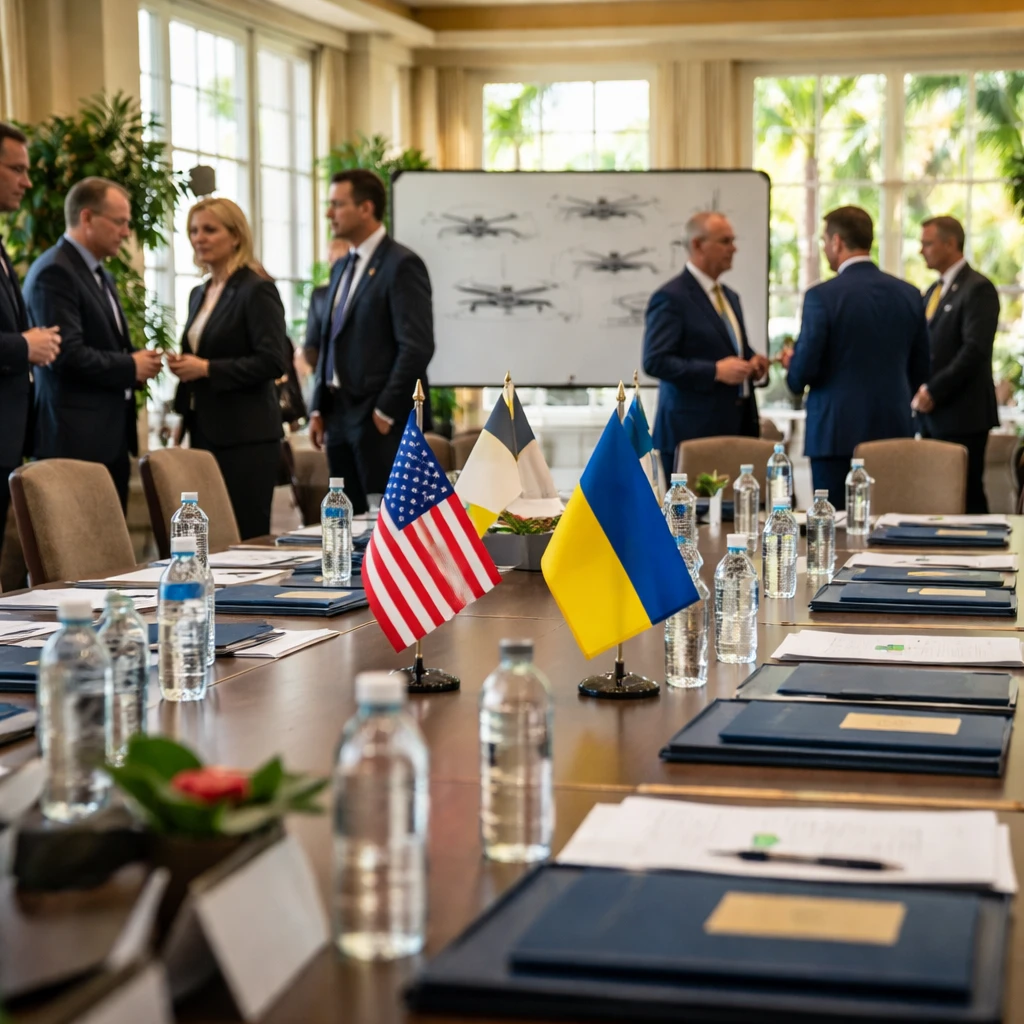
Negotiators from Ukraine and the United States have assembled in Florida for a concentrated round of diplomacy intended to map a potential settlement path for the conflict that has persisted for four years. The U.S.-brokered session, scheduled to continue through Sunday, is focused on refining bilateral documents and creating a framework that could underpin a more comprehensive peace agreement.
Russian representatives were absent from the first session on Saturday. Nevertheless, the White House described the meeting as "constructive," signaling that the U.S. and Ukrainian delegations are working to narrow outstanding differences on technical and procedural matters.
Drone technology and defense cooperation at the center
A central element of the discussions is a proposed broad-ranging agreement centered on drone technology. Ukrainian President Volodymyr Zelenskiy has confirmed that dedicated working groups are prioritizing accords designed to harness Kyiv's combat-tested expertise with unmanned aerial systems. Those working groups are focused on translating operational experience into formal arrangements.
Alongside the U.S. talks, Ukraine is seeking to finalize defense partnerships with eight Middle Eastern countries, aiming to leverage its specialized knowledge of drone warfare amid wider regional instability. The emphasis on high-tech defense collaboration indicates an intent to integrate Ukraine's specialized industrial capabilities into a larger security architecture.
By formalizing the bilateral documents now under discussion, Washington and Kyiv are attempting to lay down stable foundations for long-term military-industrial cooperation, even while the "negotiation track" remains active as the channel for reaching a diplomatic resolution.
Territorial redlines and diplomatic deadlocks
Despite movement on technical and defense-focused items, the primary barrier to a final accord continues to be the status of the Donbas region. Moscow maintains a demand that Kyiv surrender the entirety of the eastern territory, including sectors not currently under Russian control. Ukraine has firmly rejected that demand. This fundamental disagreement over sovereignty sets the limits of the peace process and keeps the "negotiation track" focussed on assessing how prepared each side is to move toward an "honest conclusion."
The U.S. negotiation team, led by special envoy Steve Witkoff and Jared Kushner, is pressing for a breakthrough after earlier rounds in Geneva and the UAE produced only limited outcomes, such as prisoner exchanges. As the discussions continue into Sunday, market participants and observers are watching for signs that parties may be willing to advance beyond strict adherence to "sanctions purity" or rigid territorial positions toward a more pragmatic stance that could reduce tensions.
Outlook
The talks in Florida are structured around producing concrete, technical agreements that could anchor longer-term cooperation between Ukraine and the United States. However, the unresolved dispute over Donbas sovereignty remains the decisive issue that any final settlement would have to address.