
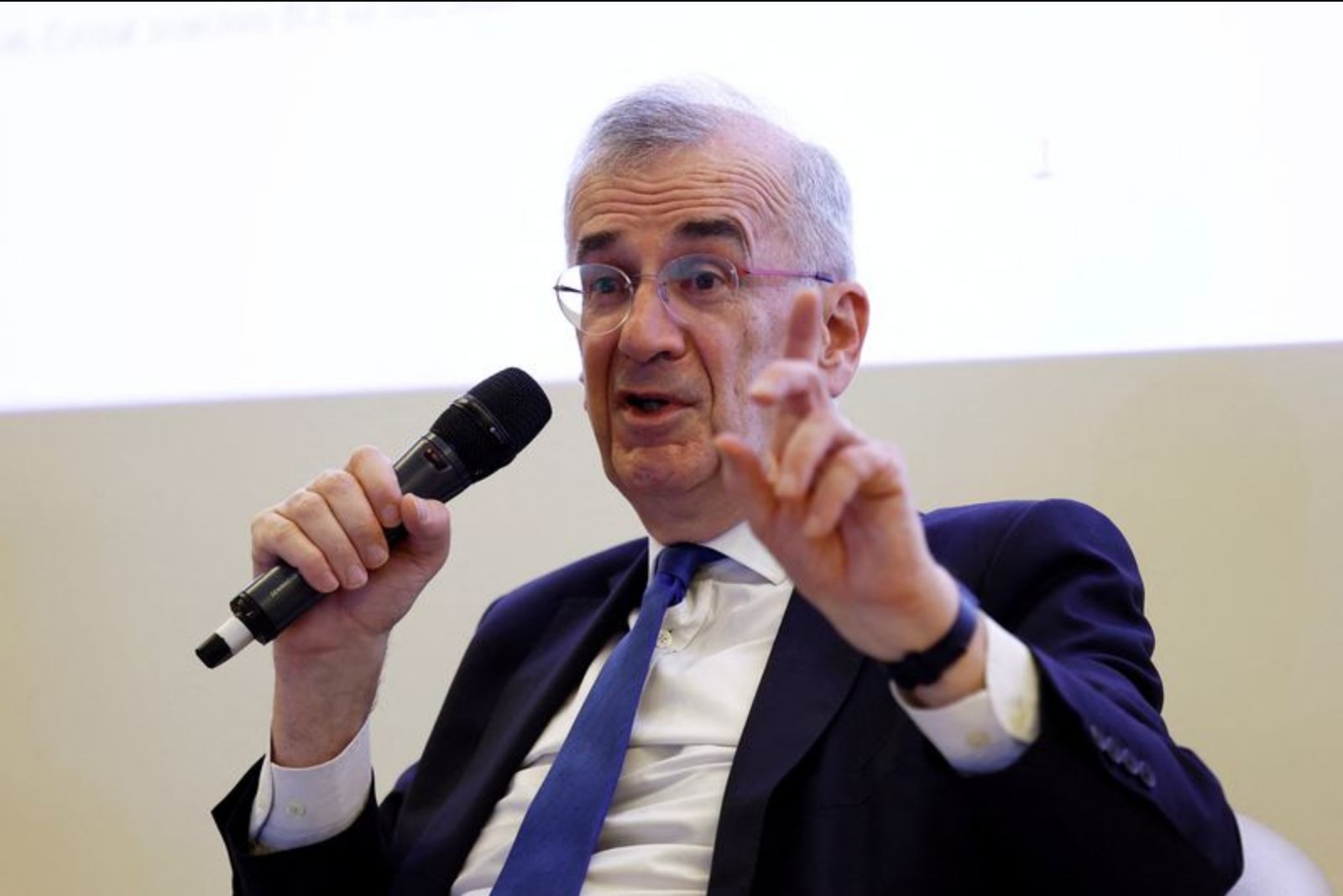
Summary: European Central Bank officials are closely monitoring a recent surge in energy prices tied to the U.S.-Israeli war on Iran. Francois Villeroy de Galhau, governor of the Banque de France, said the ECB stands ready to act to stop those increases from feeding into broader inflation, but that it is too soon to discuss setting dates for potential interest rate hikes.
Speaking to Italy's La Stampa, Villeroy framed the central bank's priority as preventing an energy-led shock from spreading into general price increases. "We are ready to act in this direction if needed," he told the newspaper on Monday. At the same time he cautioned that "the debate on pre-established dates appears very premature."
The spike in energy costs has prompted debate inside the ECB about whether and under what conditions a tightening of monetary policy would be required to stop that rise from passing through to the prices of other goods and services. Some policymakers have flagged April as an option for a rate increase, while others have urged caution, arguing there is currently insufficient evidence to justify raising borrowing costs immediately.
Villeroy acknowledged the war has worsened the near-term inflation outlook and said the central bank cannot avert that immediate shock. He emphasized the ECB's role is to ensure that short-lived price increases do not translate into more widespread inflationary pressures.
Noting his imminent departure from office in June, Villeroy also pointed out a limitation in the ECB's adverse and severe inflation scenarios: those projections may overstate the impact because they do not assume any policy response from the central bank. Market expectations reflect the concern about inflation risks, with financial markets now pricing in three ECB rate hikes this year and the first of those moves fully expected by June.
The discussion inside the ECB thus remains focused on balancing readiness to respond with caution about prematurely committing to dates. Officials are assessing current evidence and the evolving impact of energy prices on broader inflation dynamics before determining whether a series of rate increases will be required.
Key points
- ECB leadership says it is prepared to act to prevent energy-driven inflation from broadening - impacts: energy, consumer prices, and financial markets.
- Villeroy warned it is too early to fix dates for rate hikes, reflecting internal disagreement over timing - impacts: bond markets and banking sector policy planning.
- Markets currently price three ECB rate increases this year, with the first fully expected by June - impacts: interest-rate sensitive sectors and asset allocation.
Risks and uncertainties
- Ongoing geopolitical conflict has pushed energy prices sharply higher, creating the risk of inflation pass-through into other sectors - affects: energy and consumer goods.
- The ECB is unable to prevent a near-term price shock caused by the war, making immediate inflation outcomes uncertain - affects: households and short-term market volatility.
- Official adverse and severe inflation scenarios may overstate impact because they do not include any central bank reaction, adding uncertainty to projections - affects: policy planning and market expectations.