
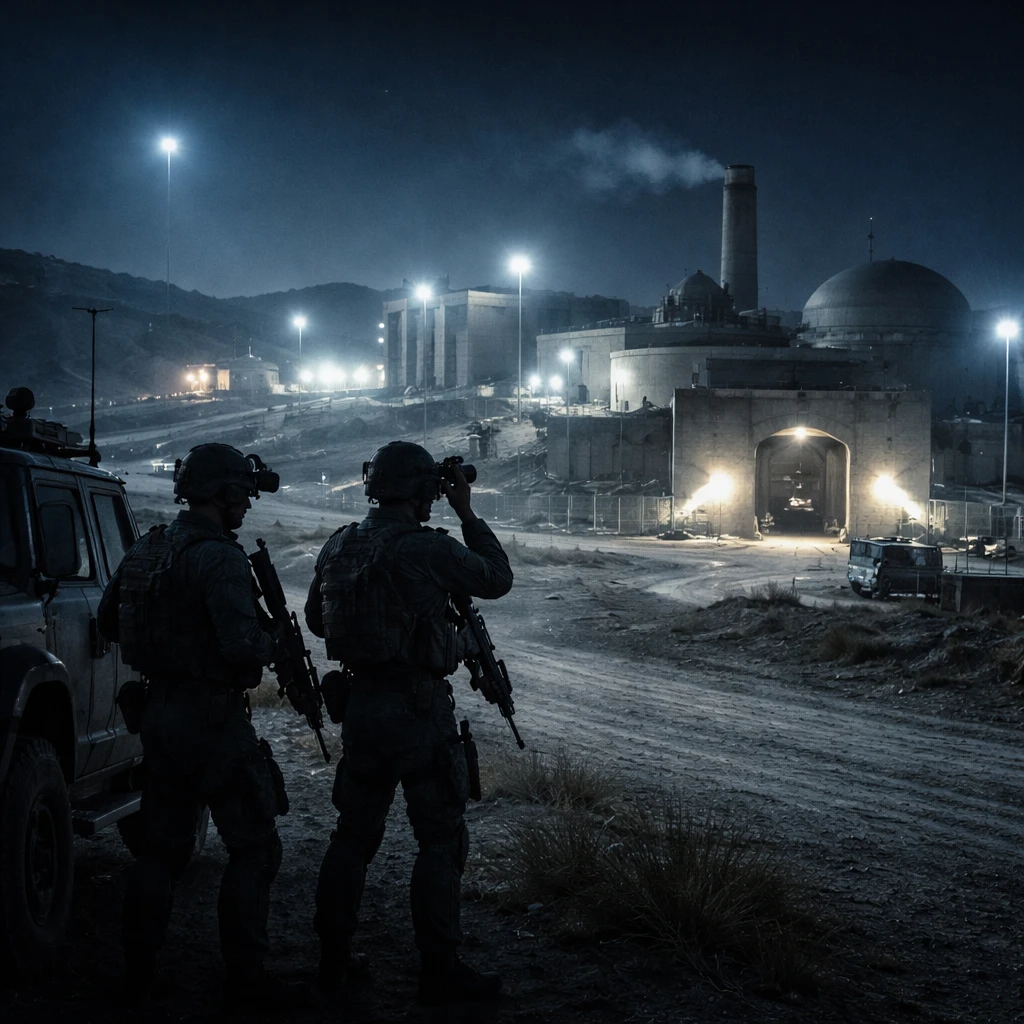
Diplomatic officials familiar with internal discussions say the United States is weighing the possibility of sending special operations forces to secure Iran's near-bomb-grade uranium if its location can be confirmed. The contingency has been presented to President Donald Trump amid continued uncertainty about where Iran’s highly enriched stockpile is now held.
Concerns have intensified because United Nations nuclear inspectors have not verified the material’s whereabouts for several months. That verification gap followed a period of military strikes that hit a number of Iranian nuclear facilities during last year’s conflict with Tehran, complicating efforts to track the enriched uranium.
Before the disruption of monitoring, the International Atomic Energy Agency had most recently recorded about 441 kilograms of uranium enriched close to weapons-grade levels. That quantity is characterized in official records as roughly sufficient, if further refined, for approximately a dozen nuclear warheads.
Diplomats cited by officials say activity observed recently near underground tunnels at the Isfahan nuclear complex - where part of the stockpile had been stored - raises the possibility that some material may have been moved from its previously recorded location. U.S. and Israeli officials are continuing efforts to locate the uranium, and contingency plans have been drafted that could include the use of special operations forces to secure the material if they can confirm its position, according to an official familiar with the planning.
The suspension of regular international monitoring has added a further layer of uncertainty. Prior to the fighting, Iran’s nuclear program was among the most closely inspected in the world, with IAEA monitors visiting declared facilities on a frequent basis. That oversight effectively ended after strikes struck key enrichment sites including Natanz, Fordow and Isfahan.
Officials involved in planning say a central concern is that enriched uranium may have been dispersed beyond the boundaries of monitored sites, a development that would complicate any recovery or containment operation and that remains a major consideration for military planners.
Reporting in this piece is based on information provided by diplomatic and government officials familiar with internal deliberations. Where details remain limited, the article reflects those constraints rather than speculation.