
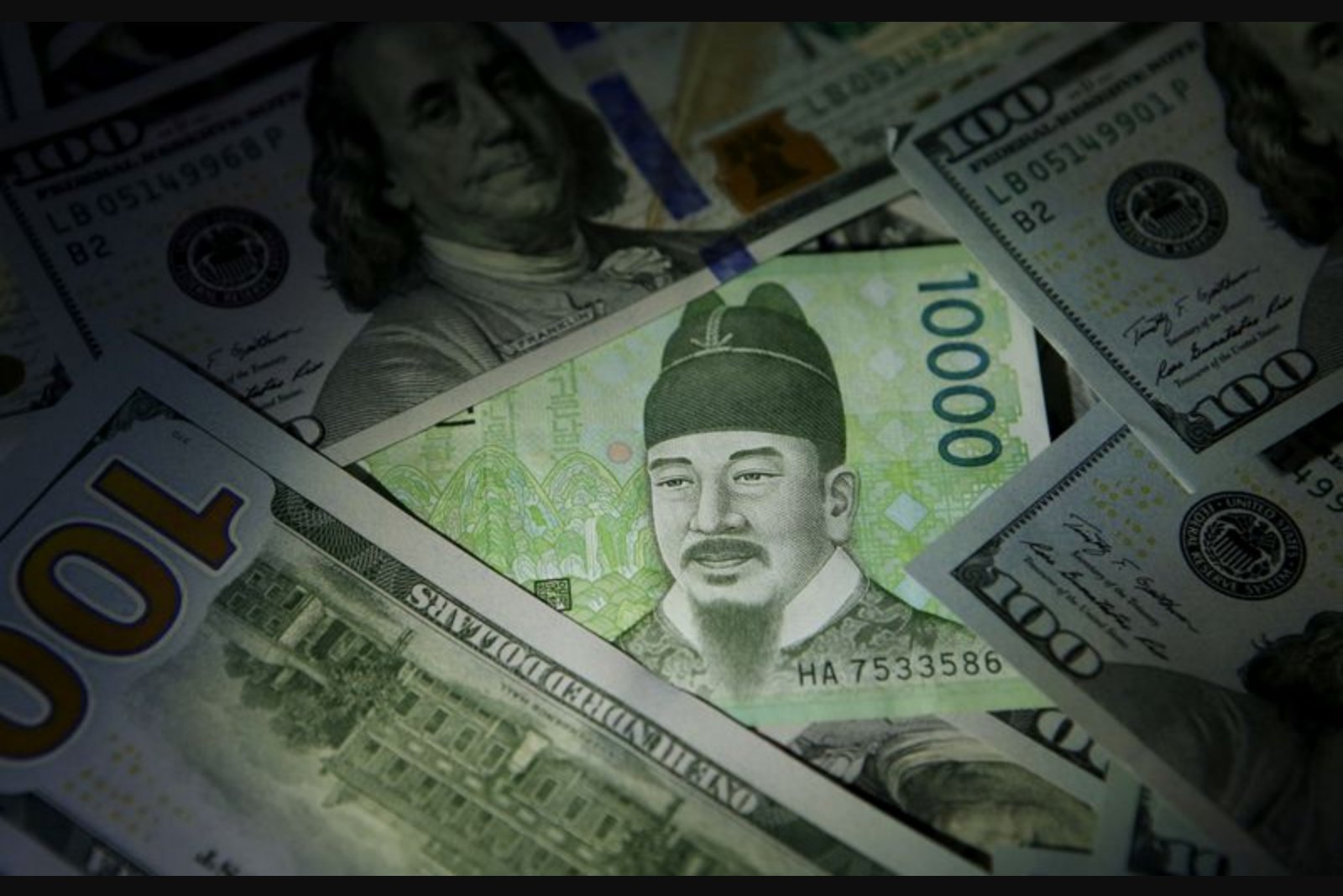
The U.S. Treasury has concluded that the recent slide in the South Korean won exceeded what would be expected given the country’s robust economic fundamentals, according to its semi-annual review of currency practices.
In the report, the Treasury said depreciation pressures on the won intensified in the fourth quarter of 2024 after the Bank of Korea cut its policy rate in November and as domestic political instability emerged. The report adds that the won weakened further in late 2025, a move the Treasury judged to be inconsistent with South Korea’s strong fundamentals.
South Korean authorities moved in December to shore up the currency as it fell toward the psychologically sensitive level of 1,500 won per dollar. The Treasury noted that the currency had been under pressure from several factors, including domestic investors increasing purchases of overseas equities and concerns tied to additional U.S. investment that was part of a trade agreement concluded with the administration of President Donald Trump.
The won traded at 1,434.0 per dollar at the close of Thursday trading, having recovered somewhat in recent sessions after a coordinated response from Japan and the United States helped lift the yen - an influence that also supported broader regional currency moves.
In the latest semi-annual assessment, the Treasury reported that no major trading partner met all three criteria that would trigger enhanced analysis of currency practices during the second half of 2024 and the first half of 2025. South Korea was retained on a monitoring list warranting close attention, but the report explicitly did not accuse Seoul of manipulating its currency.
While the Treasury highlighted specific drivers of the won’s depreciation, it stopped short of labeling the policy or market behavior as currency manipulation. The monitoring-list designation means the United States will continue to watch trade and currency dynamics involving South Korea closely, even as it acknowledges the nation’s underlying economic strength.
Summary
The U.S. Treasury said the won's recent weakening went beyond South Korea's strong economic fundamentals, citing a late-2024 rate cut, domestic political instability, overseas equity purchases by domestic investors, and concerns about additional U.S. investment under a trade deal. The won was on a partial rebound after coordinated actions by Japan and the U.S., and South Korea remains on a monitoring list but was not accused of currency manipulation.