
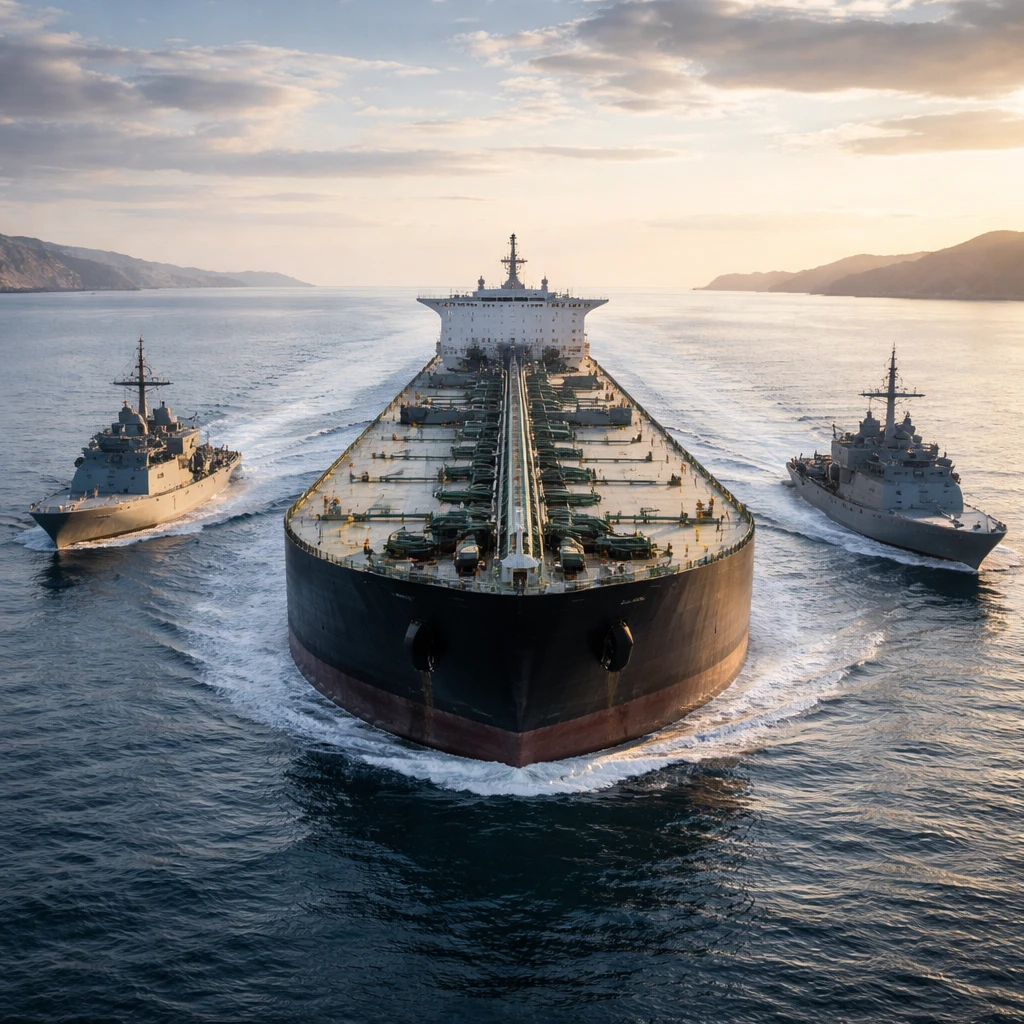
U.S. Treasury Secretary Scott Bessent said Thursday that a U.S. insurance program aimed at boosting the safety of commercial shipping through the Strait of Hormuz will begin shortly.
Bessent made the remarks during a meeting of the President's cabinet at the White House. The initiative, which the President first announced on March 3, calls for the U.S. International Development Finance Corporation to issue insurance guarantees paired with naval escorts to protect oil tankers and other vessels transiting the strait.
Addressing the cabinet, Bessent said: "The oil market is well-supplied. We've taken actions to ensure that oil supplies stranded at sea are made available to the global market." He added: "Your bold actions, like the Development Finance Corporation's maritime reinsurance program, in conjunction with Central Command, will soon provide shippers through the Gulf region with a level of security we have never seen before."
The Strait of Hormuz is a critical maritime chokepoint, carrying roughly a fifth of global oil and gas flows. Despite the program's public announcement more than three weeks ago, no evidence has surfaced that any vessels have yet benefited from the scheme.
Bessent's comments came as concerns over oil and gas prices have intensified in the context of the Iran war. The President's previous threat to strike power plants in Iran - a plan that has since been postponed - prompted Tehran to threaten to close the Strait of Hormuz entirely and to target regional energy facilities in response.
On Wednesday, the President said that, as part of negotiations with Iran, the country had "made a gift." The President later clarified those remarks, saying the gift consisted of permitting 10 tankers of oil to pass through the strait.
Iran has declared the Strait of Hormuz closed on multiple occasions since the onset of the U.S.-Israel war against the country, effectively halting ship movements through a maritime corridor that is vital to global energy flows. The administration's insurance and escort program is intended to address those disruptions by offering a combined guarantee and security presence for commercial vessels.
How quickly the program will be operational in practice and whether tankers will begin to use the guarantees and escorts remains unclear. Officials have stated the initiative will start soon, but outside verification that vessels are traveling under the program's protection has not yet been reported.
Summary
The U.S. will soon deploy an insurance guarantee program, backed by the Development Finance Corporation and supported by naval escorts, to protect shipping transiting the Strait of Hormuz. The measure was announced at a White House cabinet meeting and comes amid elevated concerns about energy prices and threats to close the strait.
Key points
- The program pairs insurance guarantees from the U.S. International Development Finance Corporation with naval escorts to secure commercial vessels.
- The Strait of Hormuz handles about one-fifth of global oil and gas flows, making security there significant for energy markets and shipping.
- Officials say the program will begin soon, but so far there is no public evidence that vessels have used the initiative.
Risks and uncertainties
- It is not yet verified whether any vessels have passed through the strait under the program's protection - this uncertainty affects shipping and energy market confidence.
- Escalating military threats and the potential for Iran to close the strait remain a risk to regional energy flows and tanker movements.
- Political developments, including postponed threats of strikes and ongoing negotiations, create uncertainty for implementation and stability in energy and shipping sectors.