
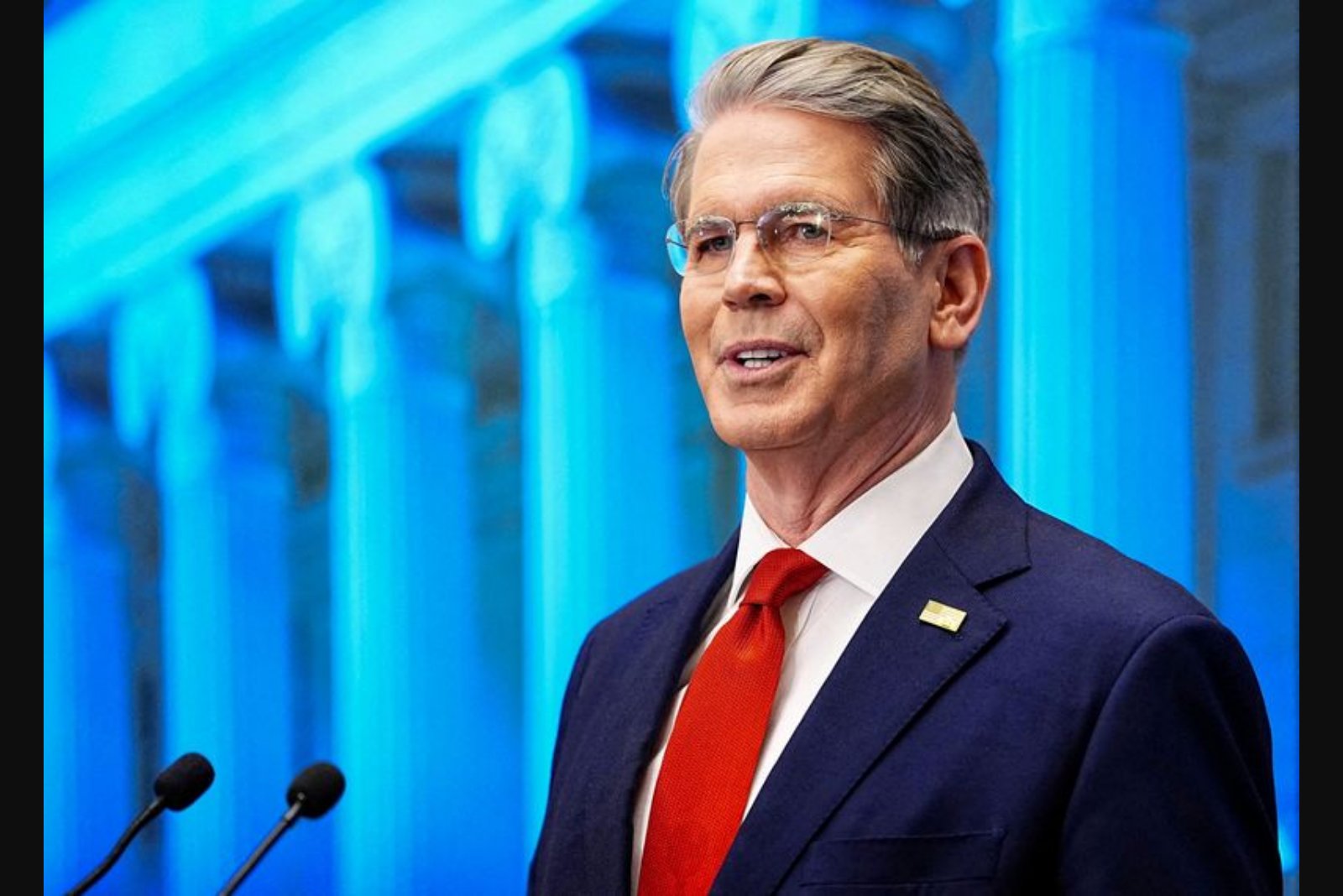
U.S. Treasury Secretary Scott Bessent said on Wednesday he was disappointed that the European Union moved forward with a comprehensive trade agreement with India, asserting that the pact demonstrated Europe had placed trade ahead of the interests of the Ukrainian people.
Speaking to CNBC, Bessent said European buyers had been taking refined products produced in India from crude that originated with sanctioned Russian oil supplies. He also said European officials had been unwilling to align with higher U.S. tariffs on Indian goods because Brussels was engaged in separate negotiations on a trade pact with New Delhi.
The European Union finalized the long-delayed agreement with India on Tuesday. According to the EU, the deal is designed to expand two-way commerce and to reduce the bloc’s reliance on the United States in the context of rising global trade tensions. The EU said the agreement will eliminate or lower tariffs on 96.6% of traded goods by value, a move it expects will double EU exports to India by 2032 and yield approximately 4 billion euros in duty savings for European companies.
Bessent did not mince words when asked whether trade arrangements excluding the United States posed a threat to American interests. "They should do what’s best for themselves, but I will tell you, I found, I find the Europeans very disappointing," he said.
"The Europeans were unwilling to join us, and it turns out, because they wanted to do this trade deal,"
He followed that remark with another pointed comment: "So every time you hear a European talk about the importance of the Ukrainian people, remember that they put trade ahead of the Ukrainian people."
Last week Bessent had indicated the United States might remove the additional 25% tariffs it applied to certain Indian imports after a significant reduction in India's purchases of Russian oil. His current criticism of Europe came at a time of heightened friction between Washington and its European partners, which intensified after President Donald Trump threatened to raise tariffs on imports from some European nations over their stance on his pursuit of Greenland. That specific tariff threat was later withdrawn, but it nevertheless unsettled many officials in Europe about the future of transatlantic trade relations.
U.S. officials have also expressed frustration that the EU has not implemented tariff reductions it committed to under a framework trade deal the two sides agreed in July. Those frustrations increased this week when the president raised duties on imports from South Korea to 25% from 15% - a move he justified by pointing to slow parliamentary action in Seoul to ratify a framework trade agreement reached with Washington last year.
Bessent defended the president’s decision on South Korea, saying the measure was "helpful to get things moved along" and stressing that the South Korean parliament needed to ratify the pact. The president said on Tuesday he expected the United States and South Korea to find a resolution, though he did not provide further details.
South Korean officials were due in Washington on Wednesday for meetings with U.S. trade officials to discuss the issue.
Summary of developments:
- The EU completed a trade agreement with India that aims to remove or reduce tariffs on the vast majority of traded goods by value, with projected export growth and duty savings for European firms.
- U.S. Treasury Secretary Scott Bessent criticized the EU for prioritizing the trade deal over aligning with U.S. tariff actions tied to reductions in purchases of Russian oil.
- Tensions over trade policy are also playing out with South Korea, where the U.S. raised tariffs to accelerate parliamentary ratification of a separate framework deal.