
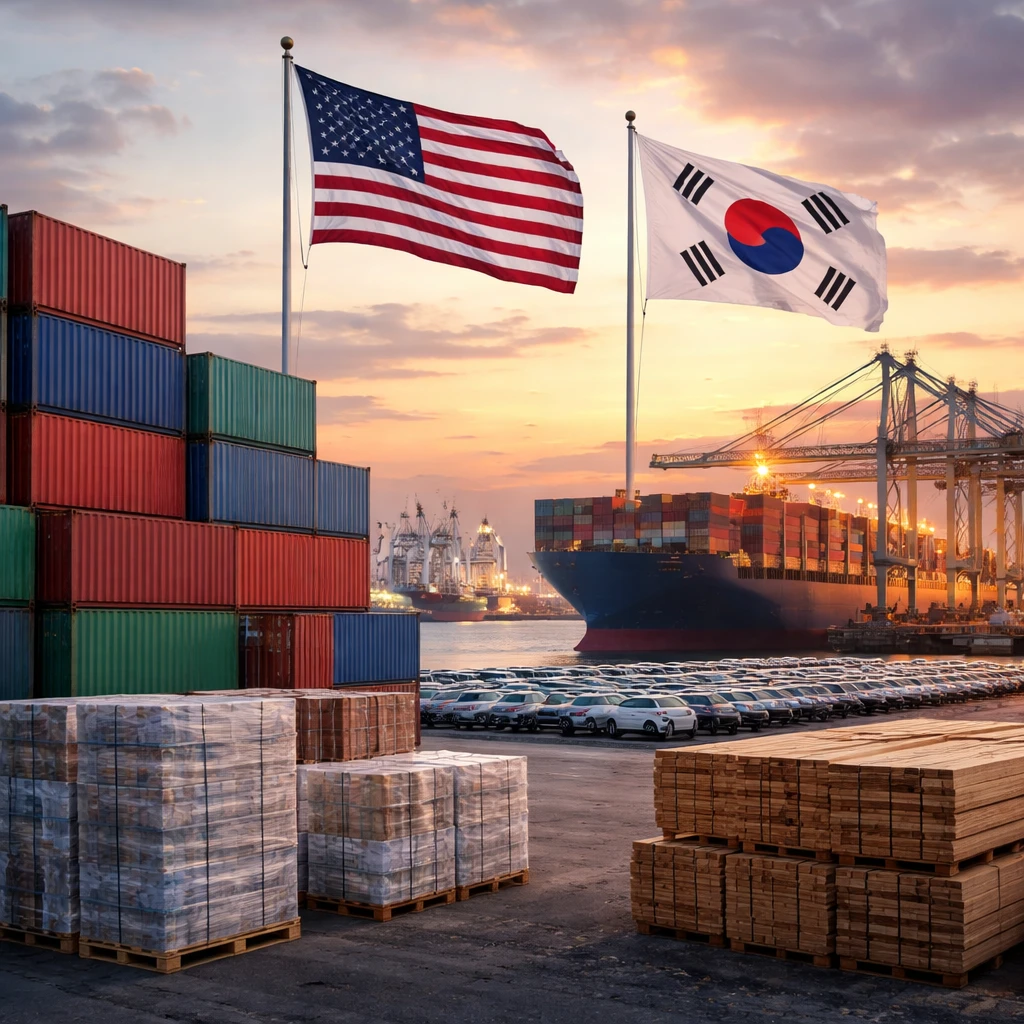
U.S. President Donald Trump said on Monday that he is raising tariffs on goods imported from South Korea from 15% to 25% because the South Korean legislature has not approved a trade agreement negotiated last year.
In a post on Truth Social, the president specified that the tariff increase will apply to South Korean automobiles, lumber, pharmaceuticals and other items covered by reciprocal duties. He framed the action as a response to legislative inaction in Seoul.
Trump wrote that he and South Korean President Lee agreed to what he called a "Great Deal for both Countries" on July 30, 2025, and that the terms of that arrangement were reaffirmed during his visit to Korea on October 29, 2025. He questioned why Korean lawmakers had not enacted the pact, saying:
"South Korea’s Legislature is not living up to its Deal with the United States."
The president acknowledged that it is the prerogative of the South Korean legislature not to pass what he labeled a "Historic Trade Agreement," but said his administration would respond by raising tariffs. He also noted that the United States had "acted swiftly to reduce our TARIFFS in line with the Transaction agreed to" and said he expected trading partners to reciprocate.
The announced tariff hike is a direct consequence, according to the administration's statement, of the trade pact remaining unsigned by the South Korean legislature. The declaration identifies specific product categories that will be affected and reiterates the sequence of bilateral steps - agreement, reaffirmation during a presidential visit, then a demand for legislative approval.
The public communication on Truth Social makes clear that the U.S. action is tied to the legislature's failure to ratify the deal rather than to any newly negotiated terms. Beyond listing categories of goods that will face higher levies, the statement emphasizes a reciprocal expectation: the U.S. reduced tariffs under the transaction and expects its trading partner to follow suit by approving the agreement.
Context and immediate implications
The president's announcement links the tariff increase explicitly to legislative inaction in South Korea and underscores a reciprocal framework underpinning the earlier transaction. The administration's move will raise duties from 15% to 25% on the specified South Korean goods until the issue of enactment is resolved.
The details provided in the public post focus on the connection between the bilateral deal - reached July 30, 2025 and reaffirmed October 29, 2025 - and the mechanics of tariff adjustments, rather than on additional diplomatic steps or timelines for resolution.