
Industry forecaster Cox Automotive expects new-vehicle sales in the United States to fall in the first quarter of 2026 as affordability concerns keep some buyers off the lot. Cox projects first-quarter sales will drop 6.5% from a year earlier, and it also sees annual sales declining by 2.6%.
Charlie Chesbrough, senior economist at Cox Automotive, cited several factors behind the softer outlook. "The loss of EV tax credits, coupled with ongoing elevated interest rates and vehicle prices will lead to a slower pace," he said. Those pressures are coinciding with broader economic and geopolitical developments that risk weighing on household spending.
The report points to the U.S.-Israeli war on Iran as an additional strain, contributing to upward pressure on oil. As gasoline costs climb, they become another potential headwind for consumer budgets; national pump prices are approaching an average of $4 per gallon, the analysis notes.
"High fuel prices are typically things that will create disruptions. But so far, we haven’t seen anything drastic in that regard. I’d hate to be a pessimist here, at this point, I feel there’s a lot of reasons to be optimistic for the year for us," said Scott Bell, vice president, global, at carmaker Chevrolet.
Electric vehicles, which saw a surge in demand ahead of a reduction in federal incentives last year, are expected to see a sharp pullback in sales in the January-March period. Cox Automotive forecasts EV sales will fall about 28% in the first quarter.
Despite the steep expected decline, interest metrics for battery-powered models show some resilience. "Pure EV shopping interest has climbed to its highest point so far in 2026," said Erin Keating, senior director of economy and industry insights at Cox Automotive. "We’ve had peaks before, so while this trend is encouraging, we’re not in uncharted territory," Keating added.
On the manufacturer front, General Motors is forecast to lead quarterly sales volumes, though the automaker’s shipments are expected to slip about 10% in the quarter. Toyota is projected to retain the number-two position and pick up some market share as the market shifts.
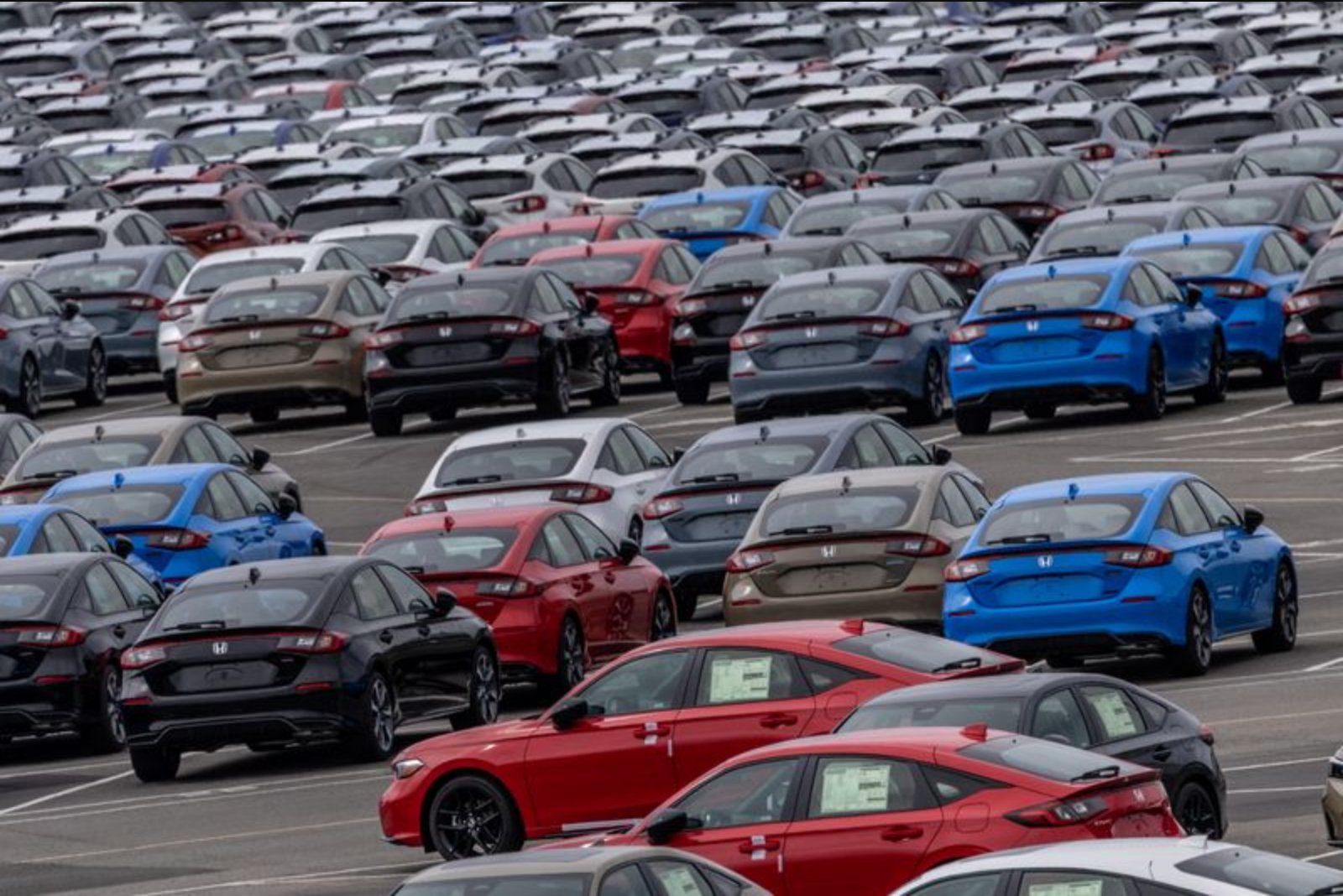
At retail, inventory growth across dealer lots is changing the competitive landscape. Higher stocks tend to push dealers to compete more aggressively on price and terms, a dynamic that can favor shoppers.
"When you have more vehicles than you have customers, it is going to be very competitive," said Jason Hoff, CEO of Mercedes-Benz North America.
Dealers on the front lines are already sensing the change in momentum. Jim Walen, a dealer representing Stellantis and Hyundai in Seattle, expects flat sales this year as consumer sentiment weakens, even as automakers push for growth. He said that combination could drive deeper discounts in the market.
For investors and potential buyers evaluating individual manufacturers, automated stock-screening tools are also in the conversation. ProPicks AI, for example, evaluates General Motors alongside thousands of other companies every month using over 100 financial metrics. The product’s promotional materials note that its AI-driven strategies have identified past winners, citing Super Micro Computer (+185%) and AppLovin (+157%), while offering users a way to check whether GM appears in current strategies.
This confluence of elevated finance costs, high transaction prices, reduced EV incentives and a more competitive dealer environment underpins the cautious outlook for the start of 2026. How these factors evolve through the remainder of the year will determine whether sales stabilize or face further downside.