
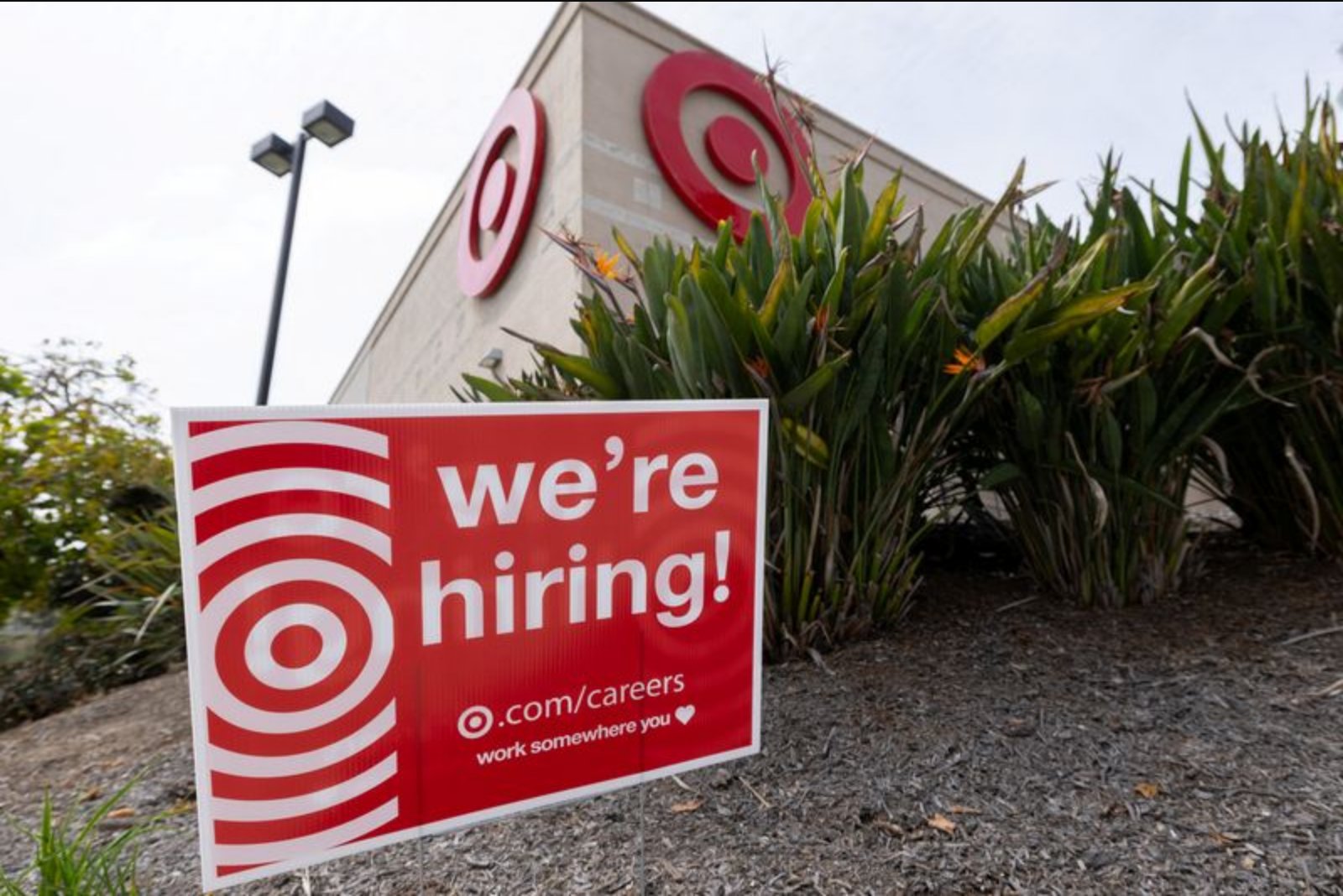
U.S. employment likely showed a modest rebound in March after a sharp decline in February, driven in part by the end of a major healthcare strike and easing winter conditions, according to economists surveyed. Still, analysts say that the labor market faces mounting downside risks as the war in the Middle East adds a fresh layer of uncertainty for businesses and consumers.
Surveyed economists see nonfarm payrolls rising by about 60,000 jobs in March. That anticipated gain would represent a return toward last year’s near stall-speed growth pace, rather than a robust upswing. Payrolls had fallen by 92,000 in February, the sixth monthly decline since January 2025 and the second-largest drop during that span.
Sources of the March rebound
One immediate factor behind the expected uptick was the resolution of a large strike. Roughly 31,000 nurses who had been on strike at Kaiser Permanente facilities in California and Hawaii returned to work in late February, which should lift healthcare payrolls in March. Healthcare has been the primary pillar of job growth in recent periods, and economists expect it will continue to play a leading role, driven by demographic shifts.
Seasonal and weather effects are also likely to have helped. Economists expect a rebound in construction employment and in leisure and hospitality payrolls after declines that were attributed to harsh winter weather in February. Overall, job gains in March were expected to be concentrated in a handful of industries, with social assistance among the sectors likely to add jobs.
Political and geopolitical uncertainty
Beyond these industry-specific drivers, the labor market has been buffeted by a series of policy and geopolitical shocks. Economists note that uncertainty around trade policy has weighed on hiring, with the situation shifting sharply after U.S. trade actions this year. The Supreme Court in February struck down duties that had been pursued under a law intended for national emergencies. In response, the administration imposed a global tariff for up to 150 days.
Compounding policy uncertainty, the U.S. and Israel launched strikes against Iran at the end of February. That month-long conflict sent global oil prices higher by more than 50% and pushed domestic gasoline prices up, with the national average retail gasoline price topping $4 a gallon this week for the first time in more than three years. Economists say the resulting spike in energy costs will feed through to higher inflation, erode household purchasing power, offset some wage gains and slow consumer spending.
"We saw this last year, uncertainty puts businesses on the back foot when it comes to hiring," said Sophia Kearney-Lederman, a senior economist at FHN Financial. "Last year, the big uncertainty was around tariffs. This year, it’s around what the conflict in the Middle East and rising oil prices will mean."
Some economists expect the economic effects of the conflict to materialize with a lag, potentially becoming more visible in April and beyond. The war also weighed on financial markets in March, with an estimated $3.2 trillion wiped off the stock market that month. On Wednesday, the administration vowed additional strikes on Iran, a development some analysts warned could encourage businesses to adopt a defensive posture in hiring and investment.
"Businesses are going to hunker down and go back in the bunker for a period of time," said Brian Bethune, an economics professor at Boston College. "My guess is that period will likely be one or two months. So we will probably see that in April and May. The prospects for the second quarter are just not good."
Labor demand, supply and the payroll outlook
Data published this week by the Bureau of Labor Statistics showed a significant decline in job openings in February, the largest drop in nearly a year and a half, signaling slipping labor demand. Labor-market researchers point to broader forces that have altered the dynamics of payroll readings.
Mass deportations carried out by the administration have been cited by economists as a factor contributing to labor market paralysis by reducing labor supply. Lower labor supply growth means fewer jobs are required each month to keep pace with growth in the working-age population. Economists estimate that historically low labor supply growth has pushed the break-even rate -- the number of jobs needed to match working-age population growth -- to less than 50,000 jobs per month; some estimates place that rate at zero or even negative.
Because of these shifts, economists at JPMorgan warned that negative payroll readings in any given month are likely to become more common. The JPMorgan team added that, "even with job growth sufficient to stabilize the unemployment rate, there could be negative payroll readings at least a third of the time."
Lightcast senior labor economist Ron Hetrick summed up the current environment, saying, "Everything is just moving at a snail’s pace, lots of uncertainty, and we are still deporting people."
Wages, unemployment and policy implications
Economists expect the unemployment rate to remain unchanged at 4.4% in the March report, although some forecasters suggested it could tick up to 4.5%. Average hourly earnings are forecast to have risen 0.3% in March, which would translate to a 3.7% annual increase in wages.
Despite the disruption to hiring and the uncertainty from the conflict and trade moves, most economists do not expect the March employment report to meaningfully alter the Federal Reserve’s policy path. The Fed left its benchmark overnight rate in the 3.50% to 3.75% range last month, and the odds of a rate cut this year have diminished markedly.
Andrew Husby, a senior economist at BNP Paribas Securities Corp., said that without a pickup in layoffs, the labor market may settle into what he described as a "low-hire, low-layoff" equilibrium. He added that such an outcome would be "uncomfortable but sustainable and one that doesn’t call for pre-emptive Fed policy support."
Timing and near-term risks
While March likely captured the mechanical rebound from the end of the Kaiser Permanente strikes and some weather-related normalization, many economists stressed that the full economic consequences of the Middle East conflict and the trade-policy shifts may not be apparent immediately. Some expect effects to show up in April’s employment report, with a further drag on payrolls and consumer spending if gas prices remain elevated and businesses delay hiring.
Good Friday is not a federal holiday in the United States, though some financial markets are closed.
Note: The article summarizes expectations drawn from economist surveys and official BLS data referenced in recent releases and commentary; it reflects forecasts and concerns voiced by market participants and economists at institutions cited above.