
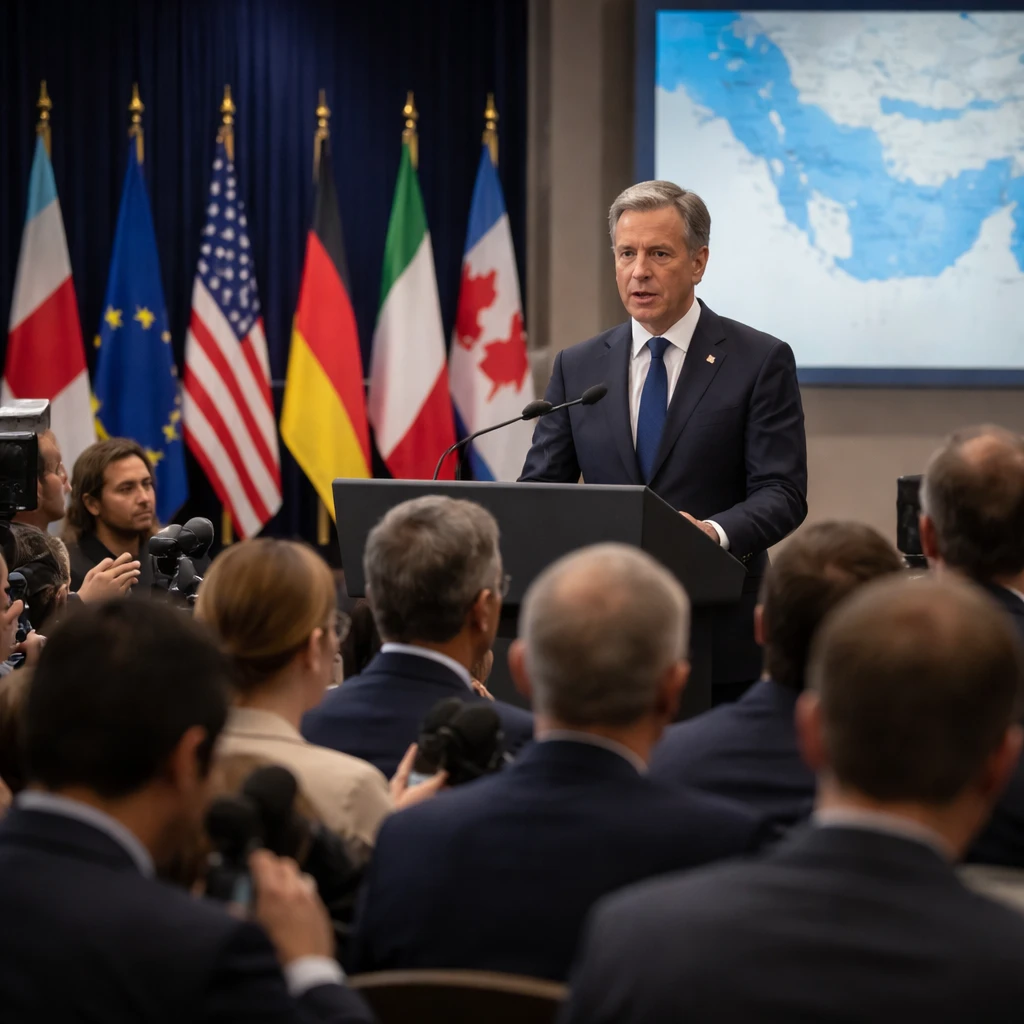
After meeting with foreign ministers from the Group of Seven in France, the U.S. Secretary of State said Friday that American operations related to Iran are expected to wrap up in weeks, not months. He described the G7 session as productive and provided officials with updates on both the timeline and the scope of U.S. activities.
Speaking to reporters, the Secretary indicated the U.S. anticipates concluding the operation at what he called the "appropriate time," emphasizing that the period is measured in weeks. He also stated that Moscow's activities in support of Iran are not obstructing U.S. efforts.
On the subject of the Strait of Hormuz - a channel the Secretary noted is a critical route for global oil shipments - he said Iran may seek to impose a tolling system for vessels passing through the waterway. He labeled such a move "unacceptable" and suggested that nations most directly affected by a potential closure should take a role in securing the passage.
In describing the U.S. plan, the Secretary was explicit that American objectives can be achieved without deploying ground troops. That assessment accompanied his updates delivered after the G7 foreign ministers' meeting in France, which he characterized as productive.
The Secretary's remarks covered several discrete points: an expectation of a short operational timeline, a rejection of ground-force deployment as necessary for U.S. goals, an assessment that Russian support for Iran is not impeding operations, and concern about any effort by Iran to extract tolls from transit through the Strait of Hormuz.
He urged participation from countries most affected by disruptions to the Strait, implying a multilateral role in securing the waterway should Iran attempt to impose restrictions. Beyond those calls, his statements left the operational specifics and the precise mechanisms for such multinational cooperation unspecified.
Those public comments followed the Secretary's engagement with G7 counterparts in France, where he reported on developments tied to the U.S. operations and their timeline. He characterized the international meeting as productive while reiterating the administration's position on troop deployment and maritime security in the Strait.
Bottom line: U.S. leadership expects a weeks-long conclusion to current operations related to Iran, does not plan to use ground troops to meet objectives, and views any Iranian tolling of the Strait of Hormuz as unacceptable while calling for involvement from affected states.