
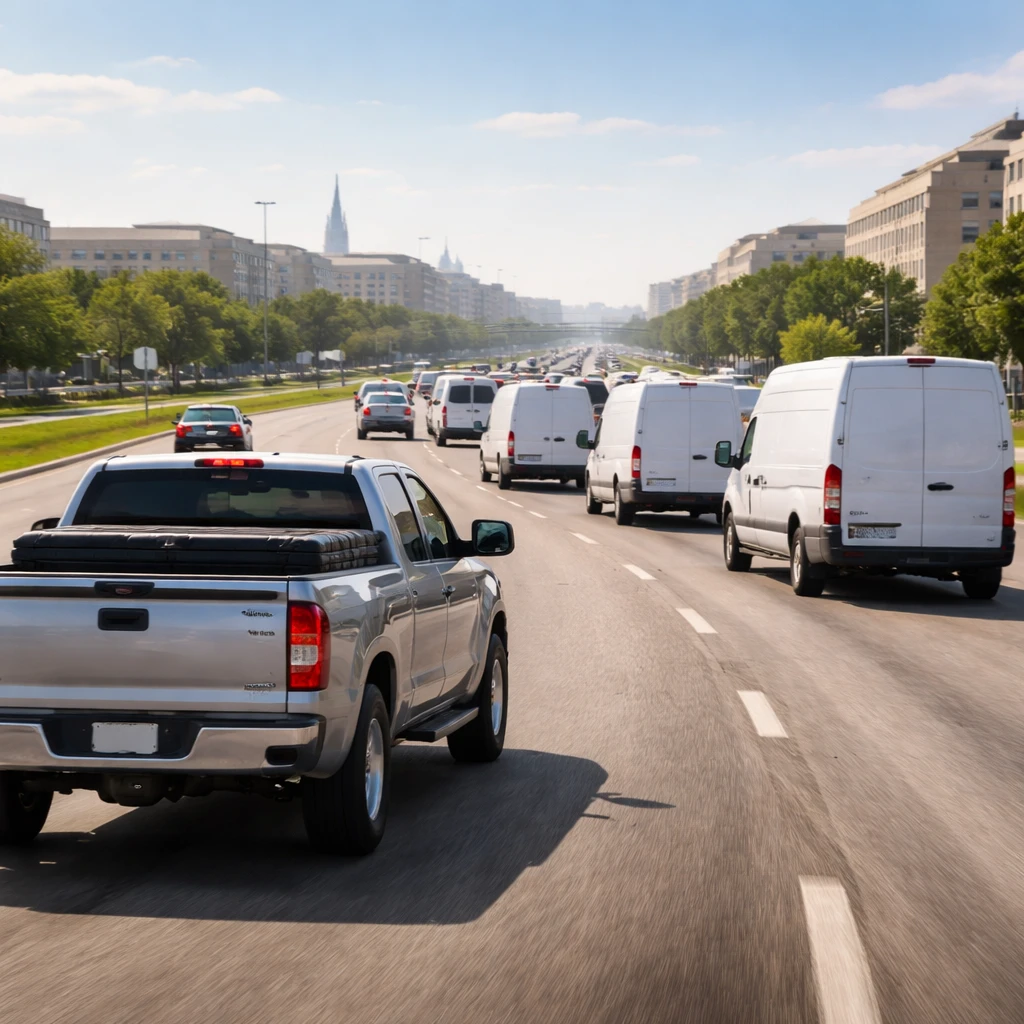
The U.S. Transportation Department said on Friday it intends to propose a rollback of fuel economy standards for heavy-duty pickup trucks and vans that were finalized under the previous administration. The agency characterized the existing requirements as unrealistic for larger commercial vehicles and signaled plans to reset the rules.
Under the rules finalized in 2024, heavy-duty pickup trucks and vans were required to improve fuel efficiency by 10% per year for model years 2030-2032 and by 8% per year for model years 2033-2035. The Biden administration had said those standards would produce a fleetwide average of approximately 35 miles per gallon by model year 2035 and would save heavy-duty pickup and van owners more than $700 in fuel over the lifetime of their vehicles.
On Friday, the National Highway Traffic Safety Administration (NHTSA) told automakers in a letter that the standards were unrealistic and needed to be reset. The agency also said the prior administration lacked the legal authority to establish civil penalties for failing to meet standards for larger vehicles. NHTSA Administrator Jonathan Morrison said unrealistic standards "harm American consumers and business owners who use these commercial vehicles."
The Environmental Protection Agency under the prior administration had issued parallel rules for heavy-duty vehicles.
Industry groups had criticized the 2030 rules. The American Trucking Associations in 2024 described the 2030 requirements as "entirely unachievable given the current state of zero-emission technology, the lack of charging infrastructure and restrictions on the power grid."
The move to revisit heavy-duty standards follows a separate NHTSA proposal last month to substantially lower fuel economy targets for light-duty passenger cars and trucks. That proposal revised down the 2022 standards and then put forward a plan to increase them between 0.25% and 0.5% annually through 2031, with the agency saying the changes would make it easier for automakers to continue selling gasoline-powered cars.
NHTSA also noted its prior rulemaking actions taken under the previous administration. In 2022, the agency increased fuel efficiency requirements by 8% annually for model years 2024-2025 and by 10% for 2026.
Agency estimates accompanying the light-duty proposal indicated the rule would reduce average up-front vehicle costs for automakers by $930 but would increase fuel consumption by around 100 billion gallons through 2050. NHTSA estimated that additional fuel use could cost Americans up to another $185 billion and raise carbon dioxide emissions by about 5%.
On Friday, NHTSA said it aimed to move quickly to finalize the new regulation addressing heavy-duty pickups and vans. The agency noted last year’s legislation signed by the President ended fuel economy penalties for automakers for cars and trucks, and said manufacturers faced no fines dating back to the 2022 model year.
Investment services note included with original reporting: AI computing powers are changing the stock market. Investing.com's ProPicks AI includes dozens of winning stock portfolios chosen by an advanced AI. Year to date, two out of three global portfolios are beating their benchmark indexes, with 88% in the green. Their flagship Tech Titans strategy doubled the S&P 500 within 18 months, including notable winners like Super Micro Computer (+185%) and AppLovin (+157%).
Which stock will be the next to soar? Pick Stocks with AI.