
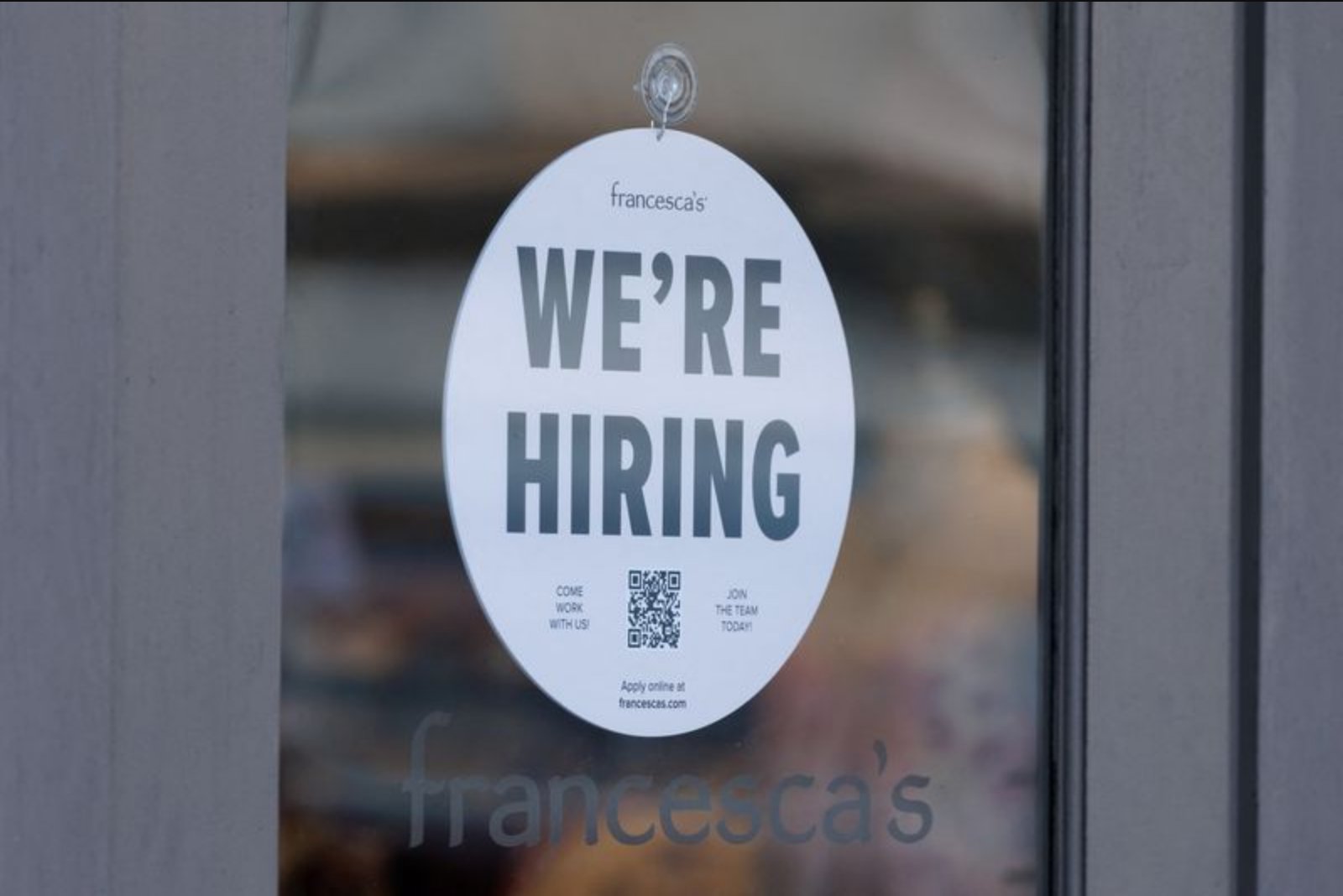
The U.S. labor market showed unexpected resilience in April as nonfarm payrolls grew by 115,000 and the unemployment rate stayed at 4.3%, according to the Labor Department's Bureau of Labor Statistics employment release.
The April gain followed an upward revision to March payrolls, which were adjusted to a 185,000 increase from earlier estimates. Economists surveyed by Reuters had been looking for a 62,000 rise in April payrolls, after a previously reported 178,000 increase in March. Forecasts ahead of the report ranged from a loss of 15,000 jobs to a gain of 150,000.
Analysts cautioned that it is too soon to see the labor market impact of the U.S.-Israeli war with Iran reflected in the data. Economists noted that the conflict has pushed up gasoline and diesel prices and lifted costs for other commodities that transit the Strait of Hormuz.
Payroll readings have been erratic since mid-2025, switching between monthly gains and losses. Economists attribute much of this volatility to adjustments in the government's birth-and-death model, which estimates job creation and losses tied to firms opening and closing in a given month. Some observers say a high turnover among newly formed firms has made it difficult for the Bureau of Labor Statistics to accurately capture employment generated by startups.
Other factors cited for the swings include weather, strikes, reductions in government employment, and sizable shifts in the labor force associated with the current administration's tightened enforcement of illegal immigration. Because of these influences, economists recommended examining the three-month moving average of payrolls for a clearer picture of underlying trends.
Economists and policymakers describe the labor market as being in a "slow hire, slow fire" phase, a stagnation they link to trade and immigration policies. With lower immigration and an aging population, the economy reportedly needs between zero and 50,000 new jobs per month merely to keep pace with growth in the working-age population. Given that the breakeven level of job growth is far lower than in prior years, economists did not expect the unemployment rate to spike even if monthly employment gains eased substantially.
The April report strengthened market expectations that the Federal Reserve will maintain its current policy stance through 2027. The Fed last week left its benchmark overnight interest rate in the 3.50% to 3.75% range, citing ongoing concerns about inflation.
Investors and analysts will continue to watch payrolls for confirmation of the slower but stable hiring environment, and many will lean on multi-month averages and other smoothing measures to filter out short-term noise introduced by measurement adjustments and episodic events.
Data points reiterated in the report:
- April nonfarm payrolls: +115,000 jobs
- March payrolls (revised): +185,000 jobs
- Unemployment rate: 4.3% (unchanged)
- Federal Reserve benchmark overnight rate: 3.50% - 3.75%