
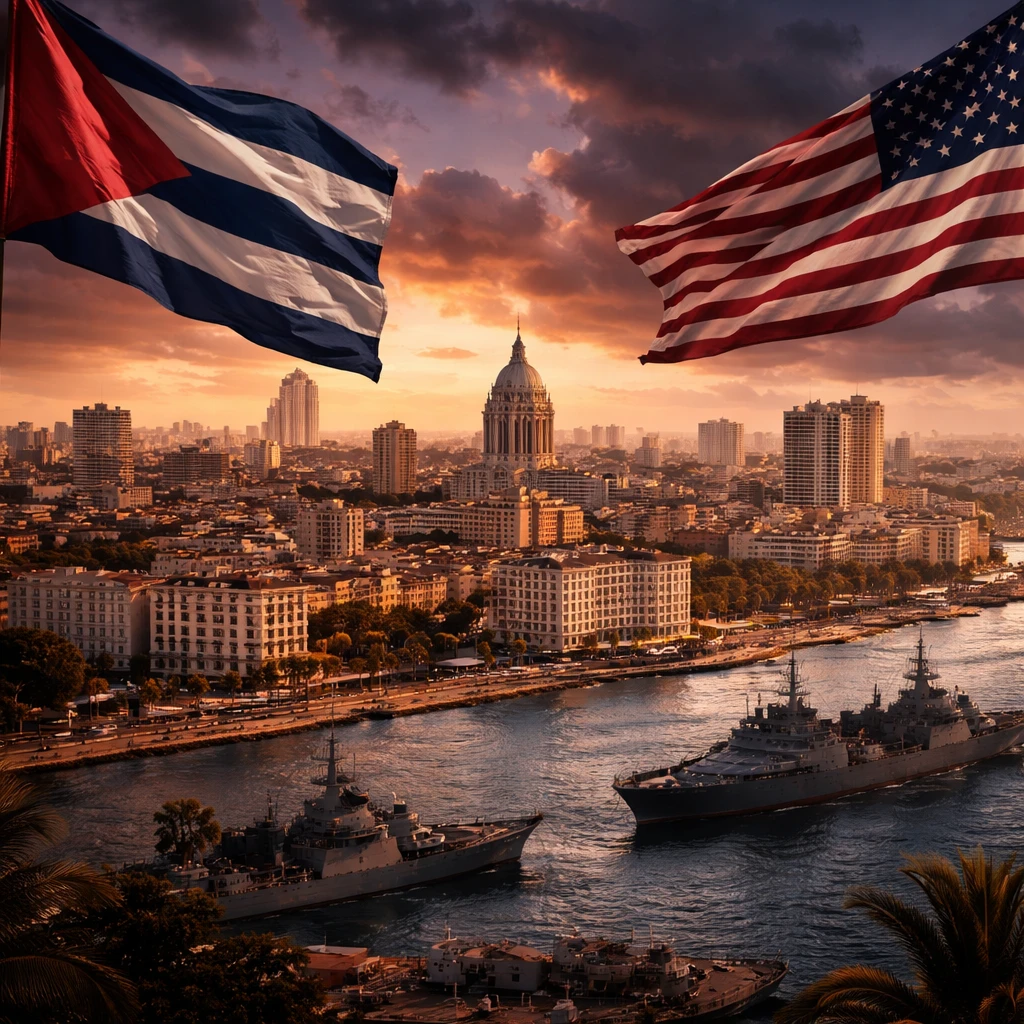
The United States administration under President Donald Trump has escalated initiatives aimed at precipitating a change of government in Cuba within the current year. This move follows the earlier successful displacement of Venezuela's President Nicolás Maduro in early January.
According to informed sources, U.S. officials are engaging in covert outreach to identify members inside the Cuban government who might be willing to negotiate an exit from the Communist regime. Intelligence evaluations indicate that Cuba’s economy is approaching collapse, largely due to the cessation of support from Venezuela, its foremost ally.
Officials have not formalized a detailed blueprint but consider the recent military intervention in Venezuela as a potential framework for operations in Cuba. President Trump has actively deployed social media platforms to increase pressure on Cuban leaders by highlighting the nation’s diminishing resources. On January 11, he declared that the United States would cease all oil and financial transfers to Cuba, emphasizing a total cutoff.
The administration appears to be using the recent incursion in Caracas, which resulted in the deaths of 32 Cuban operatives, as a veiled warning of possible military action. Highlighting the urgency of negotiations, the President publicly urged Cuban authorities to "make a deal before it is too late."
U.S. officials conducting meetings in Miami and Washington have collaborated with Cuban exile organizations to locate potential defectors within the existing power structure. Those willing to acknowledge the declining prospects of the regime are viewed as instrumental in facilitating a transition.
President Trump has publicly characterized Cuba as a "failing nation" on the verge of collapse due to profound economic instability. The administration's strategic goal is to dismantle the Communist government established nearly seventy years ago and secure a lasting impact on U.S. foreign policy before the year 2027.