
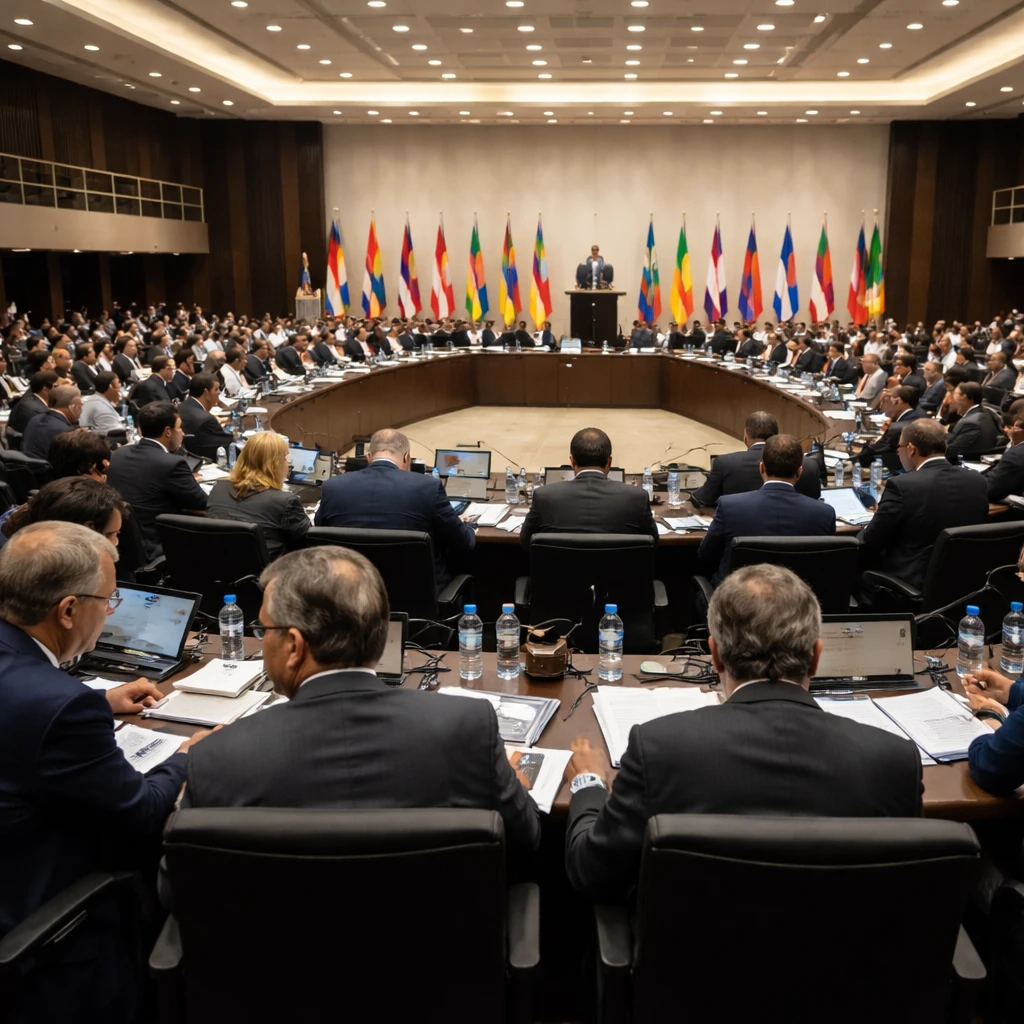
Trade ministers convened in Cameroon for the World Trade Organization summit have reached the final day of deliberations without resolving a key dispute over duties on digital transactions.
The central issue is the future of a long-standing moratorium that prevents members from imposing customs duties on electronic transmissions - a category that covers digital downloads and software. That moratorium is due to expire this month, and the outcome in Yaoundé is being watched as a test of the WTO’s standing after a turbulent period for global trade and strained supply chains.
The negotiations have become defined by a clear division between two positions: a United States push for a permanent ban versus an Indian preference for a limited renewal. U.S. Trade Representative Jamieson Greer has indicated Washington will not accept a temporary extension and is pressing for permanence to deliver long-term predictability for markets.
Indian diplomats have signaled they are prepared to accept only a two-year extension. Some Western envoys have floated the idea of a compromise that would create a "pathway to permanence" - potentially a 10-year arrangement - but there is limited appetite among the broader membership to move past the 24-month mark.
Business groups have cautioned that allowing the moratorium to lapse would likely prompt a surge in new digital duties and would remove a layer of regulatory certainty that has supported the digital economy for decades. U.S. officials have also warned that a lapse could harm Washington’s engagement with the WTO. U.S. Ambassador Joseph Barloon has said a permanent extension is essential to preserve U.S. confidence in the organization’s effectiveness.
These e-commerce negotiations are occurring alongside larger proposals to update WTO rules. Delegations are discussing measures to make the use of subsidies more transparent and to streamline the body’s consensus-based decision-making process.
The United States and the European Union are arguing that established frameworks - including the Most-Favored-Nation principle - have been used to their disadvantage, a contention that is part of motivations for the reform push. At the same time, a small group of members is blocking a detailed work plan, arguing that such changes could weaken the WTO’s founding principles.
With time running out in Yaoundé, market observers are focused on whether the WTO can avert a lame duck outcome. Failure to secure the moratorium would raise immediate concerns about the cost of digital trade and could also be read as a signal of deeper fragmentation in the rules-based international trading system.
The discussions in Cameroon therefore carry implications not only for tariff policy on digital goods and services but also for broader institutional reforms that several major economies are seeking. As delegates weigh permanence against shorter extensions, the stakes include regulatory certainty for digital markets and the coherence of multilateral trade governance.