
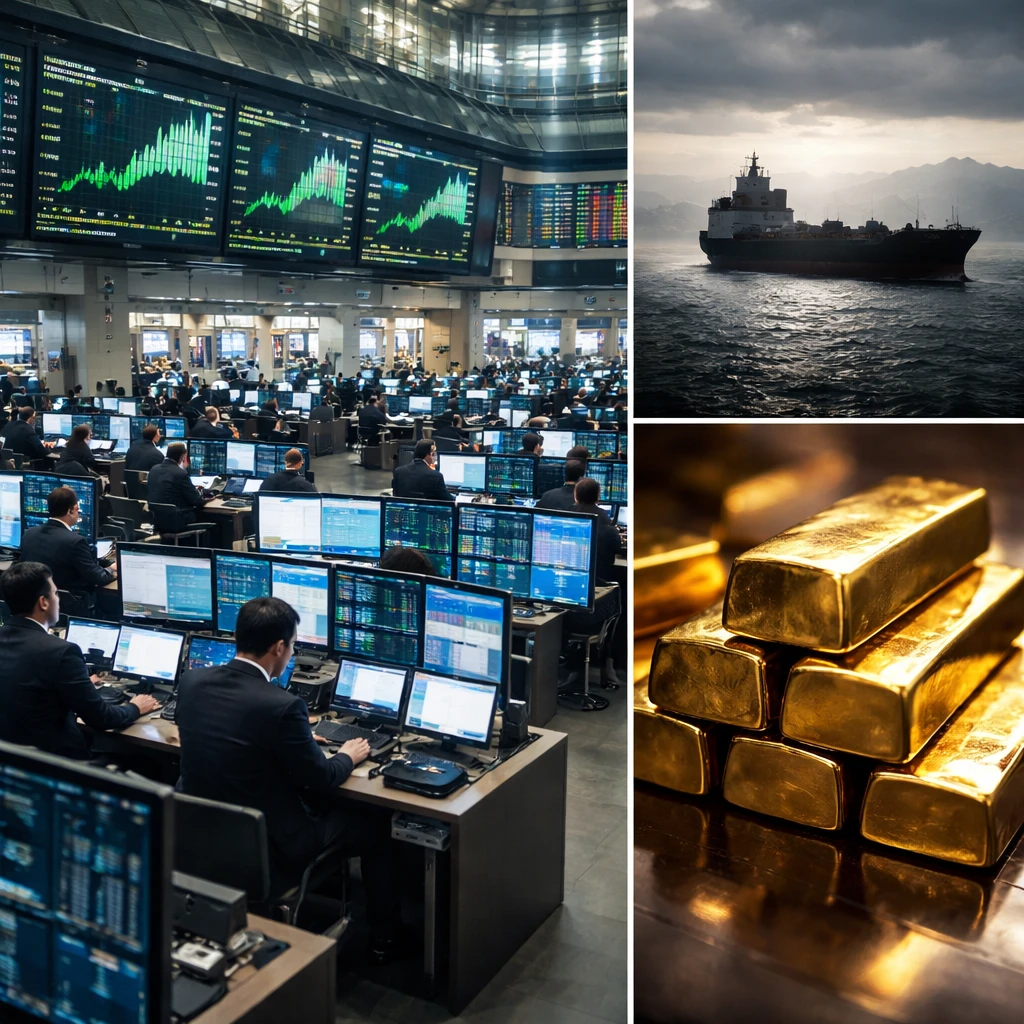
U.S. stock futures climbed early Wednesday amid renewed market optimism that the conflict with Iran may be approaching a negotiated halt. The initial gains in equity derivatives came as several media reports suggested mediators from Turkey, Egypt and Pakistan are pressing for direct talks between Washington and Tehran by Thursday, and as news circulated that the United States had submitted a detailed 15-point proposal aimed at stopping the fighting.
By 04:14 ET (08:14 GMT), the futures market showed notable rebounds: the Dow futures contract was higher by 495 points, up about 1.1%, S&P 500 futures had increased 68 points, or roughly 1.0%, and Nasdaq 100 futures were up 284 points, or around 1.2%. Those moves came after the main Wall Street averages fell in the previous session as investors wrestled with the likelihood of an end to the nearly month-long war that has amplified geopolitical risk across the Middle East.
While diplomatic activity has picked up, the fighting on the ground has continued without pause and the U.S. has moved additional military units into the region. Some Washington allies in the Persian Gulf have reportedly urged the U.S. president to continue prosecuting the conflict, heightening uncertainty over how any settlement might be negotiated and implemented. Tehran has pushed back on the White House characterization of recent talks, rejecting assertions of "very strong" negotiations and saying that such claims were aimed at stabilizing volatile financial markets.
Markets have been sensitive to the war's economic implications. Preliminary U.S. business activity data for March showed a sharp slowdown, with S&P Global's flash purchasing managers index falling to an eleven-month low. That reading highlighted mounting pressure on growth from higher prices linked to the energy shock created by the conflict. The European data painted a similar picture, with separate Eurozone PMIs warning of what was described as ringing stagflation alarm bells - a situation of sluggish growth alongside persistent inflation.
Energy markets and the Iran standoff
Optimism over a possible de-escalation pushed oil prices lower in early trade. Brent crude futures for the May contract eased by 6.5% to $97.68 a barrel by 04:31 ET, slipping back below the psychologically important $100 a barrel mark. Despite the decline, crude remains markedly higher than its level prior to the outbreak of the conflict late in February, when prices were near roughly $70 a barrel.
The reported U.S. 15-point plan includes demands for Iran to dismantle its principal nuclear sites and a call for the reopening of the Strait of Hormuz, a strategically vital shipping lane that has been effectively closed to tanker traffic for several weeks. Restrictions on traffic through the strait had been a major driver of the earlier spike in energy costs and were cited as a channel for inflationary pressures to spread globally.
Iran, however, has set a high bar for negotiations according to the reports, including a proposal that would establish fee collection from ships passing through the strait. An Iranian military spokesperson was quoted as saying the U.S. is only "negotiating with" itself, a comment that appeared to temper hopes for an imminent breakthrough.
Precious metals and currency moves
Gold rallied in European trade, supported by the retreat in oil and a somewhat weaker U.S. dollar, though gains were constrained by the ongoing regional tensions. Spot gold was last cited up 2.0% at $4,564.34 an ounce by 05:03 ET, while U.S. gold futures rose 3.7% to $4,597.42. Lower energy prices can put downward pressure on bond yields and can weaken the dollar, factors that typically help non-yielding assets such as gold.
The U.S. dollar index, which measures the dollar against a basket of major currencies, slipped 0.2% to 99.21 as global currency volatility took a pause. Traders responded to the White House's comments on negotiations and to the market relief that would accompany any plausible diplomatic off-ramp, which also supported equity gains in Europe and Asia alongside the decline in oil prices.
Still, market participants cautioned against assuming a quick resolution. Analysts at ING noted that positioning for a speedy end to the crisis could be risky because Iran might view elevated energy prices as leverage in any bargaining process. They also flagged forthcoming speeches by European central bankers, which they said were very likely to adopt a hawkish tone, potentially complicating the outlook for rates and currencies.
Other market strategists suggested investors may be entering a phase of fatigue, as attention has been stretched by rapid-fire developments out of Iran and shifting headlines have driven recurring spikes and retreats across asset classes.
Corporate earnings on the calendar
Outside of macro developments, corporate watchers were focused on the upcoming quarterly report from online pet retailer Chewy Inc. Investors are watching for signs the company can arrest a significant share-price slump that has seen the stock decline by more than 29% over the past year. Analysts at Morgan Stanley forecast fourth-quarter revenue of about $3.27 billion, roughly in line with consensus, and estimated EBITDA around $171 million, modestly above market expectations.
Morgan Stanley framed the print as a setup for fiscal 2026, expecting initial guidance in the range of 7% to 7.5% revenue growth and projected EBITDA margin expansion of around 90 to 100 basis points. Wolfe Research likewise saw the company delivering a modest upside, forecasting revenue growth near 0.8% year on year to $3.27 billion and EBITDA margins of 4.9%, an improvement of 109 basis points from the prior period.
What markets are watching next
Investors will continue to monitor any confirmation that diplomatic channels are progressing toward talks between U.S. and Iranian officials, the precise terms of the U.S. 15-point plan and Tehran's responses. Market participants will also be closely tracking further developments in energy flows through the Strait of Hormuz, movements in bond yields and commentary from central bankers in Europe, which analysts said could add a hawkish tilt to rate expectations.
Given the ongoing fighting and the reports that several Gulf states have urged continued pressure on Iran, the path to a stable resolution remains uncertain. Markets have reacted to each headline quickly, underscoring the fragile link between geopolitical headlines and asset price volatility in oil, currencies, precious metals and equities.
Bottom line
Early Wednesday moves in futures, oil, gold and the dollar reflected cautious optimism that diplomatic efforts might open a route to end hostilities. That optimism was tempered by persistent military activity, divergent statements from U.S. and Iranian officials, and firm negotiating positions reportedly taken by Tehran. Traders and policymakers alike will be parsing incoming data and headlines for signs that the conflict's economic effects - from higher energy-linked inflation to growth headwinds flagged in PMI surveys - may begin to ease or instead worsen.