
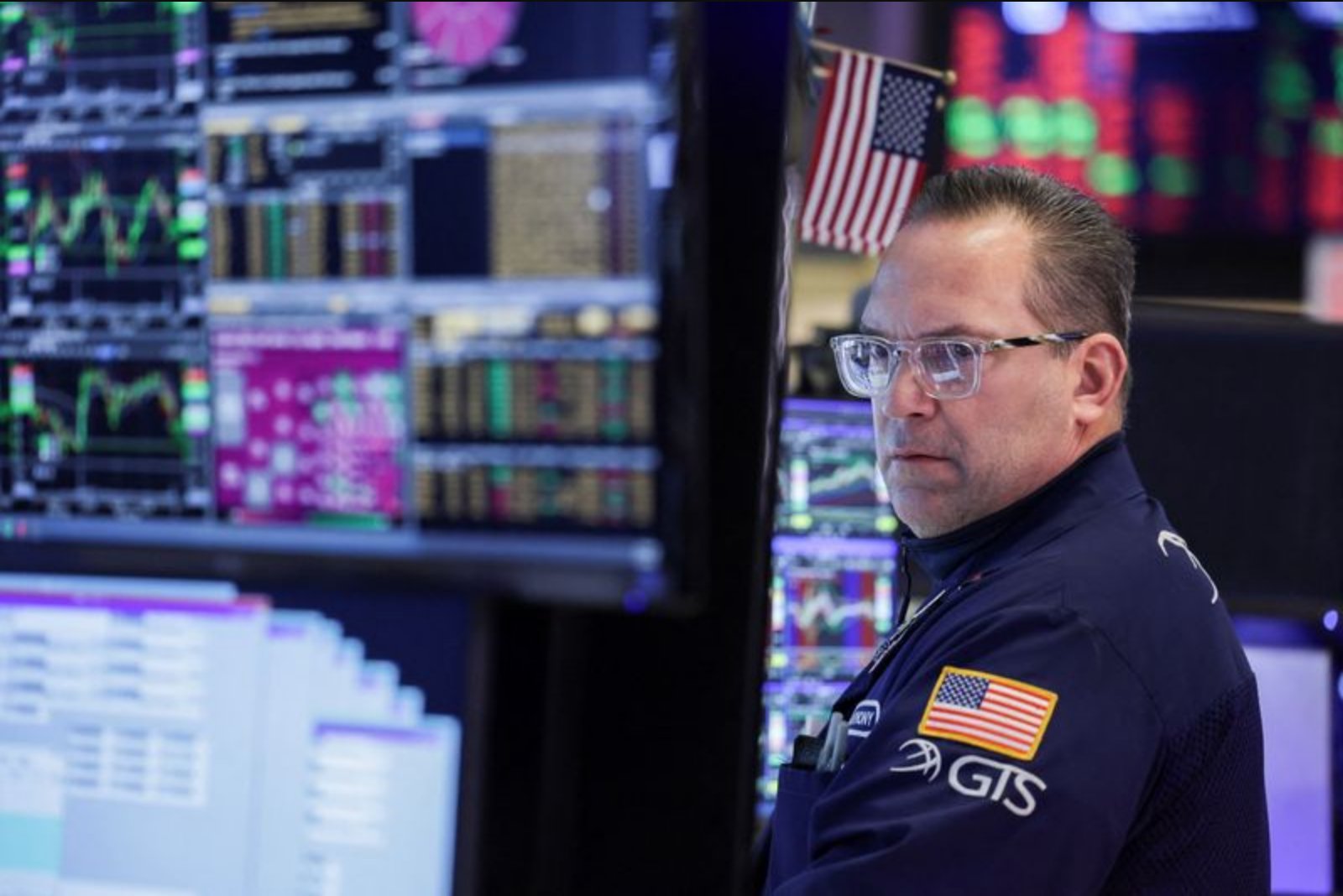
March 30 - U.S. equity futures moved up early on Monday following a heavy selloff in the prior session, with investors focused on the implications of an intensifying Middle East conflict for commodity markets and broader financial conditions.
Over the weekend, Yemen's Iran-backed Houthi militia entered the fighting and additional U.S. troops were deployed to the region. In a Financial Times interview, President Donald Trump said he wanted to "take the oil in Iran." Those remarks were balanced by his observation that the U.S. and Iran had been meeting "directly and indirectly," and Pakistan, acting as an intermediary, indicated it could host "meaningful talks" in the coming days. Market participants appeared to take some comfort from those signals of potential dialogue.
"The market is grappling with two major unknowns that feed directly into each other: when oil flows will resume in meaningful volumes, and at what price level oil switches from an inflation story to a recession story," said Stefan Koopman, senior macro strategist at Rabobank. Koopman further warned that seizing Iran's Kharg Island would constrict export capacity and push global oil prices higher.
Oil prices extended gains on Monday, and energy shares edged up in premarket activity. Exxon Mobil and Chevron each rose by about 1.4% before the opening bell. Aluminum producers also benefitted from firmer commodity prices, with Alcoa and Century Aluminum jumping 8.4% and 7.2%, respectively.
Market internals remained under pressure after the major U.S. indexes finished their fifth straight week of declines on Friday. The Dow confirmed it was in correction territory after closing more than 10% below its record high. The Nasdaq and the small-cap Russell 2000 have likewise moved into correction territory since the outbreak of war. The S&P 500 sits slightly above the threshold, about a little over 1% from that level.
Street strategists have adjusted positioning in light of the geopolitical shock. Morgan Stanley downgraded global equities to "equal weight" from "overweight," but noted that since the conflict began, fund flows into U.S. equities and U.S. bonds have outpaced flows to other regions, suggesting the U.S. could reassert itself as a haven for some investors.
At 05:25 a.m. ET, Dow E-minis were trading up 156 points, or 0.34%. S&P 500 E-minis were up 26 points, or 0.41%, while Nasdaq 100 E-minis were up 87.75 points, or 0.38%.
Traders are mindful that U.S. markets will be closed on Friday for the Good Friday holiday, compressing the week's calendar.
The surge in oil tied to the Iran-related conflict has renewed concerns about inflation, complicating policy decisions for central banks. Money market pricing has shifted sharply; participants are not forecasting any Federal Reserve rate cuts this year, a change from the expectation of two cuts prior to the outbreak of hostilities, according to CME Group's FedWatch Tool.
A busy economic calendar could add clarity on the state of the economy. A suite of labor market releases, including March's nonfarm payrolls, is due this week and may offer fresh information on employment trends. Comments from Federal Reserve Chair Jerome Powell and New York Fed President John Williams later in the day will be closely examined for policy clues.
Separately, commodity-related moves are influencing specific sectors. Higher aluminum prices have pushed shares of primary producers sharply higher in early trading. Energy names have benefitted from a rising crude complex, while broader equity markets contend with correction dynamics that have taken hold over recent sessions.
ProPicks AI and CVX
Investors considering energy stocks are being presented with algorithm-driven analysis from services such as ProPicks AI. The platform evaluates companies like CVX across more than 100 financial metrics each month, aiming to identify risk-reward profiles without bias. The service highlights past winners it has identified, citing Super Micro Computer (+185%) and AppLovin (+157%). It also offers to show whether CVX appears in current ProPicks strategies or if alternative opportunities exist within the same sector.