
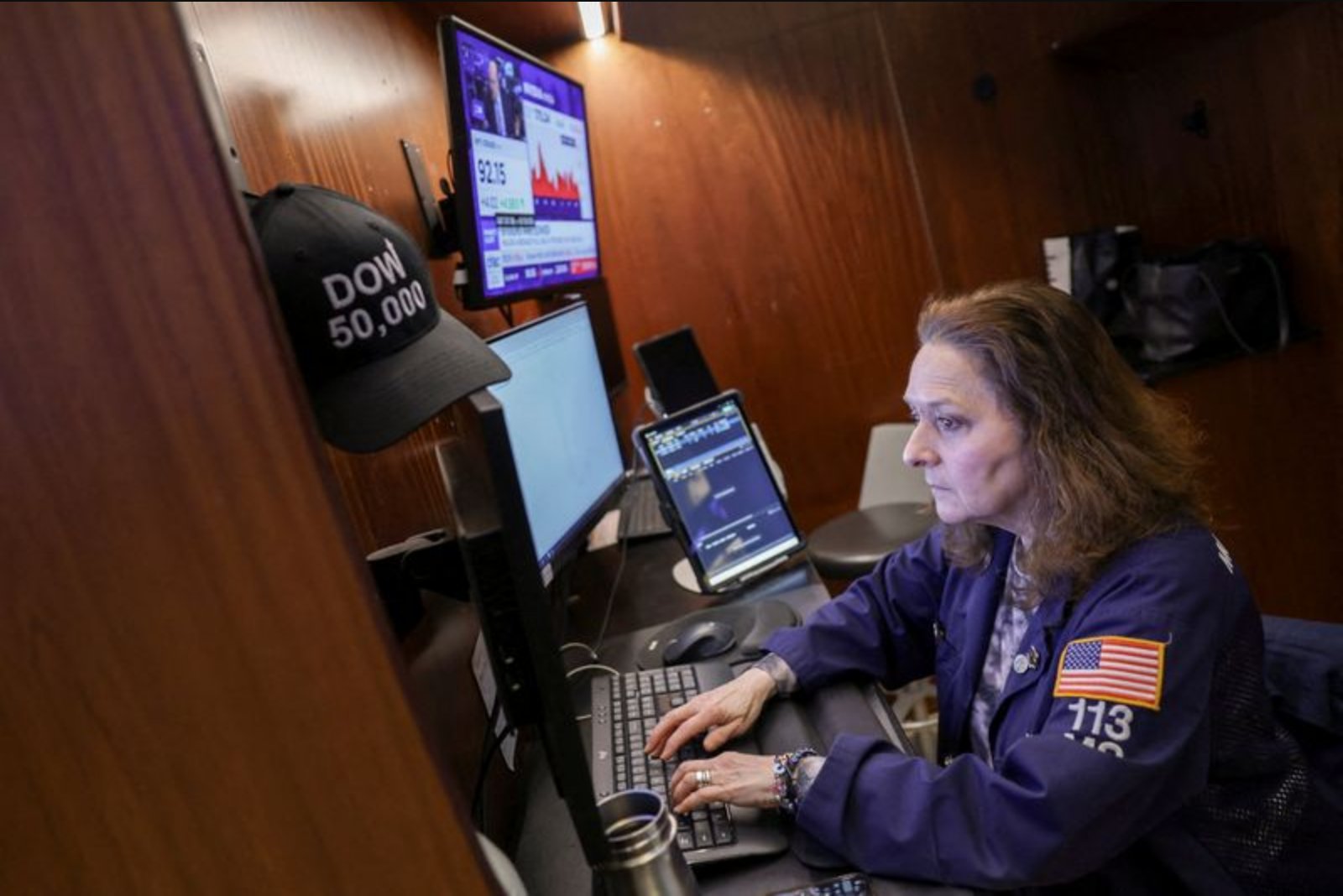
U.S. equity futures advanced on Wednesday following a broad market rally the previous day, after President Donald Trump and Secretary of State Marco Rubio signaled that an end to the Iran conflict could be close. The officials indicated the possibility of direct discussions with Iranian leadership and suggested the fighting might be wound down without a formal deal, comments that sent investors toward risk assets.
Markets responded globally. Europe’s STOXX 600 rose 2.2%, South Korea’s Kospi climbed as much as 9%, and Japan’s Nikkei increased by roughly 5% as traders priced in the prospect of shipping returning through the Strait of Hormuz, a key chokepoint for oil transit. Oil, which had jumped since the conflict began in late February, eased about 3% on Wednesday.
U.S. energy stocks traded lower in premarket activity, with Exxon Mobil and Chevron each down roughly 2.5% as oil declined. At the same time, futures tied to the main U.S. indices showed gains: at 04:40 a.m. ET, Dow E-minis were up 252 points, or 0.54%; S&P 500 E-minis were up 35.25 points, or 0.54%; and Nasdaq 100 E-minis were up 177.75 points, or 0.74%.
"While signs of a willingness to negotiate are positive, hurdles remain before an actual end to the conflict. A resumption of energy flows may take longer still," said analysts at UBS Global Wealth Management. "A sudden end to the conflict, while leaving the status of the Strait of Hormuz unclear, may also leave energy prices higher for longer."
The CBOE Volatility Index, often called Wall Street’s fear gauge, fell to a more-than one-week low and was last down 0.51 points at 24.74, reflecting a pullback in risk aversion. Still, the gains came after a sharp sell-off earlier in the month: despite Tuesday’s rally, both the S&P 500 and the Nasdaq recorded their steepest monthly declines in a year, while the Dow posted its largest monthly drop since September 2022.
Investors are balancing the improved geopolitical sentiment with a heavy slate of domestic economic data due throughout the day. Market participants will parse private payrolls, retail sales, and business activity surveys for clues about underlying momentum in the U.S. economy. Domestic private payroll figures for March are scheduled to be a focal point on Friday, although U.S. markets will be closed in observance of Good Friday.
Money market traders had moved to price out any interest-rate easing from the U.S. Federal Reserve this year after the outbreak of the conflict rekindled concerns about energy-driven inflation, clouding the path to rate cuts. Prior to the war, market participants had expected two reductions. Against that backdrop, remarks from Federal Reserve officials Alberto Musalem and Michael Barr were being watched for any indications on future policy direction.
On the corporate front, a number of U.S. equities were under pressure in premarket trading. Nike slid 9.1% after the sportswear company warned of an unexpected decline in fourth-quarter sales. Luxury furniture retailer RH dropped 17.2% after it projected annual revenue growth below analysts’ estimates and reported fourth-quarter revenue that missed expectations.
The market’s advance on hopes of de-escalation highlights how sensitive different asset classes remain to changes in geopolitical risk and energy flows. While reduced tensions can quickly lift equities and lower oil, analysts caution that practical challenges in restoring full transit through critical routes like the Strait of Hormuz could persist, leaving prices and some sectors vulnerable.
Key points
- Geopolitical comments from President Trump and Secretary of State Marco Rubio boosted global markets, with major European and Asian indices posting strong gains.
- Oil prices fell about 3%, pressuring U.S. energy stocks such as Exxon Mobil and Chevron, which were down roughly 2.5% in premarket trading.
- Investors remain focused on upcoming U.S. economic data - private payrolls, retail sales and business surveys - and remarks from Fed officials that could influence the outlook for interest-rate cuts.
Risks and uncertainties
- Negotiations or a willingness to talk do not guarantee an immediate end to hostilities - hurdles remain before a ceasefire - affecting oil and shipping sectors.
- Restoration of energy flows through chokepoints like the Strait of Hormuz could take longer than markets expect, potentially keeping energy prices elevated and weighing on energy-intensive industries.
- Monetary policy uncertainty persists as money markets have removed near-term Fed easing from pricing; Fed commentary could change market expectations, affecting interest-rate sensitive sectors.