
Economy May 8, 2026 10:10 AM

U.S. Forces Disable Two Iranian-Flagged Tankers Trying to Enter Gulf of Oman Port

Precision strikes on smokestacks prevent M/T Sea Star III and M/T Sevda from completing transit amid ongoing blockade enforcement

By Marcus Reed

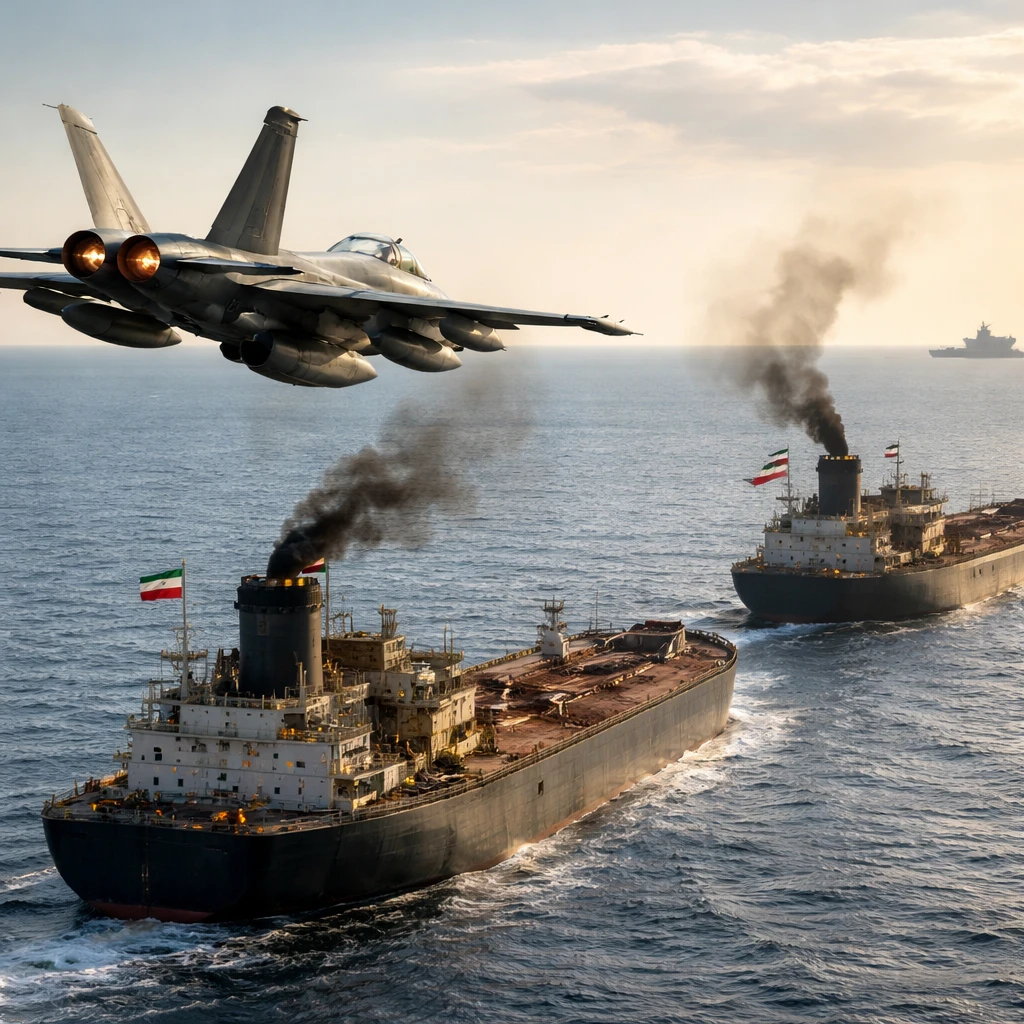
U.S. Central Command disabled two unladen Iranian-flagged oil tankers on Friday as they attempted to enter an Iranian port on the Gulf of Oman in breach of a U.S. blockade. The vessels, M/T Sea Star III and M/T Sevda, were struck in their smokestacks by precision munitions fired from an F/A-18 Super Hornet operating from USS George H.W. Bush. The action follows an earlier incident this week in which M/T Hasna had its rudder disabled by rounds from an F/A-18 assigned to USS Abraham Lincoln. CENTCOM says all three vessels are no longer transiting to Iran and that multiple commercial ships have been disabled while over 50 vessels have been redirected to enforce compliance.

U.S. Forces Disable Two Iranian-Flagged Tankers Trying to Enter Gulf of Oman Port

Key Points

  • U.S. forces disabled M/T Sea Star III and M/T Sevda by striking their smokestacks with precision munitions from an F/A-18 Super Hornet operating from USS George H.W. Bush.
  • Earlier in the week U.S. forces disabled M/T Hasna's rudder with 20mm cannon rounds fired from an F/A-18 flying from USS Abraham Lincoln; all three vessels are no longer transiting to Iran.
  • CENTCOM reported multiple commercial vessels have been disabled and more than 50 ships redirected to enforce the blockade - sectors affected include shipping and oil transport.

Overview

U.S. forces disabled two Iranian-flagged oil tankers on Friday after the vessels attempted to enter an Iranian port on the Gulf of Oman in violation of an active blockade. The tankers, identified as M/T Sea Star III and M/T Sevda, were unladen at the time of the incident.

Operational details

A U.S. Navy F/A-18 Super Hornet operating from the aircraft carrier USS George H.W. Bush engaged both ships, firing precision munitions into each vessel's smokestack. The strikes into the smokestacks prevented the two ships from completing their transit to the Iranian port.

This action comes after a similar enforcement event on Wednesday. In that case, a separate F/A-18 Super Hornet from USS Abraham Lincoln disabled the Iranian-flagged M/T Hasna as it tried to sail to an Iranian port in the Gulf of Oman. That engagement involved firing several rounds from a 20mm cannon that struck and disabled the Hasna's rudder.

Status of the vessels

CENTCOM has reported that all three Iranian-flagged tankers - M/T Sea Star III, M/T Sevda and M/T Hasna - are no longer transiting to Iran following these actions.

Official statement

"U.S. forces in the Middle East remain committed to full enforcement of the blockade of vessels entering or leaving Iran," said Adm. Brad Cooper, CENTCOM commander.

Broader enforcement activity

CENTCOM reported that multiple commercial vessels have been disabled in connection with blockade enforcement operations and that more than 50 commercial ships have been redirected to ensure compliance with the blockade's restrictions.

Implications for maritime traffic

The events described reflect active measures being used by U.S. forces to prevent selected vessels from entering Iranian ports in the Gulf of Oman and indicate a continuing pattern of interdiction and redirection announced by CENTCOM. The reported disabling of commercial and flagged vessels and the redirection of over 50 ships are the operational facts made public by the command.

Limitations

The reporting here is limited to the actions and statements provided by CENTCOM and the operational details cited above. No additional information about the condition of the vessels beyond the disabling actions, nor about subsequent port destinations for redirected ships, has been provided in the material available.

Risks

  • Continued enforcement actions may sustain operational disruption to maritime traffic in the Gulf of Oman - this affects commercial shipping and oil transport sectors.
  • Further redirections and disablements create uncertainty for carriers and operators moving through the region, with implications for routing and logistics planning.
  • The documented use of kinetic measures to enforce the blockade introduces risks for vessels attempting to approach or leave Iranian ports in the Gulf of Oman.

More from Economy

USDA Bans Ten Lenders from Rural Development Program Over Compliance Issues May 12, 2026 Consumer Financial Protection Bureau Prepares to Recall Staff Following Headquarters Closure May 12, 2026 Trump Says He Will Discuss Iran with Xi in China Visit, But Says He Doesn’t Need Beijing’s Help May 12, 2026 U.S. Posts Reduced $215 Billion April Surplus as Refunds and Outlays Rise May 12, 2026 Bundesbank's Nagel Says Iran Conflict Could Force ECB to Raise Rates May 12, 2026