
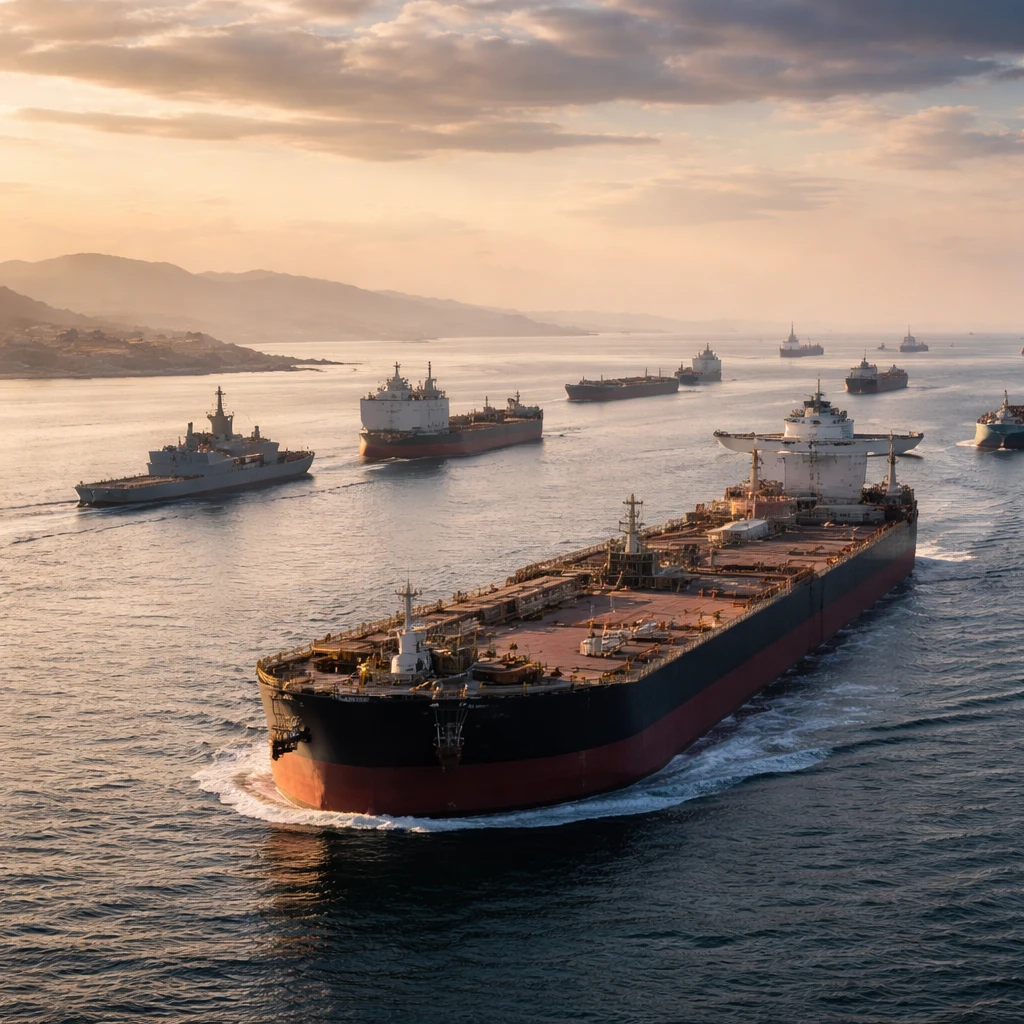
Treasury Secretary Scott Bessent said in a Fox News interview that the administration expects the Strait of Hormuz to be restored to commercial traffic, with U.S. efforts aimed at re-establishing freedom of navigation for cargo vessels.
"Over time, the US is going to retake control of the straits, and there will be freedom of navigation - whether it is through US escorts or a multinational escort," Bessent said.
Addressing the state of the global oil market, Bessent said the United States sees a supply deficit in the neighborhood of 10 to 12 million barrels per day. He added that the International Energy Agency's coordinated release of strategic petroleum reserves is contributing around 4 million barrels per day toward mitigating that shortfall.
On the topic of past policy toward Russian and Iranian crude, the Treasury secretary referenced the previous administration's decision to lift sanctions on oil that was "already on the water." He said the move did not channel additional funds to either Moscow or Tehran, asserting there was "no extra money for either one of those regimes."
Bessent also commented on potential disruptions in the Red Sea tied to the Iranian-backed Houthi militant group. He noted the Houthis "have been very quiet so far."
While the Houthis did launch ballistic missiles at Israel on Saturday, Bessent characterized that attack as specific to Israel, saying it "was Israel specific." He reiterated that the group has "been pretty quiet so far" in terms of activity affecting the Red Sea and expressed the view that he expects them to "likely remain that way."
Key takeaways
- The administration anticipates reopening the Strait of Hormuz to cargo ships and restoring freedom of navigation through military or multinational escorts.
- U.S. officials estimate a global oil supply deficit of roughly 10 to 12 million barrels per day; coordinated strategic reserve releases supply about 4 million barrels per day toward that shortfall.
- Authorities indicate past unsanctioning of oil "already on the water" did not provide additional funding to Russian or Iranian regimes, and current Houthi activity has been described as limited to an attack that was "Israel specific."
Impacted sectors
- Energy markets, especially oil supply and tanker logistics.
- Maritime shipping and trade routes reliant on the Strait of Hormuz.
- Defense and security sectors involved in escort operations and naval deployments.