
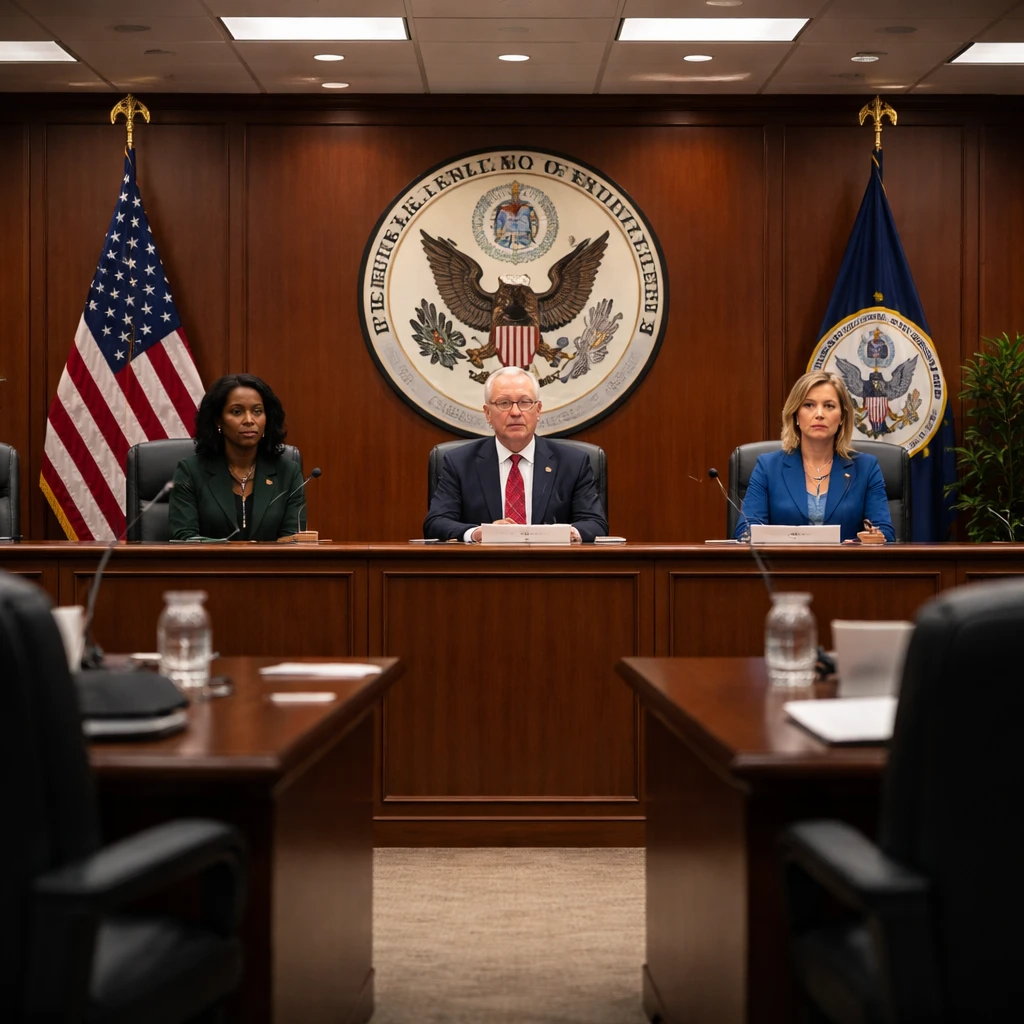
In a significant policy shift, the U.S. Equal Employment Opportunity Commission (EEOC) voted 2-1 on Thursday to retract its 2024 legal guidance that had expanded workplace protections against harassment for LGBTQ employees and individuals seeking abortions. This guidance, last updated comprehensively about 25 years ago, integrated key judicial rulings and legislative enactments that have emerged in recent decades.
The EEOC, a five-member body, is responsible for enforcing federal anti-discrimination statutes covering factors like race, sex, religion, and disability. It issues guidance that, while not legally binding, provides a framework for how anti-discrimination laws will be applied and is frequently referenced by courts addressing novel legal questions. Additionally, a separate agency division led by the general counsel processes discrimination complaints, negotiates settlements, and initiates lawsuits against employers found violating these protections.
The rescinded guidance notably incorporated the landmark 2020 Supreme Court decision in Bostock v. Clayton County, which affirmed that discrimination due to sexual orientation or gender identity constitutes unlawful sex discrimination. Although Bostock primarily concerned employment termination for a gay worker, the EEOC’s 2024 directive extended the Court’s reasoning to cover workplace harassment involving LGBTQ employees.
Since President Donald Trump assumed office, appointees he placed on the EEOC have notably curtailed enforcement related to transgender workers and scrutinized workplace diversity initiatives and allegations of antisemitism within higher education institutions. The repeal of the 2024 guidance was anticipated after Senate confirmation of Brittany Panuccio, Trump’s nominee, restored a quorum and resulted in a 2-1 Republican majority on the commission.
EEOC Chair Andrea Lucas, aligned with the Trump administration, argued prior to the vote that the guidance exceeded the agency’s authorized powers by imposing new compliance obligations on employers instead of offering interpretations of existing laws. However, opponents contend that abandoning the guidance could deter proactive measures from employers to curb harassment and deprive affected workers of critical protections.
In a pre-vote statement, a coalition of a dozen former officials from the EEOC and U.S. Department of Labor—primarily appointed during Democratic administrations—warned this action would likely increase workplace harassment nationwide. The 2024 guidance had also acknowledged protection against discrimination for employees undergoing abortions or using contraception and emphasized respecting transgender workers’ preferred names and pronouns.
Legal challenges have already arisen concerning the guidance. A federal judge in Texas blocked the harassment protections pertaining to LGBTQ workers on the basis that the EEOC's interpretation was novel and beyond its authority. Two additional judges separately prevented the agency from applying the guidance against religious organizations that filed lawsuits.
This development reflects ongoing legal and political debates concerning the extent of workplace discrimination protections in the United States and has implications for sectors with sizable and diverse workforces aiming to maintain inclusive environments.