
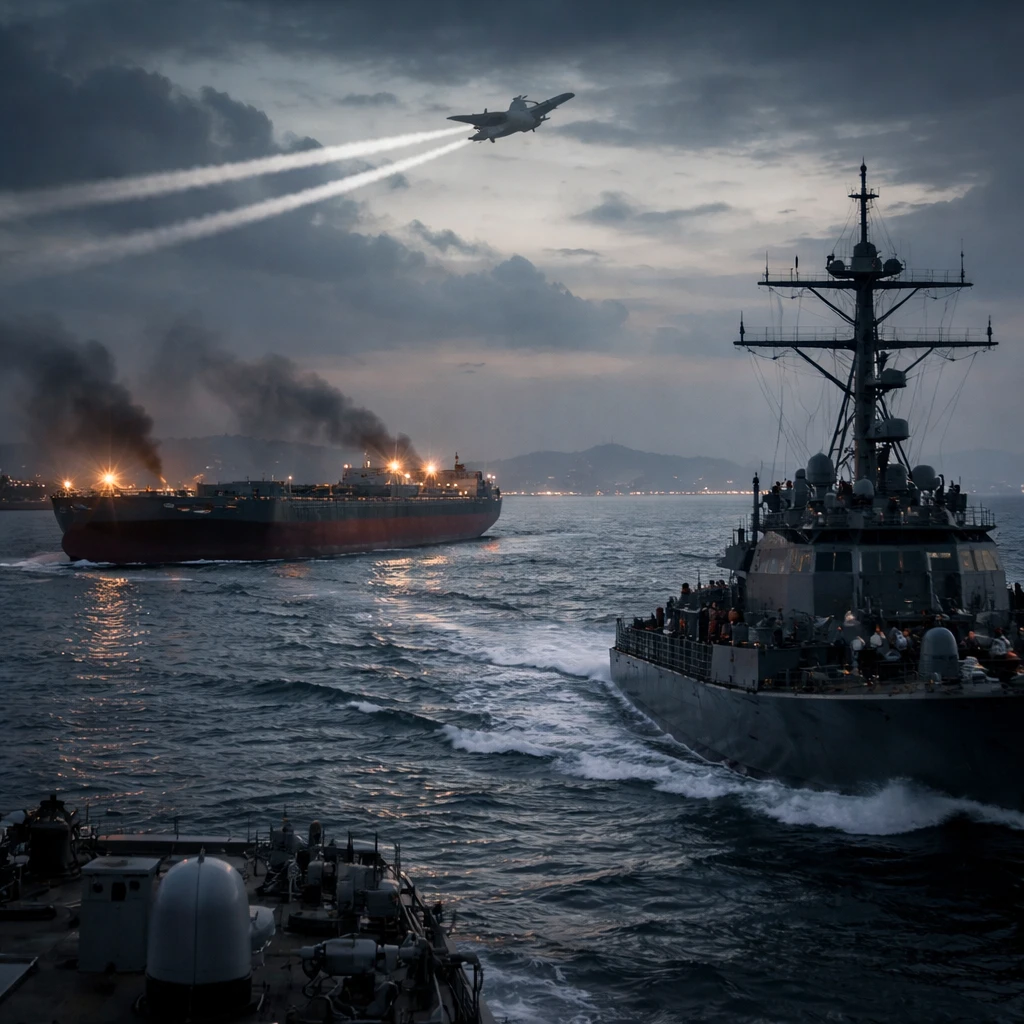
Fresh military strikes were reported on Friday as Israel and Iran continued to clash, and media accounts suggested diplomatic channels are still active even as the conflict approaches its one-month mark.
Israel’s military said it struck weapons facilities in Tehran and other Iranian locations, and also reported it had detected missile launches earlier originating from Iran. The exchanges come amid reporting that the United States - which is conducting a joint assault on Iran with Israel - is considering a substantial buildup of ground forces in the region.
The Wall Street Journal, citing Defense Department officials, reported that Washington is weighing the possible deployment of up to 10,000 additional ground troops to the Middle East. The contingent under consideration would likely include infantry and armored vehicles and would be supplemental to the roughly 5,000 Marines and the thousands of paratroopers already ordered to the theater, according to the report.
In Washington, President Trump announced late on Thursday that a White House deadline requiring Iran to reopen the Strait of Hormuz - or face U.S. attacks on energy facilities - would be pushed back until April 6. In a post on Truth Social, the president said the extension was made at Tehran’s request and added that negotiations between the United States and Iran were "ongoing" and "going very well." He dismissed contrary media accounts as "erroneous."
That statement follows an ultimatum issued last weekend in which the president threatened strikes on Iranian power plants if the country did not unblock the Strait of Hormuz, a chokepoint through which roughly one-fifth of the world’s oil flows. Trump subsequently said he would delay such strikes until Friday after what he described as "very strong" discussions with Iran. Iran has publicly denied that talks with Washington are taking place.
Diplomatic activity is due to continue in Europe as diplomats from the Group of 7 nations meet in France. The White House has been seeking international assistance to reopen the Strait of Hormuz, a demand that, according to reporting, has largely been rebuffed so far. The G7 meeting is expected to focus heavily on those appeals.
Markets responded to the unfolding events. Brent crude futures for the May contract were last reported up 1.2% at $109.25 a barrel, trimming back declines from earlier in the week but remaining comfortably above pre-conflict levels. Analysts at ING cautioned that while the extension of the White House deadline may alleviate some immediate supply fears, the additional risk premium investors demand to hold oil amid geopolitical instability remains "intact."
Equity markets fell across multiple regions. European stocks were lower, pressured in part by rising government bond yields as investors bet that the European Central Bank could need to raise interest rates to counter an inflation surge driven by energy costs. Asian markets were not spared, with stocks in South Korea and India declining. U.S. stock futures also moved lower ahead of the new trading day.
The combination of sustained military activity, the potential for a significant U.S. troop escalation, the diplomatic back-and-forth over the Strait of Hormuz, and elevated energy prices is creating an uncertain outlook for markets and energy supply. For oil-dependent sectors, higher prices and added volatility can affect cash flows and balance sheets. Financial markets are already reflecting these risks through lower equity prices and higher bond yields.