
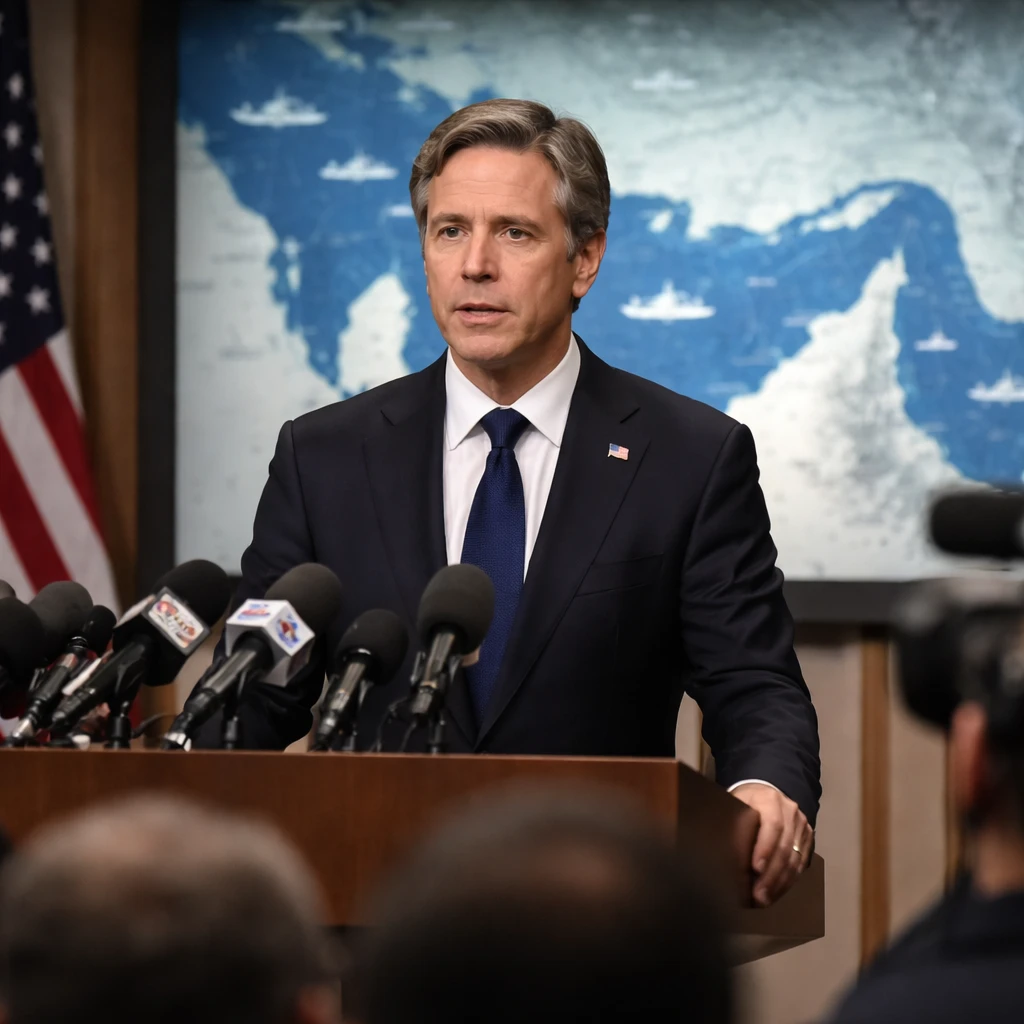
At a press briefing in Rome, the U.S. Secretary of State said Friday that Washington expects to receive a response from Iran regarding ongoing negotiations, noting "we should hear something today." The comments came amid heightened tensions in the Strait of Hormuz and follow a recent U.S. military operation.
The secretary confirmed that Operation Epic Fury - an action that targeted Iranian missile launchers, naval vessels, air force capabilities and factories - has concluded. The military engagement was prompted when U.S. destroyers transiting international waters were fired upon by Iranian forces. According to the secretary, the return of force was a defensive measure.
"If you fire a drone or a missile at our destroyer, what are we supposed to do, let it hit it?" he asked. "We have to respond to it. We have to knock down the missile. We have to knock out whatever it is that launched that missile." The statement underscored a firm U.S. stance that threats to Americans will be met with military action.
The secretary also expressed concern about Iranian moves to exert control over the Strait of Hormuz, which he described as an international waterway. He warned that accepting such claims could create a precedent, encouraging other states to advance comparable assertions over international maritime routes.
Separately, the secretary said humanitarian aid shipments remain unable to move through the Persian Gulf because of the current situation. The United States is working on a United Nations Security Council resolution aimed at addressing Iran's activities in the strait.
On the topic of Ukraine, the secretary assessed that U.S.-led mediation efforts have stalled but said Washington stands ready to facilitate negotiations should the situation evolve. He characterized the conflict as a tragedy with heavy costs borne by both sides.
Addressing Taiwan, the secretary reaffirmed that U.S. policy has not changed following Taiwan's parliament approval of a defense spending bill. He noted that maintaining stability in the Taiwan Strait serves the interests of China, the United States and the broader international community.
Note: The information above reflects remarks made at the Rome briefing and statements provided by the U.S. Secretary of State regarding recent events in the Strait of Hormuz, diplomatic outreach to Iran, ongoing humanitarian constraints in the Persian Gulf, mediation posture on Ukraine, and policy toward Taiwan.