
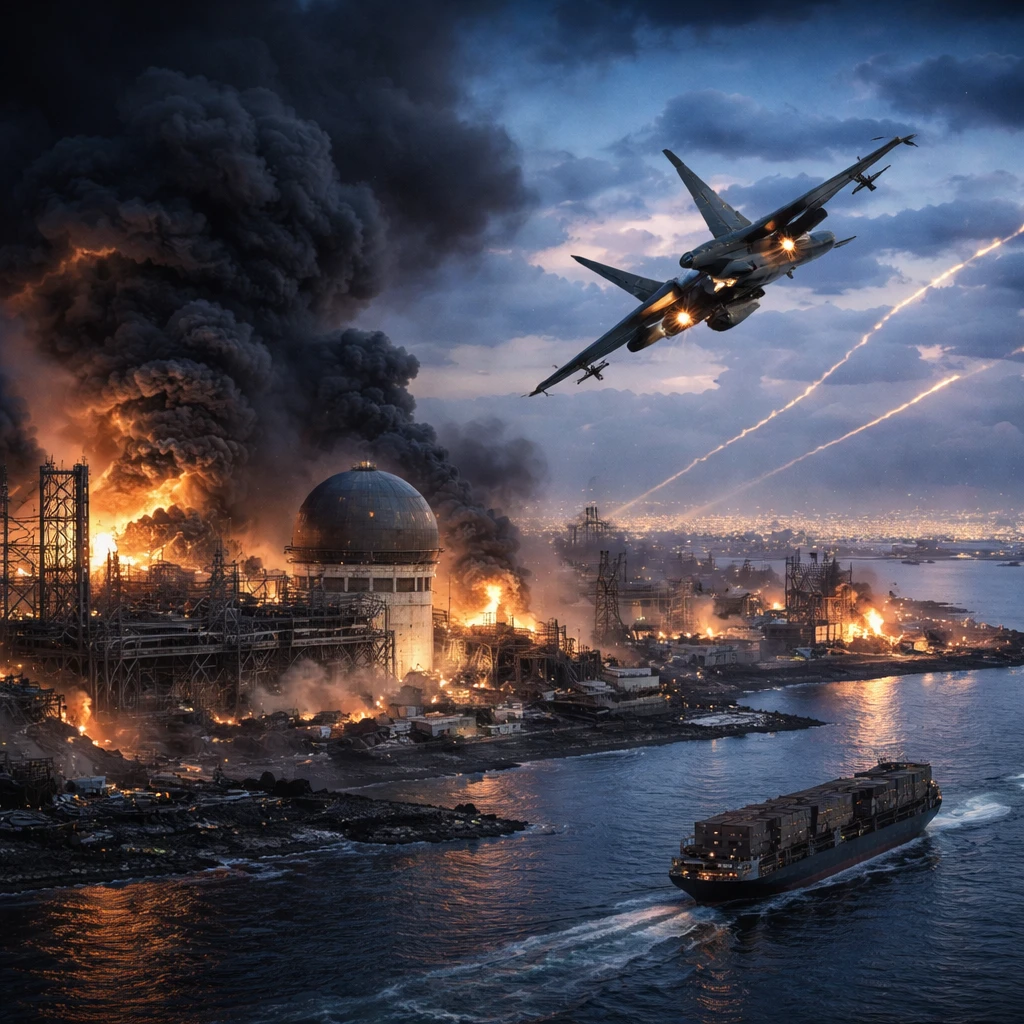
U.S. and Israeli air operations struck multiple targets inside Iran on Friday, hitting nuclear-related facilities and large steel production sites as Tehran launched counterstrikes across the Persian Gulf.
Iranian state media reported that the raids damaged a heavy water research reactor at the Arak complex and a yellow cake production plant in Yazd province. The reports also said two of the country’s largest steelmakers were hit during the campaign.
In response to attacks on civilians, Israeli Defense Minister Israel Katz said the nation's military would intensify its campaign against the Islamic Republic. Katz's comments signaled a readiness to expand military pressure following the strikes.
Tehran answered with a series of drone and missile launches directed at neighboring Gulf countries. Iranian actions damaged two ports in Kuwait and prompted missile alerts in Doha. Saudi Arabian authorities reported that they intercepted drones and missiles aimed at the capital Riyadh.
Iran additionally warned of retaliation specifically targeting steel plants across the Gulf and Israel, according to state accounts. The cross-border strikes and counterstrikes have contributed to mounting tensions and disruption in the region.
The wave of attacks followed a decision by U.S. President Donald Trump to extend a deadline tied to Iranian access to the Strait of Hormuz. Mr. Trump delayed his deadline by 10 days for Tehran to agree to reopen the waterway or face strikes on its power plants - the second such extension since a previous threat over the weekend to destroy infrastructure if Iran did not reopen the critical channel.
As the Strait of Hormuz remained closed, the article noted growing global energy and commodity shortages tied to the ongoing disruptions at the chokepoint. President Trump described talks with Iran as going "very well" and said the American war effort was "ahead of schedule."
Economic and market context
The strikes and reciprocal attacks directly affect sectors tied to energy transit, commodity supply chains and heavy industry. Shipping through the Strait of Hormuz and port operations in the Gulf are implicated by the reported damage to Kuwaiti ports and continued closure of the strait. Steel producers and broader metals markets are exposed through strikes on major steelmakers and threats of further retaliation against such facilities.
Summary
- U.S. and Israeli strikes hit Iran's Arak heavy water reactor, a yellow cake plant in Yazd and two major steelmakers.
- Iran launched drone and missile attacks that damaged two Kuwaiti ports and triggered missile alerts in Doha; Saudi Arabia reported intercepting attacks aimed at Riyadh.
- President Trump extended a deadline by 10 days for Iran to reopen the Strait of Hormuz or face strikes on power plants; he said diplomacy was progressing and the military effort was "ahead of schedule."
Key points
- Military action targeted nuclear and industrial facilities inside Iran, including the Arak reactor and a yellow cake plant in Yazd - developments that directly affect the nuclear infrastructure cited in official reports.
- Regional escalation included damage to Kuwaiti ports and missile alerts in Qatar's capital, indicating immediate disruption to Gulf maritime and port operations - a core channel for global energy shipping.
- Threats and countermeasures are weighing on energy and commodity availability, as the Strait of Hormuz remains closed and officials warn of shortages linked to the chokepoint's disruption.
Risks and uncertainties
- Further military escalation - The situation could intensify if strikes and reprisals continue, heightening risks to regional stability and to sectors dependent on Gulf shipping and ports.
- Supply disruptions - Damage to ports and continued closure of the Strait of Hormuz create uncertainty for global energy and commodity flows, potentially worsening shortages.
- Industrial targeting - Attacks on steel plants and warnings of further retaliation against steel facilities pose risks to metals supply chains and heavy industry production in the region.
Outlook
Events remain fluid, with direct military engagements and diplomatic maneuvers both shaping near-term risks to energy, shipping and industrial commodity markets. Officials' statements indicate continued pressure to change Iran's posture regarding the Strait of Hormuz, while retaliatory strikes have already produced damage to regional infrastructure.