
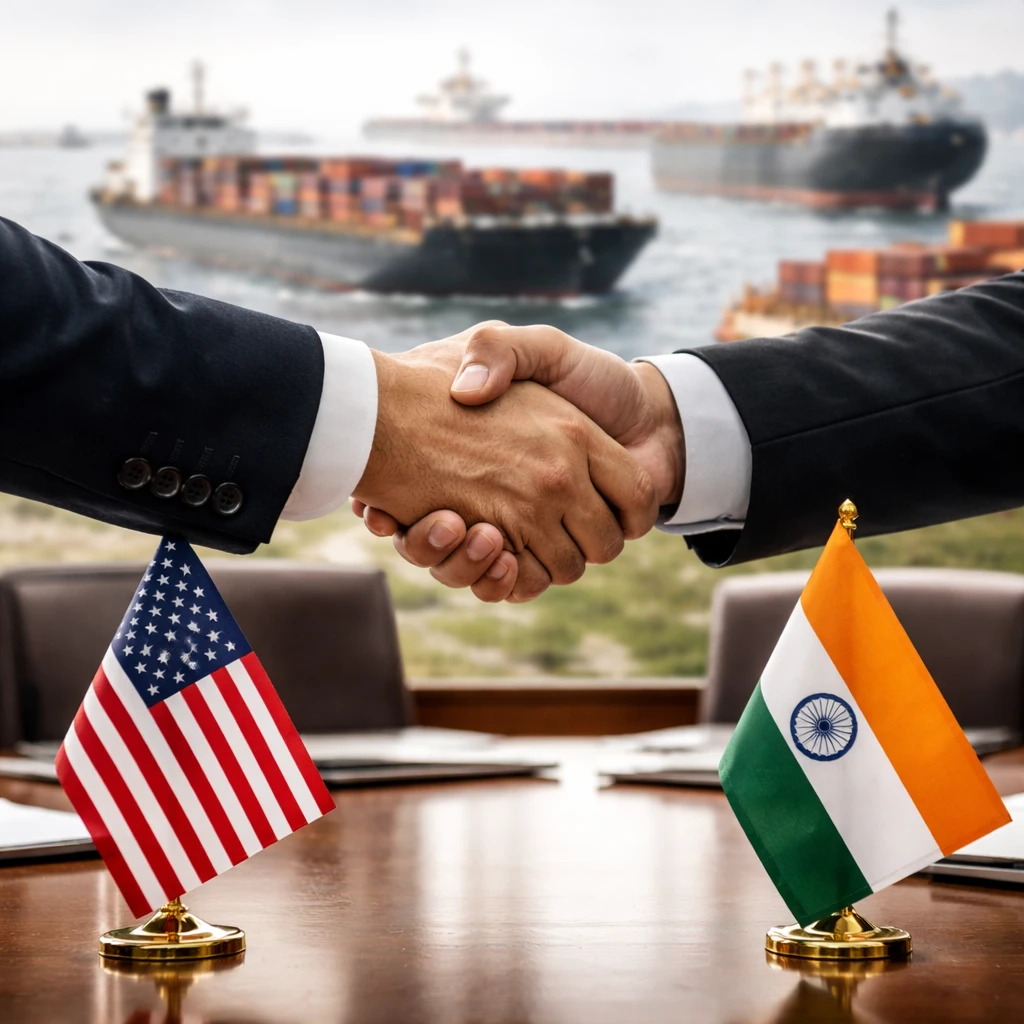
Summary: U.S. President Donald Trump said on Monday that Washington and New Delhi have agreed to a trade deal that reduces reciprocal U.S. tariffs on Indian goods and secures substantial purchasing commitments from India across energy, technology, agriculture, and other sectors. The announcement followed a phone call between Trump and Indian Prime Minister Narendra Modi.
The central economic elements disclosed in the announcement are straightforward. President Trump said the United States will reduce its reciprocal tariff on Indian imports from 25% to 18%. In tandem, Prime Minister Modi committed to purchases of more than $500 billion worth of U.S. products spanning multiple sectors, including energy, technology, and agriculture, among other categories.
The statement also said India agreed to stop buying Russian oil and to increase oil imports from the United States and possibly Venezuela. Those commitments were set out by the U.S. President in a social media post made after his conversation with Modi. "Out of friendship and respect for Prime Minister Modi and, as per his request, effective immediately, we agreed to a Trade Deal between the United States and India, whereby the United States will charge a reduced Reciprocal Tariff, lowering it from 25% to 18%," the post said.
This announcement represents a notable step in U.S.-India trade relations as described in the communication: a tariff cut by Washington, a large-scale procurement pledge from New Delhi, and a reorientation of Indian oil sourcing away from Russia toward U.S. supplies and potentially Venezuelan crude.
Key points
- Tariff change: Reciprocal U.S. tariff on Indian goods reduced from 25% to 18%.
- Purchasing commitment: India pledged to buy more than $500 billion of U.S. products across energy, technology, agriculture, and other sectors.
- Energy sourcing shift: India agreed to stop buying Russian oil and instead increase imports from the United States and potentially Venezuela.
Risks and uncertainties
- Limited detail in the public announcement - the statement provided key outcomes but did not include implementation mechanics or a timeline for the commitments.
- Language indicating potentiality for Venezuelan imports implies uncertainty about the extent and timing of oil purchases from that source.
- The public disclosure took the form of a social media post following a phone call, and further official documentation or formal agreements were not presented in the announcement.
The information presented here is limited to the elements disclosed in the announcement and does not include additional documentation or clarifications beyond what was made public in the President's post.