
Economy May 9, 2026 08:43 AM

UK positions destroyer near Strait of Hormuz to support possible multinational escort operation

HMS Dragon moved from the eastern Mediterranean as London prepares to join a UK- and France-led maritime security effort amid renewed US-Iran tensions

By Priya Menon

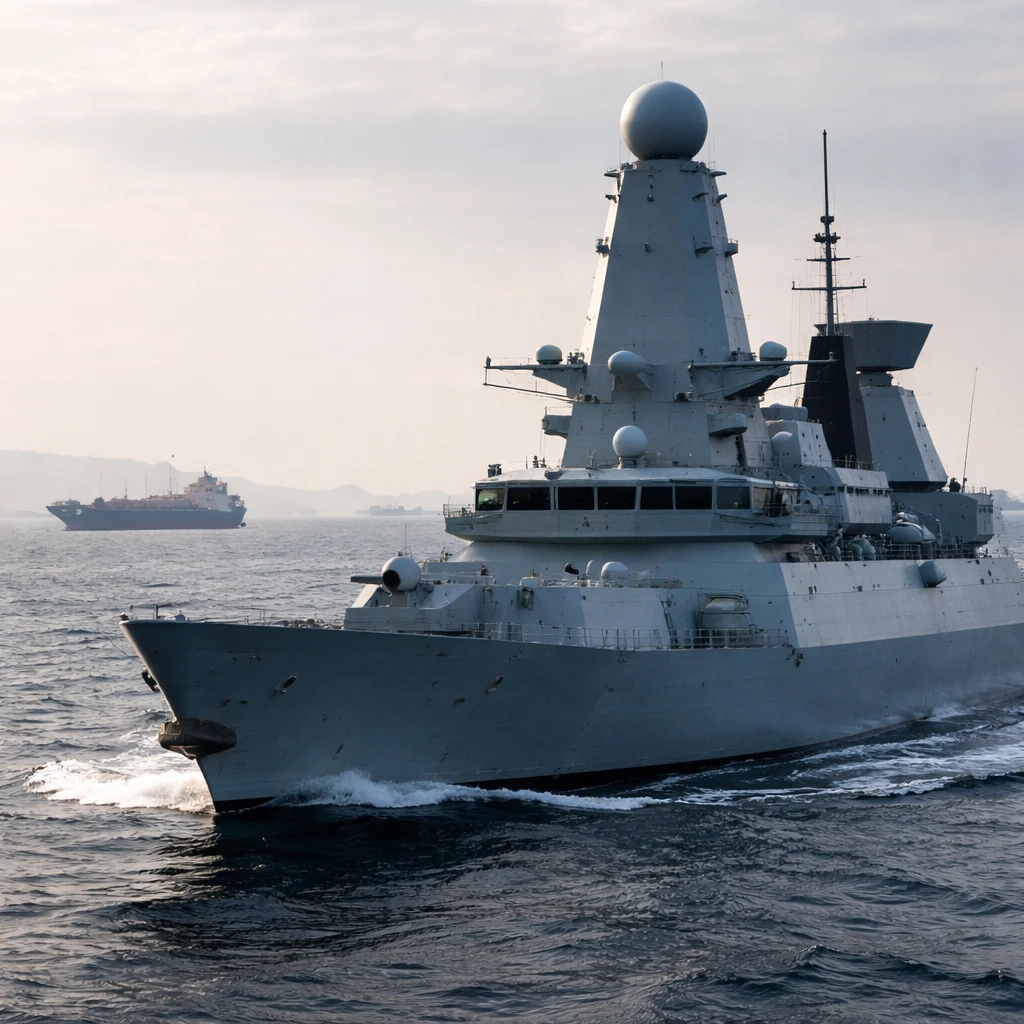
The United Kingdom has dispatched the Type 45 destroyer HMS Dragon from the eastern Mediterranean toward the Middle East to be in position to support a multinational maritime security operation aimed at protecting commercial traffic through the Strait of Hormuz. The move comes as Washington awaits an Iranian response to a ceasefire proposal following fresh clashes in and around the strait and reports of exchanges of fire between Iranian and American forces.

UK positions destroyer near Strait of Hormuz to support possible multinational escort operation

Key Points

  • The UK has moved HMS Dragon, a Type 45 destroyer, from the eastern Mediterranean to the Middle East to be ready for a multinational maritime security operation led by the UK and France.
  • U.S. and Iranian forces reportedly exchanged fire near the Strait of Hormuz this week, and the United States has accused Iran of disrupting shipping and targeting Gulf infrastructure.
  • The Strait of Hormuz carries about a fifth of global oil trade, so disruptions there raise concerns for energy markets, shipping, and wider market sentiment.

Britain has redeployed a Royal Navy destroyer to the Middle East to be ready to support a potential multinational mission to safeguard merchant shipping transiting the Strait of Hormuz, the UK Ministry of Defence said.

HMS Dragon, a Type 45 destroyer currently operating in the eastern Mediterranean, has been pre-positioned so that it can contribute to a maritime security operation jointly led by the UK and France when conditions permit safe passage through the strategic waterway, officials said.

"The pre-positioning of HMS Dragon is part of prudent planning that will ensure that the UK is ready, as part of a multinational coalition jointly led by the UK and France, to secure the strait, when conditions allow," a spokesperson for the UK Ministry of Defence said.

The deployment follows renewed tensions in the Gulf after fresh clashes in and around the Strait of Hormuz. The United States has proposed a new ceasefire and is awaiting Tehran's response, while officials report recent exchanges of fire.

U.S. officials said Iranian and American forces exchanged fire near the strait this week. In addition, the United States has accused Iran of disrupting shipping and targeting Gulf infrastructure, raising alarm among international observers and maritime interests.

Secretary of State Marco Rubio said the U.S. expected an Iranian reply "imminently", although both sides have accused the other of breaching the truce declared last month.

The Strait of Hormuz is a vital chokepoint for global energy flows, handling roughly a fifth of worldwide oil trade. Continued disruptions there have increased concerns about the potential for extended supply shocks and the risk of further military escalation in the Gulf.


Context and implications

The Ministry of Defence described the movement of HMS Dragon as precautionary planning to ensure readiness for a multinational operation led jointly by the UK and France. The decision to pre-position a destroyer reflects the strategic importance of being able to respond quickly should conditions in the strait permit coordinated escort or protective operations.

At present, U.S.-Iran diplomatic exchanges are ongoing, with Washington awaiting a response to its ceasefire proposal. Reports of recent skirmishes and accusations between the two sides have contributed to an atmosphere of uncertainty that underpins the UK deployment.

Risks

  • Ongoing hostilities and reported exchanges of fire near the strait increase the risk of further military escalation - this affects defense and insurance sectors, as well as shipping and energy markets.
  • Disruptions to shipping through the Strait of Hormuz pose a risk of prolonged supply shocks to global oil flows - relevant to oil markets and energy-dependent industries.
  • Uncertainty around diplomatic responses, including Tehran's pending reply to the ceasefire proposal, leaves the situation fluid and could influence market volatility - impacting broader financial markets and trade.

More from Economy

USDA Bans Ten Lenders from Rural Development Program Over Compliance Issues May 12, 2026 Consumer Financial Protection Bureau Prepares to Recall Staff Following Headquarters Closure May 12, 2026 Trump Says He Will Discuss Iran with Xi in China Visit, But Says He Doesn’t Need Beijing’s Help May 12, 2026 U.S. Posts Reduced $215 Billion April Surplus as Refunds and Outlays Rise May 12, 2026 Bundesbank's Nagel Says Iran Conflict Could Force ECB to Raise Rates May 12, 2026