
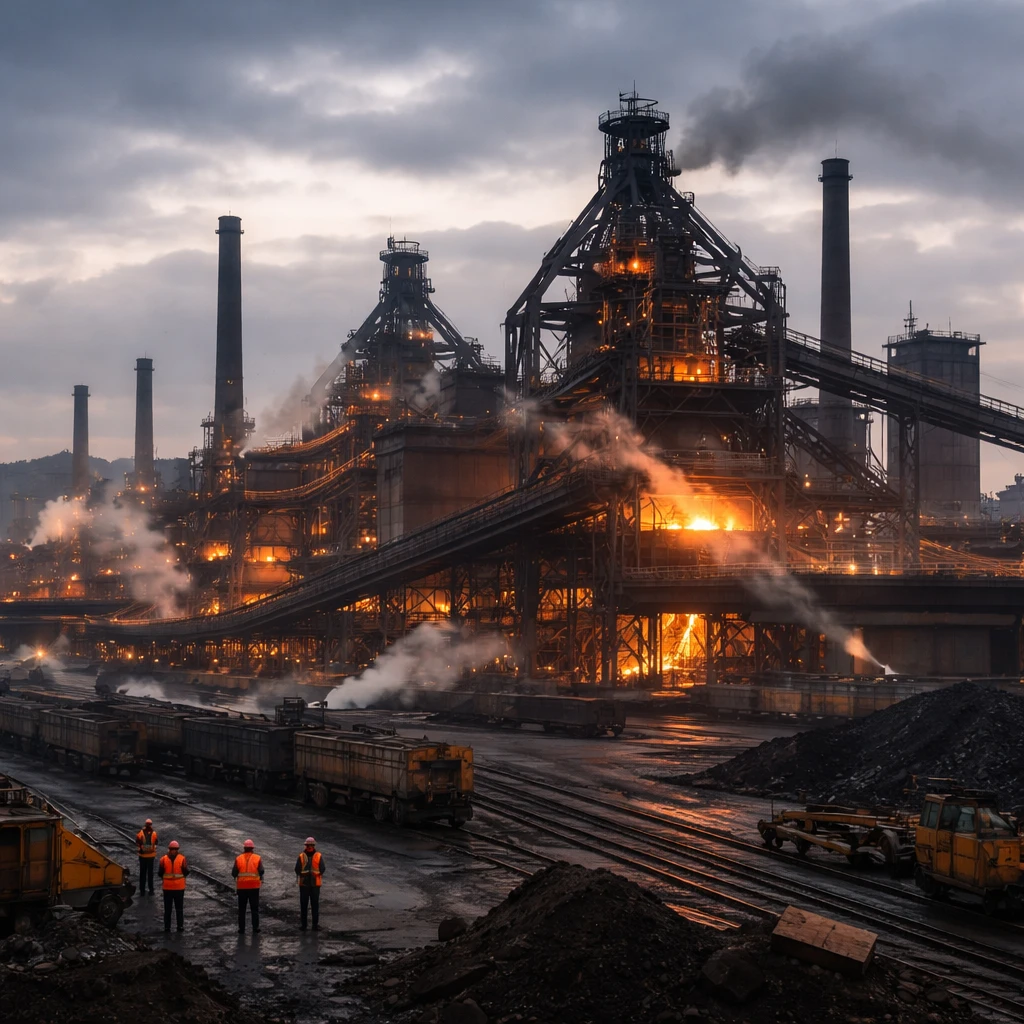
Britain could take complete ownership of British Steel under new government proposals unveiled on Monday by Prime Minister Keir Starmer. Officials said selling the Chinese-owned business the government had intervened to rescue last year proved unachievable, prompting plans for fresh legislation to permit state ownership of the Scunthorpe steelworks in northern England.
The proposed law would give authorities a legal route to assume title of the plant, which the government says is the country's last remaining primary steelmaking facility. Any final decision on taking ownership would depend on the outcome of a public interest test. That test is described as encompassing considerations of national security, the need to maintain critical national infrastructure, and the importance of supporting the broader economy.
The Scunthorpe site produces steel used by the rail, construction, and automotive sectors. The plant has faced operational challenges in recent years, according to the government's statement, with high energy costs in Britain and an oversupply of steel on global markets cited as pressures on the business.
While announcing the measures, Prime Minister Starmer said, "Steel is strategically important to our economy and our national resilience." He delivered the comments during a wider speech in which he defended his leadership.
The announcement follows an earlier government intervention in April 2025, when ministers assumed operational control of British Steel from its Chinese owners, Jingye. That step was taken to stop the furnaces from being shut and to protect about 2,700 jobs at the Scunthorpe plant along with thousands of related roles across the supply chain.
Context and immediate details
- The legislation would create a statutory mechanism for the government to take ownership of the Scunthorpe steelworks.
- Any transfer to public ownership would be subject to a public interest test focused on national security, critical infrastructure maintenance, and economic support.
- The Scunthorpe plant supplies rail, construction, and automotive industries and has been affected by high domestic energy costs and a global steel surplus.
This package of measures represents the latest step in the government's efforts to preserve the country's primary steelmaking capability after a period of commercial distress. Further decisions will hinge on the results of the prescribed public interest assessment and subsequent steps under the proposed legislation.