
Economy March 27, 2026

Two COSCO Container Vessels Turn Back After Attempt to Transit Strait of Hormuz

Ships reversed course despite Tehran saying Chinese-flagged vessels were permitted to pass; tracking data and operator notices offer conflicting signals

By Derek Hwang
Two COSCO Container Vessels Turn Back After Attempt to Transit Strait of Hormuz

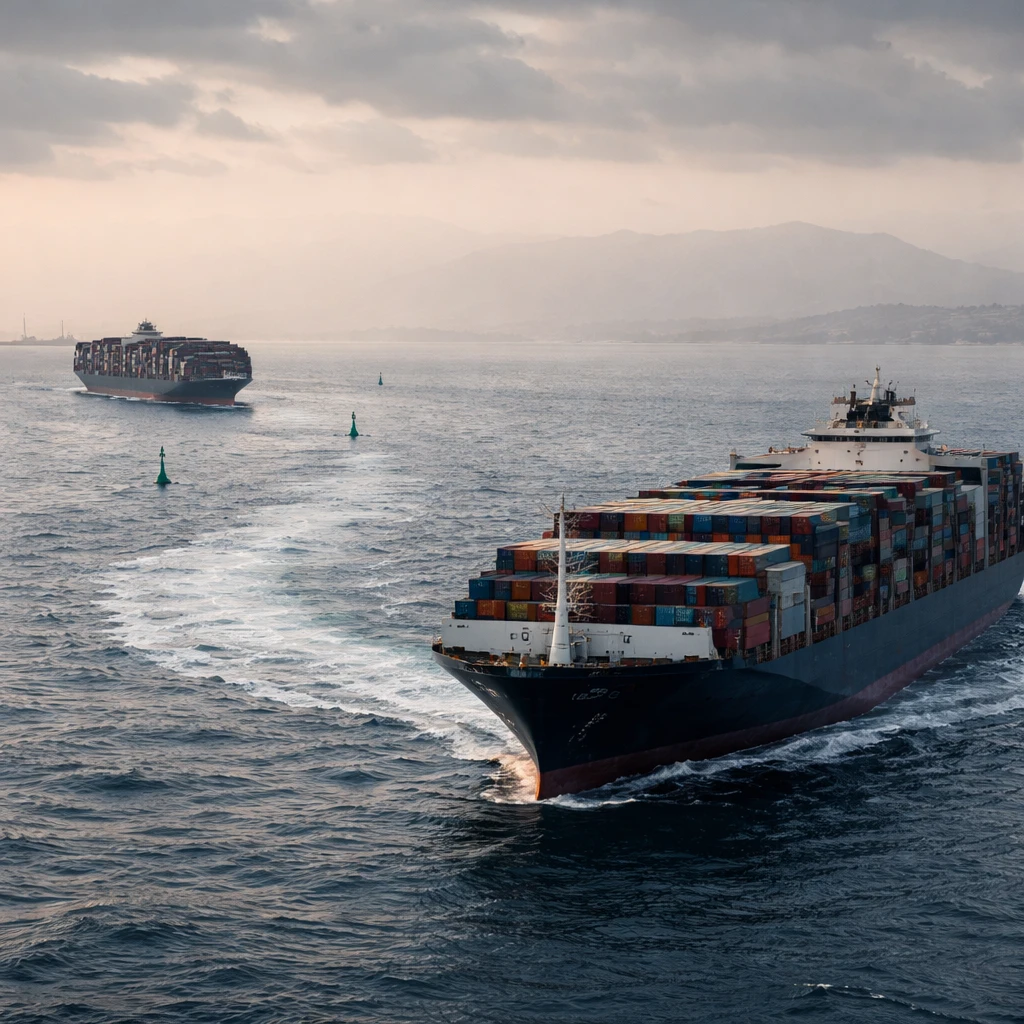
Two Hong Kong-flagged container ships operated by China’s COSCO attempted to leave the Gulf through the Strait of Hormuz but turned back shortly after beginning the transit, ship-tracking data shows. The incident occurred despite a statement from Iran saying it had allowed passage for friendly nations including China. The move was the first recorded crossing attempt by a major shipping group since hostilities in the region began on Feb. 28.

Key Points

  • Two COSCO-operated container ships, CSCL Indian Ocean and CSCL Arctic Ocean, attempted to transit the Strait of Hormuz at 0350 GMT on Friday but turned back, according to Kpler tracking analysis.
  • Both vessels are Hong Kong-flagged and have been detained in the Gulf since Feb. 28, when the U.S.-Israeli conflict with Iran began; COSCO had said on March 25 it resumed bookings for container shipments to Gulf states.
  • Iran publicly said it permitted passage for friendly nations including China, but an analyst noted the incident demonstrates safe passage cannot be guaranteed - affecting shipping and regional trade logistics.

Two container vessels operated by China Ocean Shipping Company (COSCO) reversed course after initiating a transit of the Strait of Hormuz on Friday, ship-tracking records indicate. The move came even after Iranian officials publicly stated that certain friendly nations, including China, were permitted to navigate the waterway.

According to analysis from the Kpler data platform, the CSCL Indian Ocean and the CSCL Arctic Ocean - both Hong Kong-flagged and managed by COSCO - began an attempt to pass through the strait at 0350 GMT on Friday before altering course and turning back. The tracking data showed the vessels' movements and the subsequent retreat.

Both ships have been detained in the Gulf since Feb. 28, when the current U.S.-Israeli confrontation with Iran began. COSCO previously issued a client advisory on March 25 indicating it had resumed bookings for general cargo containers from Asia to destinations in the Gulf, specifically naming the United Arab Emirates, Saudi Arabia, Bahrain, Qatar, Kuwait and Iraq.

The Friday maneuver marked the first attempted crossing by a major shipping group since the outbreak of hostilities, a development Kpler analyst Rebecca Gerdes highlighted as evidence that safe passage through the strait could not be assured. Her assessment underlined the continued uncertainty for commercial vessels operating in the area.

Iran's foreign minister, Abbas Araghchi, had stated on Wednesday in a tweet that Iran "permitted passage through the Strait of Hormuz for friendly nations including China, Russia, India, Iraq, and Pakistan." Despite that statement, the two COSCO-operated vessels broadcast AIS messages identifying Chinese ownership and crews, data shown on the LSEG platform on Friday confirmed.

Shanghai-based COSCO Shipping, the parent company of the vessels' operator, was not immediately available to comment on the attempted transit or the subsequent course reversals.


For stakeholders tracking maritime movements and regional trade flows, the episode underscores persisting operational risks for container services between Asia and the Gulf, even where formal permissions are reported. The limited information available from tracking platforms and operator advisories highlights how navigational decisions continue to be influenced by security developments in the region.

Risks

  • Safe passage through the Strait of Hormuz remains uncertain despite Iranian assurances - a risk for maritime shipping and container logistics.
  • Vessels that have been stuck in the Gulf since Feb. 28 face ongoing operational disruption, with potential impacts on schedules for routes between Asia and Gulf destinations.
  • Inconsistent signals between public statements permitting transit and actual vessel movements create uncertainty for carriers, shippers, and port operators reliant on Gulf-Asia trade lanes.

More from Economy

Philadelphia Fed’s Paulson Flags Middle East Conflict and AI as New Economic Uncertainties Mar 27, 2026 Philadelphia Fed’s Paulson: Iran conflict adds economic risks but stops short on policy signal Mar 27, 2026 Barkin: AI advances and Iran conflict have intensified economic uncertainty Mar 27, 2026 Canada's 2025/26 Ten-Month Budget Shortfall Rises to C$31.21 Billion Mar 27, 2026 Barkin: Geopolitical shock and AI roll-out deepen uncertainty for Fed Mar 27, 2026