
Economy April 1, 2026

Turkey Seeks Clearance for 11 Vessels to Transit Strait of Hormuz Amid Ongoing Blockade

Ankara holds talks with Iran as 14 Turkish-owned ships remain in the waterway after Tehran's effective closure following the outbreak of war

By Priya Menon
Turkey Seeks Clearance for 11 Vessels to Transit Strait of Hormuz Amid Ongoing Blockade

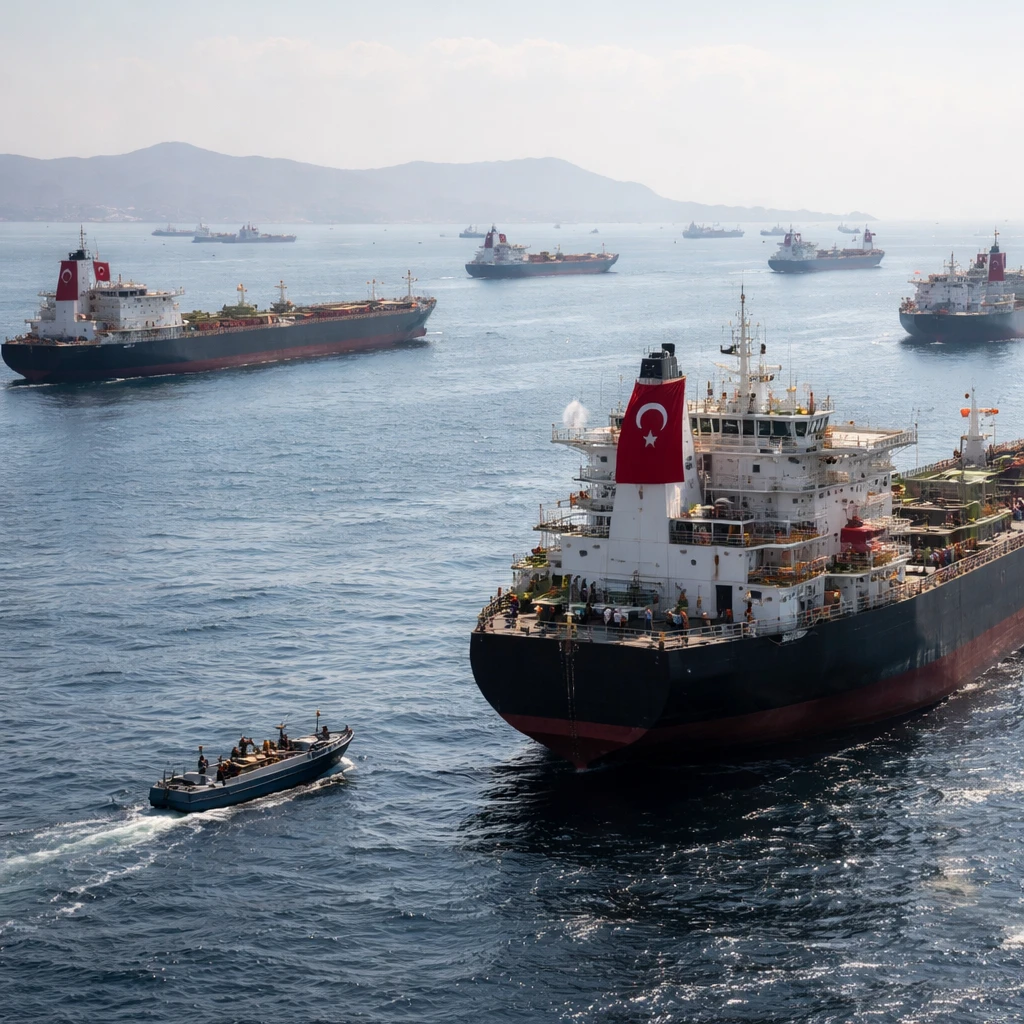
Turkey has requested Iranian authorization for 11 Turkish-owned ships to transit the Strait of Hormuz, according to state-run Anadolu. Transport and Infrastructure Minister Abdulkadir Uraloglu said 14 Turkish-owned vessels remain in the strait, with three engaged in operations and not seeking departure. Iran has effectively blocked the waterway since the onset of war on Feb. 28, disrupting flows that account for about one-fifth of global oil and gas.

Key Points

  • Turkey has requested Iranian permission for 11 Turkish-owned vessels to transit the Strait of Hormuz.
  • Fourteen Turkish-owned ships remain in the strait; three are conducting operations and are not seeking to leave.
  • The Strait of Hormuz handles about one-fifth of global oil and gas flows, and Iran has effectively blocked the waterway since the outbreak of war on Feb. 28, affecting shipments of oil, gas, fertilizer and metals.

Turkey has formally asked Iran to permit 11 Turkish-owned ships to pass through the Strait of Hormuz, the state-run Anadolu news agency reported Wednesday.

Transport and Infrastructure Minister Abdulkadir Uraloglu provided the latest account from Ankara, saying that 14 Turkish-owned vessels remain in the strait. Of those, three are actively engaged in operations - including power generation - and are not requesting to leave, he told reporters in Ankara.

"Discussions are ongoing" for the other ships, Uraloglu said, adding that Turkish authorities are in regular contact with the crews on board. He reiterated that only one Turkish-owned vessel has been granted permission to transit Hormuz since the conflict began - a clearance that was issued because that ship had used an Iranian port, he said earlier this month.

The Strait of Hormuz is a critical chokepoint, handling roughly one-fifth of global oil and gas supply. According to the account provided by Turkish officials, Iran effectively blocked the waterway following the outbreak of war on Feb. 28, a development that has halted movements of oil, gas, fertilizer and metals through the channel.

Energy markets have reacted to the disruption. Brent crude has risen about 42% since the war started, though prices have shown volatility as market participants weigh prospects for resolution. Prices declined Wednesday after President Donald Trump indicated the US could withdraw from the conflict within two or three weeks.


For now, Turkish authorities appear focused on diplomatic and operational channels to secure safe passage for their flagged vessels, while maintaining direct lines of communication with crews in the strait. Details on timelines for individual clearances were not provided by Uraloglu in his remarks.

Risks

  • Continued closure of the Strait of Hormuz poses supply risks to the oil and gas sector, given the strait's role in transporting about one-fifth of global energy supplies.
  • Operational uncertainty for Turkish-owned vessels remains while permissions are under discussion, affecting shipping and logistics sectors tied to those ships.
  • Price volatility in energy markets is a near-term risk, as demonstrated by Brent crude's roughly 42% rise since the war began and recent price movement following comments about potential US withdrawal.

More from Economy

Bailey: Markets Have Moved Ahead of Themselves on Bank Rate Expectations After Iran War Shock Apr 1, 2026 Barkin Sees Oil-Driven Price Shock as Largely Transient; Consumers, Firms Largely Unbowed Apr 1, 2026 Coca-Cola, Local Bottlers Commit 17.6 Billion Rand to South Africa Through 2030 Apr 1, 2026 Dollar's Short-Term Rally Seen Losing Steam as Safe-Haven Demand Ebbs Apr 1, 2026 Goldman Says Markets Overestimate Odds of Fed Hikes After Iran Conflict Apr 1, 2026